



Fast Track to Glory? Indonesia and Its Naturalization Game
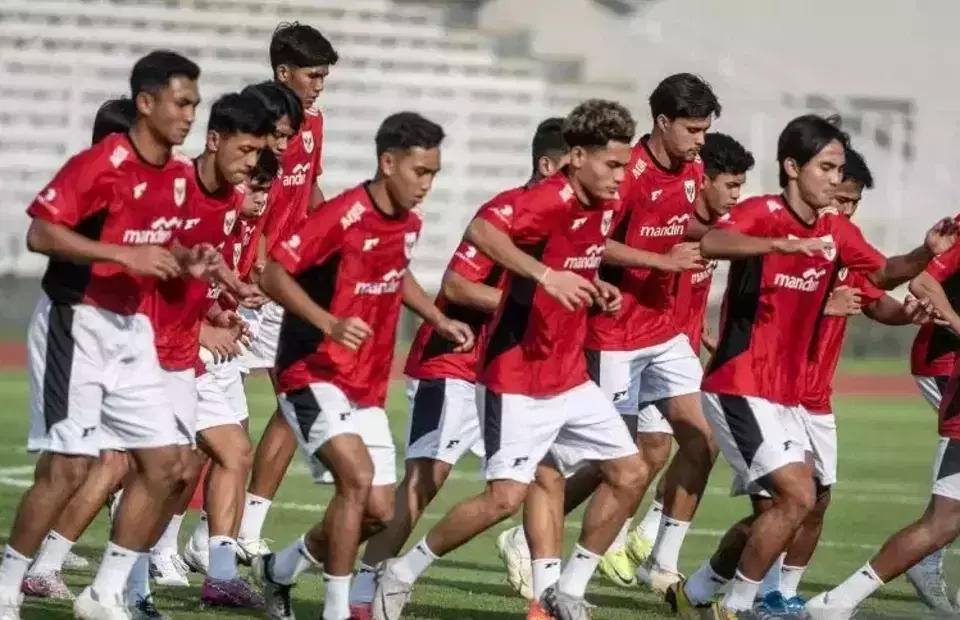
The roadmap is ambitious: rise in the FIFA rankings, make a deep run at the AFF Cup and the 2027 AFC Asian Cup, and ultimately qualify for the 2030 FIFA World Cup. To get there, Indonesia has increasingly relied on one approach -- naturalizing foreign-born players eligible to wear the national jersey.
Can Indonesia fast-track its way to glory, or will the shortcut expose cracks in an underdeveloped football ecosystem?
Naturalization has become a hot issue in Indonesia. With Erick Thohir at the helm of Indonesia’s Football Association (PSSI), the men's national football team is filled with naturalized players, mostly from the Netherlands. Past ties have resulted in many young Dutch players having Indonesian heritage.
Currently, nearly 90% of the Indonesian men's national team lineup is filled with naturalized players. Indonesian football freaks don't mind. They simply love the national team; they want to see their team play beautifully, perform on a higher stage, and hear the national anthem echoing in the world's biggest stadiums.
The naturalization program also shows no signs of slowing down. By mid-July, two more players had taken the oath of Indonesian citizenship. The Ministry of Law officially granted citizenship to 19-year-old striker Mitchell Baker and 20-year-old winger Luke Vickery.
Both players are expected to strengthen Indonesia at the 2026 AFF Cup, scheduled to be held from July 24 to August 26.
Following the naturalization of Baker and Vickery, PSSI is already preparing additional candidates as part of its long-term plans for the 2027 AFC Asian Cup and the 2030 FIFA World Cup qualifiers. Among the diaspora players most frequently linked with Indonesia is VfB Stuttgart midfielder Laurin Ulrich (beritasatu.com, 2026).
The premise seems legit. But naturalization is a double-edged strategy. It certainly brings unquestionable advantages. Naturalized players, who are overseas trained, clearly have a higher ranking in technical skills, tactical understanding, game approach, and professionalism.
Besides positively boosting a team's game, the presence of naturalized players can also be a magnet for attracting sponsors, media attention, and supporters. In countries where local competitions are not well-organized, naturalized players can serve as role models and raise the standard of play to an international level.
However, there are significant risks behind naturalization. Over-reliance on imported players can hinder the growth and development of local players. Cultural differences and communication gaps can be obstacles to building team cohesion.
Even though Indonesian football fanatics yearn to watch the team play at a higher level and achieve titles, deep inside they believe that success is built from the ground up, not through short-term fixes.
Up to today, 13 naturalized players are now playing in the Super League (previously known as Liga 1), which is a positive sign (viva.co.id, 2026). Local players are able to learn from naturalized players, from the knowledge, techniques, culture, and habits of athletes.
Naturalized players grow up in environments with well-established football ecosystems. They play in clubs; they have school or college teams that compete in university-level tournaments.
Building a sustainable football ecosystem requires far more than short-term success at the senior national team level. Indonesia’s long-term priority should be the establishment of a genuine grassroots development system, starting with structured youth academies, qualified coaching at the grassroots level, and nationwide competitions across every age group from U-10, U-12, U-14, U-16, U-18, to U-20 for both boys and girls.
A systematic and modern competition pyramid allows young players to develop through consistent, high-quality matches rather than relying on sporadic tournaments.
Countries with successful football programs such as Japan, South Korea, Spain, and Germany have shown that sustained investment in youth development is the foundation of long-term international success.
However, football development cannot rest solely on the shoulders of PSSI or the government. Developing thousands of coaches, improving training facilities, running nationwide youth leagues, and expanding scouting networks requires significant and sustained financial investment.
This is where the private sector can play a transformative role. Through sponsorships, CSR initiatives, and long-term partnerships with academies and competitions, businesses can help create a sustainable football ecosystem that benefits both the sport and society.
One example is what Liga TopSkor is doing. Since 2011, Liga TopSkor has established itself as one of Indonesia’s leading platforms for identifying and nurturing young football talent. The competition has built a strong reputation as a key scouting ground for the national team, with many of its graduates progressing to represent Indonesia at various age-group levels.
They widely regarded as one of Indonesia’s largest and most consistent privately run youth football competitions. For years, it has regularly organized leagues across multiple age groups, from U-10 to U-17.
In other words, naturalization may help a team compete today, but only a comprehensive grassroots system can ensure success for the next 20 or 30 years.
The ultimate goal should be to reach a point where Indonesia no longer relies on shortcuts because it consistently produces world-class players through its own development system.
Lessons from Cape Verde and Curacao
Naturalization is not a new game in sports; many countries have adopted this model. Naturalization can be part of a plan for success, but it must be implemented in conjunction with genuine grassroots development, a consistent league structure, and strong institutional commitment.
The 2026 FIFA World Cup has once again reminded us that football is full of surprises. Among the tournament’s biggest stories was Cape Verde, a nation of just over 525.000 people that arrived as a World Cup debutant and quickly became everyone’s favourite underdog.
Cape Verde’s remarkable journey was not built overnight. It was the result of years of strategically integrating diaspora talent through naturalization and eligibility rules. Of the 26 players selected for the 2026 World Cup, 15 were born outside Cape Verde.
The Netherlands contributed six players, Portugal four, and France three, while Ireland and the United States each produced one player. Meanwhile, the remaining squad members were born on the islands but have largely developed their careers in European professional clubs.
This reflects an important reality. Cape Verde’s domestic football ecosystem is still developing and has yet to consistently produce players with the technical and tactical standards demanded at the highest international level. Virtually every player in the squad was shaped by European football, whether through elite youth academies or competitive professional leagues.
Naturalization can accelerate competitiveness, particularly for smaller football nations with large overseas communities. But it works best when it complements, rather than replaces, long-term football development.
Another World Cup debutant that captured global attention was Curacao. The Caribbean nation reached football’s biggest stage by relying heavily on players with Dutch roots who were eligible to represent the island through their family heritage. However, choosing to represent Curacao is a significant career decision.
Under FIFA’s eligibility rules, once a player has officially switched sporting nationality and met the conditions that permanently tie them to Curacao through competitive senior international appearances, they can no longer represent the Netherlands in official international competitions. In other words, by wearing the Curacao jersey, these players commit their international future to the Caribbean nation rather than the country of their birth.
The same principle applies to Indonesia’s naturalized players. Once they become Indonesian citizens and are permanently tied to Indonesia under FIFA regulations through official competition, they cannot return to represent their country of birth.
As PSSI continues to naturalize more players, competition for places in the national team will become increasingly fierce. Inevitably, some naturalized players may no longer be selected as new talents emerge or coaching preferences change.
That is why naturalization should be part of a long-term strategy rather than a short-term solution. Every player who chooses Indonesia makes a significant commitment, and the policy should complement, not replace, the development of homegrown talent.
---
Hanna Fauzie is a football enthusiast and international affairs observer. The views expressed in this article are those of the author.
 as a preferred
Related Articles

Indonesia's Calvin Verdonk Makes Historic Champions League Debut Against Arsenal
Verdonk is the first Southeast Asian player to play in the UEFA Champions League.
Prabowo to Decide Mandalika MotoGP Future as Five-Year Deal Ends
MotoGP's official website now displays a provisional 2027 calendar listing Mandalika for Oct. 31, 2027.
Prabowo Praises Indonesia’s Never-Say-Die Spirit after Historic ASEAN Cup Victory
Indonesia defeated Thailand 4-2 in a penalty shootout after a thrilling final ended 2-2 following extra time at Gelora Bung Karno Stadium.
Indonesia Make History, Beat Thailand on Penalties to Win Inaugural FIFA ASEAN Cup
Indonesia beat Thailand 4-2 on penalties after a dramatic 2-2 draw to become the first FIFA ASEAN Cup champions.
Thailand Have Fresh Legs, Indonesia Have 67,000 Fans for FIFA ASEAN Cup Final
Thailand enter the FIFA ASEAN Cup final well-rested, while Indonesia will have 67,000 home fans behind them.
Indonesia Reach FIFA ASEAN Cup Final after Wild 9-2 Win over Bangladesh
Mitchell Baker scored five as Indonesia thrashed Bangladesh 9-2 and edged Malaysia on goals scored to reach the FIFA ASEAN Cup final.
10-Man Indonesia Hold Malaysia 0-0, Leaving Final Berth to Last Group Match
Ten-man Indonesia held Malaysia 0-0 after Thom Haye’s first-half red card, leaving the race for a final berth to the last group match.
Indonesia Coach Won’t Make Title Promise at Home FIFA ASEAN Cup
John Herdman won't promise Indonesia the FIFA ASEAN Cup title, saying he can only guarantee his team will give everything on the pitch.
Indonesia Eyes Title as Host of Inaugural FIFA ASEAN Cup
Indonesia will host eight teams in Jakarta and Bandung for the inaugural FIFA ASEAN Cup Division 1 tournament starting Sept. 25.
Indonesia Sets 4-Gold Target for Asian Games With $16 Million Budget
Indonesia has allocated Rp283 billion for the 2026 Asian Games and set a target of four gold medals in Aichi-Nagoya.The Latest

Jakarta Outranks Amsterdam in Global Public Transport Survey
Jakarta climbs two places to 15th in Time Out's 2026 public transport survey, with its governor citing better network integration.
MSCI Concerns, Tighter IDX Trading Rules Send Indonesian Stocks Down 5% by Midday
Indonesian stocks plunge 5% by midday as MSCI concerns weigh on sentiment and the IDX tightens its daily downside limit to 7%.
Jakarta Prepares 367 Health Facilities as Haze Reaches the Capital
Jakarta prepares 367 health facilities to treat potential haze-related illnesses after smoke from Sumatra and Kalimantan crosses the region.
Jakarta Expands Flood Prevention With New Water Storage Ponds
Jakarta opens two East Jakarta water storage ponds as it expands flood prevention efforts through reservoirs and river normalization.
Press Council Highlights AI Ethics at United Tractors Journalist Workshop
United Tractors’ 2026 journalist workshop highlights ethical AI use and the importance of trust and credibility in journalism.Most Popular
