



Indonesia's Industrial Salt Imports Climb Despite Self-Sufficiency Push
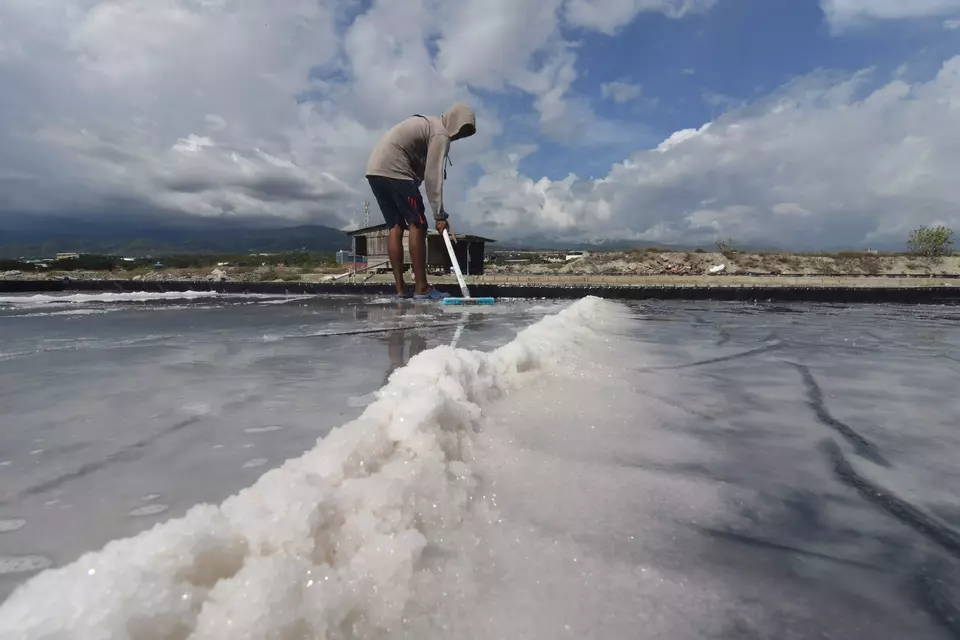
Jakarta. Indonesia's industrial salt imports rebounded in the first five months of 2026, prompting calls for the government to reassess additional import quotas amid concerns they could undermine domestic producers and the country's 2027 salt self-sufficiency target.
Despite being the world's largest archipelagic nation with more than 17,000 islands and extensive coastlines suitable for salt production, Indonesia continues to rely on imports to meet industrial demand. Domestic salt production is largely geared toward consumption-grade salt and often falls short of the purity standards required by industries such as chlor-alkali, food processing, and pharmaceuticals.
The Central Statistics Agency (BPS) data show imports of industrial salt, covering salt with sodium chloride content of at least 97%, reached around 936,000 tons between January and May, up 13.1% from the same period last year. Indonesia imported around 2.66 million tons of industrial salt in 2025, down from roughly 2.74 million tons in 2024.
Nailul Huda, economics director at the Center of Economic and Law Studies (Celios), said the government should regularly publish national salt supply-and-demand data to ensure import decisions are based on transparent assessments of domestic production and industrial needs.
"Data on the supply-demand balance of staple commodities such as salt is not published regularly. Yet this information is essential to assess domestic production and demand so imports can be planned properly. I believe this should be made available to the public," Nailul said on Monday.
One of the largest sources of industrial salt demand comes from the chlor-alkali plant (CAP) industry, whose projected requirement for 2026 stands at 1.18 million tons. Industrial salt imports also supply other sectors, including food processing and pharmaceuticals.
According to Nailul, transparent data would allow the public to determine whether additional imports are genuinely driven by higher industrial demand or simply reflect routine import practices.
He also questioned the timing of imports, stating that domestic salt production typically begins during the dry season while importers tend to build inventories early in the year.
"Policy uncertainty surrounding imports encourages companies to rush and secure inventories," he said.
Nailul added that weak price incentives for local salt farmers have also constrained domestic absorption. Selling prices sometimes fall below Rp 1,000 ($0.06) per kilogram despite rising production costs, while the absence of a government purchase price further discourages producers from improving quality.
"As a result, salt farmers have little incentive to produce higher-quality salt. They prioritize shortening the harvest cycle rather than improving product quality," he said.
Given these conditions, Nailul said any increase in industrial salt imports should be evaluated against existing stock levels, actual industrial demand, domestic production capacity, technical specifications, and the timing of import arrivals. He also urged the government to distinguish the needs of CAP, food processing, pharmaceuticals, and other industries instead of allowing broad-based import approvals.
For non-CAP sectors such as food processing and pharmaceuticals, the government does not set fixed import quotas. Imports are permitted only under special circumstances after assessing whether domestic production is sufficient. Nailul said the mechanism should be closely monitored to prevent it from becoming a routine import channel for products that local producers are already capable of supplying.
Meanwhile, forecasts from Indonesia's Meteorology, Climatology, and Geophysics Agency (BMKG) indicate that the 2026 dry season will be longer and drier due to El Niño, creating an opportunity to expand domestic salt production. Nailul said imports should therefore be scheduled carefully to avoid coinciding with the local harvest season and depressing prices for domestic producers.
He added that import policy should also take into account pressure on the rupiah. Bank Indonesia data showed the currency briefly weakened to Rp 18,039 per US dollar in early June. Amid efforts to safeguard foreign exchange reserves, imports that can be substituted by domestic production should be managed prudently.
With Indonesia targeting salt self-sufficiency by 2027, Nailul said import policy must support rather than weaken local production. Without transparent supply-and-demand data, proper import scheduling, and certainty over domestic absorption, local salt producers will struggle to improve quality, expand capacity, and remain competitive.
Tags: Keywords: as a preferred
Related Articles

Indonesia's Industrial Salt Imports Climb Despite Self-Sufficiency Push
Industrial salt imports rose 13.1% in early 2026, prompting calls to review quotas and protect Indonesia's 2027 self-sufficiency goal.The Latest

Chandra Asri Group Receives Trade Finance Excellence Award, Reinforcing Its Role in Indonesia’s Industrial Development
Chandra Asri Group receives the Trade Finance Excellence Award at CIMB Niaga Business Summit 2026.
AEON MALL Deltamas Brings 11 Sports and Creative Competitions to AEONLYMPIC 2026
AEON MALL Deltamas hosts AEONLYMPIC 2026, featuring 11 sports and creative competitions, with more than 3,100 participants.
Indonesian Stocks Extend Losses for Third Day, Fall 3.64% to 4,996
Indonesian stocks fell 3.64% on Monday, extending losses for a third straight session amid MSCI concerns and tighter trading limits.
Prabowo Calls Meeting on Forest Fires as Haze Reaches Jakarta, Singapore
Prabowo summons senior officials to discuss forest fires as smoke reaches Jakarta and Malaysia pushes for regional action.
Jakarta Outranks Amsterdam in Global Public Transport Survey
Jakarta climbs two places to 15th in Time Out's 2026 public transport survey, with its governor citing better network integration.Most Popular
