



Indonesia Nears Eid Travel Peak on Wednesday with 143.9 Million on the Move

Jakarta. Indonesia’s annual Eid homecoming, locally known as mudik, is nearing its peak on Tuesday night, as surging passenger numbers and rising traffic volumes strain transport hubs across the archipelago ahead of Eid al-Fitr, expected to fall on March 20-21.
At Soekarno-Hatta International Airport, one of the country’s busiest gateways, police have stepped up monitoring as passenger numbers climb sharply in the days leading up to the holiday. Metro Jaya Deputy Police Chief Eko Purwono said traffic has risen steadily over the past week, with daily increases of around 12–13%.
The surge peaked on March 14, when roughly 183,000 travelers passed through the airport, a jump of nearly 25%.
Security patrols have been intensified to deter theft and other crimes that often accompany crowded travel periods, while traffic management around the airport is being tightened to prevent bottlenecks that could cause passengers to miss flights. Airlines and airport operators have also been urged to minimize delays and communicate clearly with travelers when disruptions occur.
Vice President Gibran Rakabuming Raka urged both travelers and officials to remain vigilant as the peak period approaches, warning that traffic density will continue to intensify.
“Everyone must stay alert and be careful during the homecoming period, given the heavy traffic conditions. Preparations have been thorough, but vigilance must be maintained,” Gibran said in a statement on Tuesday. He added that authorities should further strengthen traffic management and readiness as the busiest traffic is expected in the coming days.
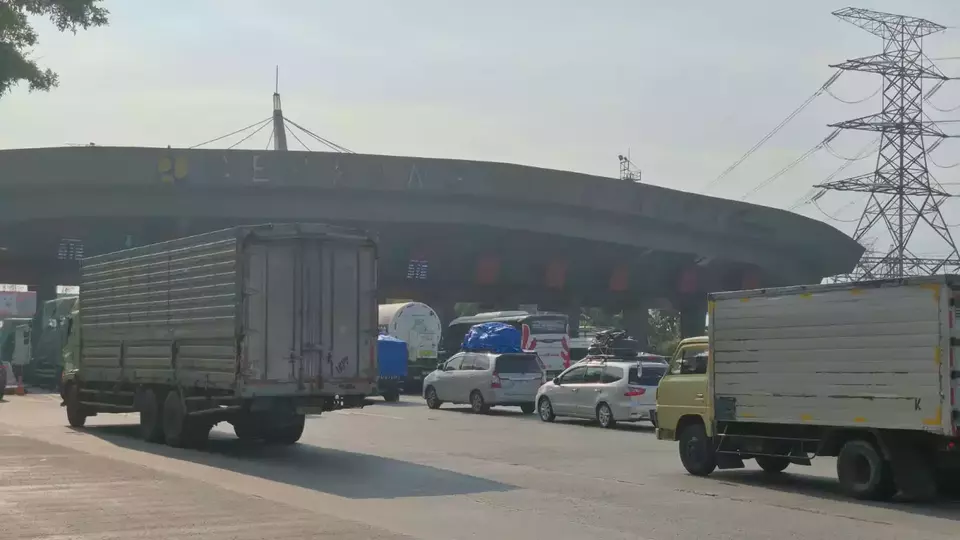
Beyond the airport, the early stages of the homecoming wave are already visible on key toll roads. On the Tangerang–Merak Toll Road, more than 162,000 vehicles were recorded on Monday, though traffic remains relatively smooth. Operators say volumes are still below last year’s levels, suggesting the main surge has yet to arrive.
That peak is expected between March 18 and 19, with an estimated 3.5 million vehicles projected to pass through the corridor during the broader holiday period. The route is a critical link for travelers heading to Sumatra via Merak Port.
Further east, traffic is already intensifying along the Cikopo–Palimanan Toll Road, where vehicle numbers jumped more than 40% in a single day. Authorities have implemented one-way traffic schemes stretching from the Jakarta–Cikampek highway to Central Java in an effort to ease congestion as flows increase.
Weather conditions are adding another layer of risk. Heavy rain in parts of the toll road network has prompted warnings for drivers to remain cautious on slippery roads.
At sea crossings, ferry operator ASDP Indonesia Ferry expects its busiest period between March 17 and 18 on the Merak–Bakauheni route. Traffic is forecast to spike during nighttime hours, driven by travelers departing after daytime activities.
EV Readiness Expands
Officials say the pattern mirrors previous years, slow and steady in the morning, followed by renewed congestion at night, creating rolling waves of peak demand.
To support the growing number of electric vehicle users joining the exodus, state utility PLN has deployed 1,680 public charging stations nationwide, a sharp increase in line with a surge in EV adoption. For some travelers, the shift is already paying off — one driver reported spending just Rp180,000 ($12) on electricity for a cross-province 200 km journey from Bandung in West Java to Tegal in Central Java.
Human Stories Along the Journey
Amid the statistics and logistical planning, the human dimension of mudik remains ever-present. At a port in Banten, a motorcyclist was seen breaking down in tears after learning of his mother’s death while en route home
Along Kalimalang in Bekasi, West Java, motorcyclists heading home have begun to fill the streets at night, many carrying handwritten messages on their bikes — from jokes and love notes to personal reflections.
Some read, “Tegal City, mudik this year still can’t bring a spouse,” while others offer simple resolve: “Head may feel like breaking, but what matters is getting home safely.” For travelers like Ahmad and Bayu, the tradition has become a lighthearted way to endure long journeys and connect with fellow travellers on the road.
Indonesia is bracing for one of its largest annual travel surges, with an estimated 143.9 million people expected to travel during the 2026 Eid al-Fitr holiday period, according to projections released by the Transportation Ministry.
The first peak of the Eid homecoming travel is projected to occur on Friday, March 13, with a second wave expected on Wednesday, March 18. The return flow is forecast to begin on Monday, March 23. The first return peak is expected on Tuesday, March 24, followed by a second wave on Saturday, March 28.
Private vehicles are expected to remain the dominant mode of transport. The ministry estimates that more than 76 million people will travel by private car, followed by motorcycles at 24.1 million and buses at 23.3 million. Most car users are expected to rely on toll roads, while motorcycle riders are projected to favor alternative routes rather than main highways.
Tags: Keywords: as a preferred
The Latest

Prabowo Calls Meeting on Forest Fires as Haze Reaches Jakarta, Singapore
Prabowo summons senior officials to discuss forest fires as smoke reaches Jakarta and Malaysia pushes for regional action.
Jakarta Outranks Amsterdam in Global Public Transport Survey
Jakarta climbs two places to 15th in Time Out's 2026 public transport survey, with its governor citing better network integration.
MSCI Concerns, Tighter IDX Trading Rules Send Indonesian Stocks Down 5% by Midday
Indonesian stocks plunge 5% by midday as MSCI concerns weigh on sentiment and the IDX tightens its daily downside limit to 7%.
Jakarta Prepares 367 Health Facilities as Haze Reaches the Capital
Jakarta prepares 367 health facilities to treat potential haze-related illnesses after smoke from Sumatra and Kalimantan crosses the region.
Jakarta Expands Flood Prevention With New Water Storage Ponds
Jakarta opens two East Jakarta water storage ponds as it expands flood prevention efforts through reservoirs and river normalization.Most Popular
