



Does G7 Make Sense Without China?
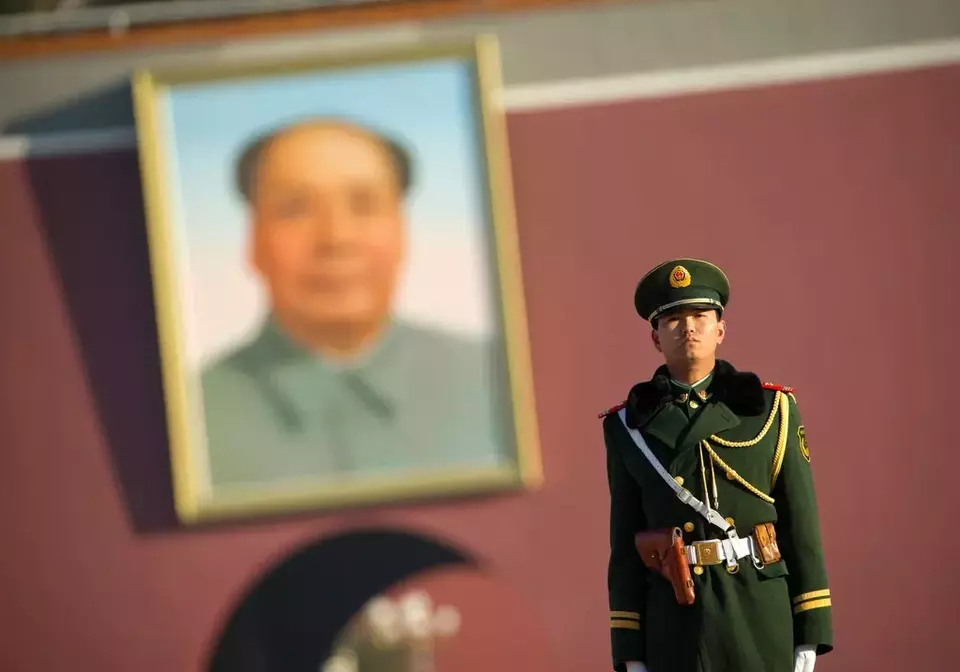
Paris. From the outset, China wasn't included when major powers gathered in 1975 at a chateau outside Paris to fix the slumping global economy, the first of what have become annual summits by the G7 club of wealthy nations to forward their interests.
No surprise there. Imagining Chinese revolutionary leader Mao Zedong brainstorming with US President Gerald Ford and other leaders would have been unthinkable.
China was in turmoil, nowhere close to becoming the economic giant it is now. Mao had also helped defeat France and US forces in Vietnam by militarily supporting Ho Chi Minh's communists that took power. So Mao would have been the odd man out had he been at the inaugural Rambouillet summit of six nations, growing into the G7 when Canada joined the following year.
But as US President Donald Trump and his G7 counterparts gather again in France from Monday, China’s exclusion from the informal club's summits also looks odd, given its now immense sway over the world's economic well-being and affairs.
Put simply: Without China, does the G7 make sense?
Here's a closer look:
By the Numbers, China Would be a Shoo-In
If determined only by economic success, China would already be in the club.
Its economy, swollen by decades of growth since Mao's death in 1976, now dwarfs those of G7 nations Germany, Japan, the United Kingdom, France, Italy and Canada — leaving only the United States to catch. By this measure, a G7 summit without China is arguably like a soccer World Cup without 5-time winner Brazil.
From being “only a tiny, benign, panda bear” in 1975, ”China has become a great global dragon," says John Kirton, a University of Toronto specialist on the G7.
“So many understandably ask: Would the G7 and the global community be better off if China became a member of the G7 club? A plausible answer is ‘Yes.’”
But It's Only for Democracies
A year ago, Trump mused about possibly expanding the club to include China, saying "it’s not a bad idea" when a journalist asked him.
But an unwritten G7 rule has always been that it's only for democracies.
“We are each responsible for the government of an open, democratic society, dedicated to individual liberty and social advancement,” the founding leaders declared in Rambouillet in 1975.
China wouldn’t have cleared that bar then, during Mao’s rule that claimed many millions of lives through famine and revolutionary upheaval.
Nor, under President Xi Jinping, would China do so now. By multiple measures, including the annual Freedom in the World study, the World Press Freedom Index, or the Canadian Fraser Institute's ranking of economic freedom, China lags far behind G7 nations for civil liberties.
China a Priority Subject for the G7
China’s clout impacts all G7 countries in myriad ways. It sells far more goods than it buys, announcing a record trade surplus of almost $1.2 trillion in 2025, which is a source of friction with other industrial powers. It controls supplies of crucial rare minerals. Its technological advances and growing military strength are giving rivals cold sweats. And it is the world’s biggest emitter of climate-warming pollution.
All this means that China will be an elephant in the room at the Monday-to-Wednesday summit in the Alpine spa town of Evian-les-Bains.
As host, French President Emmanuel Macron has carved out time for the leaders to talk about how to rebalance trade with China, amid fears that soaring Chinese exports of cars and other products could wreck G7 industries.
The chemistry between Trump and other G7 leaders has been bad of late — over the Iran war and other bones of contention — but China could be an issue that unites them, said Cédric Dupont, who specializes in international politics at the Geneva Graduate Institute.
“They agree on the same thing, you know: China is a problem,” he said.
Beijing Looking on Warily
China's Communist Party-led government has in the past criticized the G7's exclusiveness and painted it as a relic of the Cold War when the world was more divided along ideological lines.
But in a statement to The Associated Press ahead of the Evian gathering, the Chinese Foreign Ministry took a more nuanced view, saying “the G7 should serve as a catalyst for solidarity and cooperation rather than an amplifier of division and confrontation.”
Beijing-based analyst Wang Zichen says that “Beijing is wary of the G7 because it sees the group as structurally aligned with US-led Western power, and increasingly as a venue where China is discussed as a challenge or threat.”
But Chinese leaders cannot ignore it.
“China recognizes that the G7 still represents a very significant concentration of economic, technological, military and financial power," said Wang.
China Seen as a Threat to G7 Cohesion
Analysts say that admitting China to the club could wreck its cohesion, not only because Beijing’s authoritarian system of government, interests, and positions on Russia, Iran, and other major issues don’t align with those of G7 democracies, but also because its presence could test their long-standing alliances.
“China inside would indeed be a Trojan horse,” said Kirton. With a Chinese leader at the table, “individual members might be tempted to break G7 ranks to secure special favors from him on the economic, critical minerals, digital technology, and other issues they address.”
Chris Alden, an international relations expert at the London School of Economics and Political Science, said that adding China “would make it very difficult for it to function.”
Russia's Example Is also a Barrier to China
The G7's last expansion — accepting Russia as a member in 1998 — didn't end well.
The club froze out Russian President Vladimir Putin when he seized Crimea from Ukraine in 2014, foreshadowing the full-scale war now raging since 2022.
Trump said last year that excluding Russia “was a very big mistake.”
But Kirton said the experience convinced other leaders "that they should never take a chance on a less than fully democratic power becoming a full member of their fully democratic club again.”
Tags: Keywords: as a preferred
Related Articles

'AI Development Should Not Be a Solo Performance by Any Single Country,' Says Xi Jinping
Over the next five years, he said, China will provide 5,000 training opportunities on artificial intelligence to developing countries.
Chinese Court Hands Former Local Official Death Sentence in $325M Bribery Case
The graft case is one of the most dramatic corruption scandals in recent years in terms of the sheer scale of the bribes involved.
Does G7 Make Sense Without China?
China's exclusion looks odd, given its now immense sway over the world's economic well-being and affairs.
Xi Jinping to Visit North Korea Next Week
The announcement came a day after North Korea unveiled a new facility to produce the ingredients for nuclear bombs.
Hegseth Reassures Pacific Allies While Softening China Rhetoric
Hegseth reassured Indo-Pacific allies of U.S. commitment while adopting a more measured tone toward China.
China's Rise: What Indonesia Can Learn
China’s experience suggests that the debate between the state and the market is rarely black-and-white.
The Differences -- and Similarities -- In the Trump and Putin Visits to China
China and Russia reached more than 40 cooperation agreements covering areas including trade, technology and media exchanges.
Trump-Xi Meeting Opens in Beijing With Low Expectations on Trade, Security
Trump met Xi in Beijing as both sides opened talks, with little expectation of breakthroughs on Iran, Taiwan and trade.
JCI Falls 0.68% as US-Iran Tensions and Rupiah Weakness Trigger Sell-Off
JCI closed lower Tuesday as renewed US-Iran tensions and a weakening rupiah fueled risk aversion across Indonesian equities.
JCI Rebounds 0.6% Amid Oil Rally and MSCI Rebalancing Concerns
JCI rose 0.6% at the open as investors weighed Iran tensions, soaring oil prices, and looming MSCI rebalancing risks.The Latest

Jakarta Outranks Amsterdam in Global Public Transport Survey
Jakarta climbs two places to 15th in Time Out's 2026 public transport survey, with its governor citing better network integration.
MSCI Concerns, Tighter IDX Trading Rules Send Indonesian Stocks Down 5% by Midday
Indonesian stocks plunge 5% by midday as MSCI concerns weigh on sentiment and the IDX tightens its daily downside limit to 7%.
Jakarta Prepares 367 Health Facilities as Haze Reaches the Capital
Jakarta prepares 367 health facilities to treat potential haze-related illnesses after smoke from Sumatra and Kalimantan crosses the region.
Jakarta Expands Flood Prevention With New Water Storage Ponds
Jakarta opens two East Jakarta water storage ponds as it expands flood prevention efforts through reservoirs and river normalization.
Press Council Highlights AI Ethics at United Tractors Journalist Workshop
United Tractors’ 2026 journalist workshop highlights ethical AI use and the importance of trust and credibility in journalism.Most Popular
