



World Bank: Strong Jobs, Reforms to Anchor Indonesia’s 4.8% Growth
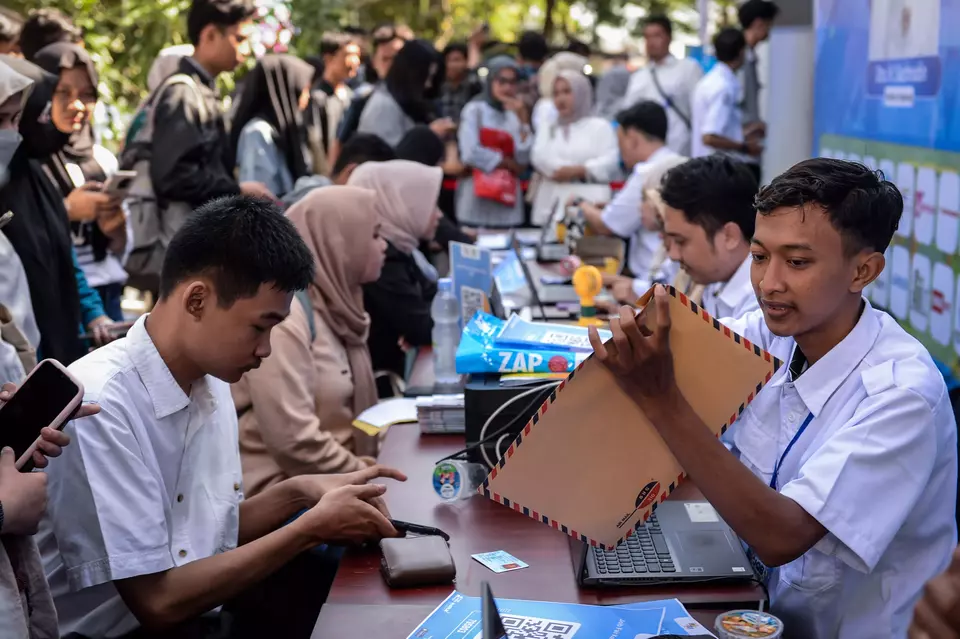
Jakarta. The World Bank has raised Indonesia’s economic growth forecast to 4.8 percent in 2025, up slightly from its previous projection of 4.7 percent in April. Growth in 2026 is expected to remain at the same level, according to the World Bank’s East Asia and Pacific Economic Update (EAP) released in October 2025.
Despite the upward revision, the Bank warned that growth across East Asia and the Pacific (EAP), while still above the global average, will likely slow in 2025 and further in 2026 amid increasing global headwinds.
Aaditya Mattoo, the World Bank’s Chief Economist for East Asia and the Pacific, said growth across the region is expected to slow in 2025 compared to 2024, as trade restrictions, heightened policy uncertainty, and weaker global momentum weigh on expansion. East Asia and Pacific's growth as a whole is forecasted at 4.8 percent in 2025 and will be declining to 4.3 percent in 2026.
The Bank noted that many firms across the region have adopted a “wait and see” approach, holding off on capital spending amid persistent uncertainties. A one-percentage-point decline in G7 growth could shave off 0.6 percentage points from developing economies’ growth in East Asia and the Pacific in the following year, the report said.
Domestic Reform Key for Resilience
While growth in several EAP countries, particularly China and Indonesia, remains relatively strong at around 5 percent per year, the Bank cautioned that such momentum has been supported largely by government spending.
"Indonesia, meanwhile, has kept its deficit within fiscal rules, but the composition of spending with a focus on subsidies for food, transport, and energy, as well as state-directed investment, could be optimized," the World Bank reported.
The Bank emphasized that structural reforms, including easing non-tariff barriers, deregulation, and business licensing simplification, are key to unlocking higher potential growth and job creation.
Labor Market Faces Structural Shifts
The EAP region’s labor market remains resilient overall, with most people finding work. However, youth unemployment remains a major challenge, one in seven young people in both China and Indonesia are jobless. Technological advancements, digitalization, and the spread of artificial intelligence (AI) are reshaping labor markets, boosting productivity in some sectors while displacing traditional jobs in others.
In Indonesia, the youth population aged 15–24 makes up almost 15 percent of the total, compared to less than 5 percent in the prime working-age group (25–54) and slightly less among older workers (55–64). The female labor participation rate also trails men by about 15 percentage points, similar to gaps seen in Malaysia and the Philippines.
"China, Vietnam, and Thailand are aging, while the Philippines, Indonesia, and Cambodia are seeing youth bulges," World Bank stated.
The World Bank noted that demographic contrasts with aging populations in countries like China and Malaysia, and growing youth populations in Indonesia and Cambodia, will shape future employment dynamics.
The report highlighted that creating more productive jobs is crucial, not only for youth and women but also in the Pacific Islands, where the share of working-age people in employment remains below the global average.
Tags: Keywords: as a preferred
Related Articles

‘Only Time Will Tell’: Indonesia on World Bank’s 5.2% Forecast
Indonesia aims to grow 5.4% in 2026 and expand further by 6% the following year, topping the World Bank's 5.2% forecasts.
Jakarta Stocks Extend Gains as Investors Await Forex Reserves Data
Indonesian stocks rose for a third day as investors awaited September forex reserves data and assessed economic growth prospects.
AI Data Centers Could Consume 4% of Global Power by 2035, World Bank Says
AI data centers are set to triple global power demand by 2035, putting Southeast Asia’s electricity grids under pressure.
Rupiah Gains as World Bank Upgrades Indonesia’s 2026 Growth Forecast
Rupiah strengthens to Rp17,899 as the World Bank raises Indonesia’s 2026 growth forecast to 5.2%.
Jakarta Stocks Rise 1.21% as Indonesia Lags in AI Boom
Indonesia’s stocks gained 1.21% as the World Bank said the country is lagging Malaysia and Vietnam in benefiting from the AI boom.
Malaysia, Vietnam Ride AI Boom as Indonesia Misses Out: World Bank
Malaysia and Vietnam are benefiting from the global AI investment boom, while Indonesia has yet to gain from AI value chains.
Ex FinMin Sri Mulyani Co-Chairs World Bank's Funding for Poor Nations
Sri Mulyani will co-lead the World Bank's initiative to roll out grants and low-interest loans to poor countries.
Jakarta Stocks Soar 4% on US-Iran Peace Hopes
JCI surged 4.1% to 6,254 as hopes for a US-Iran peace deal sent oil prices lower and boosted regional markets.
Palm Oil Seen Up 8% in 2026 as Supply Caps Gains, World Bank Says
World Bank sees palm oil rising 8% in 2026, with supply growth and higher costs capping further gains.
World Bank Sees Coal Prices Rising 20%, Nickel 12%
World Bank projects higher coal and nickel prices, pointing to stronger Indonesia exports amid global energy and demand shifts.The Latest

Jakarta Outranks Amsterdam in Global Public Transport Survey
Jakarta climbs two places to 15th in Time Out's 2026 public transport survey, with its governor citing better network integration.
MSCI Concerns, Tighter IDX Trading Rules Send Indonesian Stocks Down 5% by Midday
Indonesian stocks plunge 5% by midday as MSCI concerns weigh on sentiment and the IDX tightens its daily downside limit to 7%.
Jakarta Prepares 367 Health Facilities as Haze Reaches the Capital
Jakarta prepares 367 health facilities to treat potential haze-related illnesses after smoke from Sumatra and Kalimantan crosses the region.
Jakarta Expands Flood Prevention With New Water Storage Ponds
Jakarta opens two East Jakarta water storage ponds as it expands flood prevention efforts through reservoirs and river normalization.
Press Council Highlights AI Ethics at United Tractors Journalist Workshop
United Tractors’ 2026 journalist workshop highlights ethical AI use and the importance of trust and credibility in journalism.Most Popular
