



Unlocking Geothermal Energy: Financial Risks and Community Pushback Slow Progress
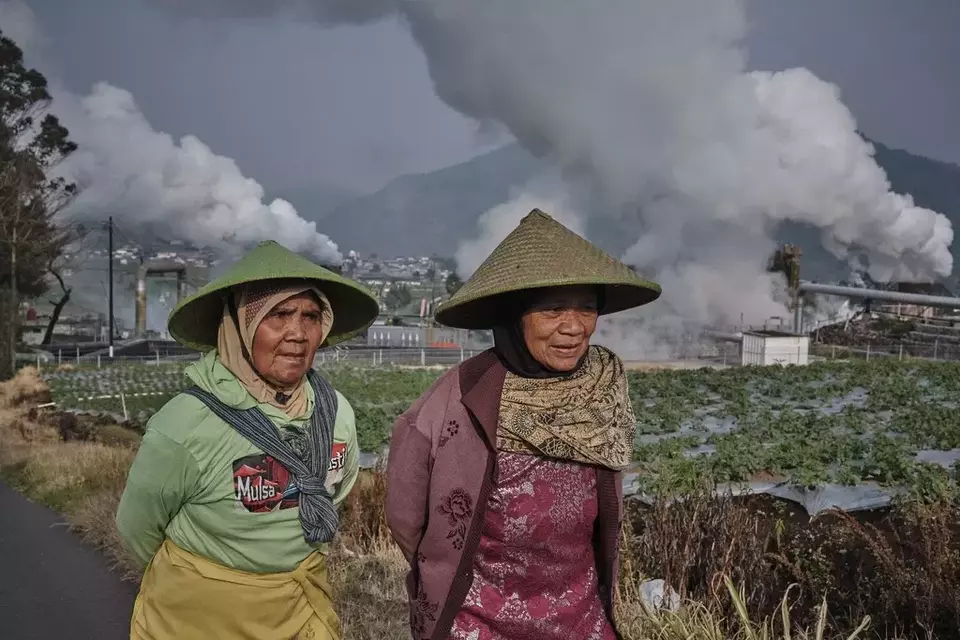
Jakarta. Providing round-the-clock energy, using minimal space and considered a clean source of power — geothermal energy seems like an ideal option for countries like Indonesia and the Philippines, where the potential is high, and governments are seeking to transition away from highly polluting fossil fuels.
Yet most of the potential of geothermal energy, created by harnessing heat produced by the earth from underground reservoirs of hot water to power turbines that generate electricity, remains untapped in these countries and across the world — as financial, regulatory and community roadblocks have stalled growth.
More readily available financing and domestic regulatory changes are starting to address these barriers, but experts say more should be done to unlock the vast clean energy source trapped just beneath the Earth's surface.
Countries with high geothermal potential — such as the United States, Indonesia and the Philippines — are usually located close to tectonically active regions where hot water or steam is naturally carried to the Earth's surface through volcanic activity, or can be accessed by shallow drilling.
"We're essentially standing on our own sun, which we can get clean, reliable energy from," said Marit Brommer, CEO of the International Geothermal Association based in Germany.
Experts also laud geothermal plants for their ability to operate continuously to meet the minimum level of power demanded around-the-clock, unaffected by weather, with long lifespans and minimal maintenance.
As countries shift towards renewable and cleaner energy, geothermal use is expected to grow: In Southeast Asia, geothermal power generation is expected to increase tenfold from 2020 to 2050, reaching 276 million megawatt-hours, according to the International Energy Agency.
With their steaming volcanoes and bubbling lakes, Indonesia and the Philippines — two archipelagic Southeast Asian countries located on the seismically active "Ring of Fire" — are the second and third-largest users of geothermal energy in the world, with some of the highest geothermal energy potential. The US is number one.
Yet Indonesia uses less a tenth of its gargantuan reserves, making up 6 percent of its power supply. In the Philippines, about 8 percent of geothermal capacity has been developed, constituting 14.6 percent of the country's energy use, the country's largest source of renewable energy.
Both countries plan to expand use of geothermal energy as they transition away from fossil fuels: Indonesia aims to increase the share of geothermal power generation by at least 8 percent by 2030, making it the second-largest renewable energy source after hydropower. The Philippine government is targeting several projects to boost geothermal capacity by adding nearly 1.5 gigawatts, nearly doubling its current use.
But the exploratory stage of geothermal development — when companies do tests and drilling to confirm the size, temperature, pressure, and potential production rates of sites — is expensive and risky. That makes it hard to attract finance for development, said Shigeru Yamamura, an energy specialist at the Asia Development Bank.
"That's the most difficult part of developers, because (financially) they cannot take 100 percent of the exploration risk themselves," Yamamura told The Associated Press.
Climate finance for geothermal development is limited for most Southeast Asian nations, accounting for only 9 percent of finance available for the Association of Southeast Asian Nations — a political and economic bloc of ten states in the region, which includes Indonesia and the Philippines.
A 2024 ASEAN energy report said "blended finance" using both public and private sources, grants and green bonds could help bridge the gap.
The Philippine government has announced green energy auction schemes for geothermal energy and is preparing a "smart green grid plan" that prioritizes renewable energy — vital to enable private developers to get financing from banks. This signals progress in policy support for investment, Yamamura said.
Indonesian President Prabowo Subianto has focused on geothermal as part of the country's energy transition. The Energy and Mineral Resources Ministry says it's working to shorten permitting times and considering ways to increase rates of return on investments in geothermal projects. The state electric utility, Perusahaan Listrik Negara, also said it's committed to ramping up geothermal energy development.
The World Bank is providing a $150 million loan to scale up Indonesian investments in geothermal energy by reducing the risks of early-stage exploration. The Green Climate Fund and the Clean Technology Fund are providing a $127.5 million.
Even when finance is secured, community pushback can slow development.
In Indonesia, residents of villages have protested projects, citing safety and environmental concerns: Several geothermal sites in Indonesia have had deadly gas leaks in the past five years.
Some Indonesian communities don't understand what geothermal energy is and how they could benefit from its development, said Timothy Ravis, a doctoral student in global development at Cornell University.
Protests at geothermal sites in the Philippines have led at least one company to pay royalties to Indigenous groups worried about land degradation caused by geothermal development.
Governments and businesses should work to gain the consent of communities near projects to help ensure they succeed, said Brommer.
"We need to show that this development benefits all people, not just a company," she said. "It's not about being a good neighbor, it's about being the best neighbor and really working with communities to respect their concerns."
 as a preferred
Related Articles

The Blind Spot in Indonesia's Clean Energy Story
One of the biggest obstacles to renewable energy development is the lack of adequate transmission and distribution infrastructure.
New Renewable Energy Law Still Unfinished as House Extends Deliberations Again
The House has again extended deliberations on Indonesia’s New and Renewable Energy Bill, leaving the proposed rules still under discussion.
Let PLN Rent Out the Grid It Already Owns
Indonesia can unlock billions in solar investment by letting companies lease PLN’s grid to buy renewable power directly.
Indonesia Breaks Ground on $169 Million Bekasi Waste-to-Energy Plant
The facility will be capable of processing up to 1,500 tons of waste per day and converting it into electricity.
Prabowo Launches 100 GW Solar Power Program
President Prabowo launches Indonesia’s 100 GW solar program, with 14 initial projects worth Rp135 trillion and a 2029 completion target.
Indonesia, Germany Eye Deeper Ties in Green Energy, Semiconductors
Indonesia and Germany are deepening cooperation in renewable energy, semiconductor supply chains and vocational education.
Education as the Engine of Indonesia’s Energy and Technology Transformation
The future of energy requires two things: clean and renewable sources that provide constant and reliable power.
Opportunities for Green Hydrogen in the Present Energy Crisis
In many emerging markets, energy imports represent a significant share of total trade deficits, exposing economies to external shocks.
Kencana Energi Wins $116 Million Hydropower Project From PLN
Kencana Energi secured a $116 million hydropower project that will nearly double its installed generation capacity.
Barito Renewables Posts $53 Million Q1 Profit on Strong Geothermal Output
New projects are expected to lift the company’s total geothermal capacity to more than 1,000 MW by the end of 2026.The Latest

Prabowo Calls Meeting on Forest Fires as Haze Reaches Jakarta, Singapore
Prabowo summons senior officials to discuss forest fires as smoke reaches Jakarta and Malaysia pushes for regional action.
Jakarta Outranks Amsterdam in Global Public Transport Survey
Jakarta climbs two places to 15th in Time Out's 2026 public transport survey, with its governor citing better network integration.
MSCI Concerns, Tighter IDX Trading Rules Send Indonesian Stocks Down 5% by Midday
Indonesian stocks plunge 5% by midday as MSCI concerns weigh on sentiment and the IDX tightens its daily downside limit to 7%.
Jakarta Prepares 367 Health Facilities as Haze Reaches the Capital
Jakarta prepares 367 health facilities to treat potential haze-related illnesses after smoke from Sumatra and Kalimantan crosses the region.
Jakarta Expands Flood Prevention With New Water Storage Ponds
Jakarta opens two East Jakarta water storage ponds as it expands flood prevention efforts through reservoirs and river normalization.Most Popular
