



Islamic Banking Sector Seen as Undervalued Growth Play
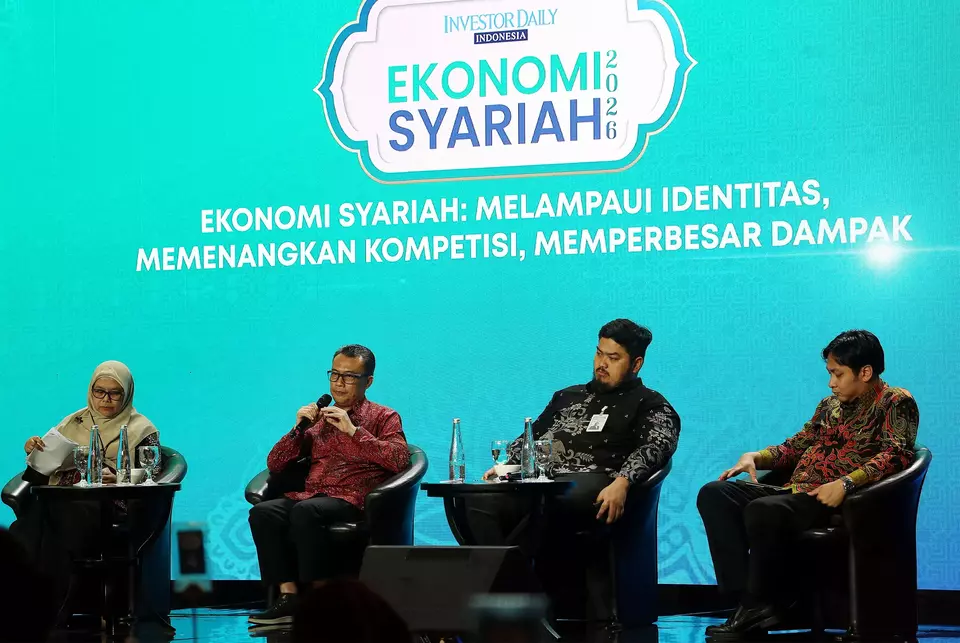
Jakarta. Indonesia’s Islamic banking sector is emerging as a potential long-term growth story, supported by strong demographic fundamentals and double-digit asset growth, but market concentration and limited regional scale continue to constrain expansion.
As of October 2025, total assets in the sharia banking sector reached a record Rp 1,028 trillion ($61 billion), up 11.3% year on year, according to data from the Financial Services Authority (OJK). Despite the milestone, Islamic banks account for only around 7.6% of total national banking assets — underscoring what regulators describe as substantial headroom for growth.
With Muslims representing roughly 87% of Indonesia’s population — more than 200 million people — the addressable market is the largest globally. Yet penetration remains modest compared with regional peers such as Malaysia, where Islamic banking commands about 30% market share.
Industry executives argue that sharia banking’s structure — based on profit-sharing and asset-backed financing — positions it well to support micro, small, and medium enterprises (MSMEs), a key pillar of Indonesia’s economic strategy.
“At our institution, customer deposits are directed to MSME sectors, ensuring funds circulate within the real economy,” said Slamet Sulistiyono, an executive at the sharia unit of Bank Jateng.
Unlike conventional banks, Islamic lenders do not charge interest and instead treat customers as investment partners, sharing profits and losses under transparent agreements. Transactions must be backed by identifiable assets and avoid speculative or non-halal activities — a framework regulators say promotes financial discipline and closer links to productive sectors.
However, structural imbalances remain.
The 2021 merger of state-owned Islamic banking units into Bank Syariah Indonesia (BSI) created a national champion with assets of approximately Rp 456 trillion ($27.1 billion). By contrast, regional sharia units operate on significantly smaller balance sheets — Bank Jateng’s sharia unit, for example, holds assets of just Rp 7.5 trillion.
This capital concentration, industry players say, risks limiting competitive depth and slowing expansion outside major urban centers.
Indonesia currently has 14 full-fledged Islamic banks, around 20 sharia business units that have yet to spin off from parent banks, and roughly 170 district-level sharia financing services.
Ayahandayani Kurssetyowati, head of Sharia Finance at the OJK, said regulators are encouraging conventional banks to establish Islamic units to broaden market participation. She stressed that sharing offices and IT infrastructure with conventional operations does not breach Sharia principles.
“We want Islamic banking to grow larger, more competitive, and deliver measurable economic impact,” Ayahandayani said.
Still, risks include uneven regional development, regulatory asymmetries compared with Malaysia, and the potential for foreign entrants to capture market share in what is widely viewed as the world’s largest untapped Islamic banking market.
Tags: Keywords: as a preferred
Related Articles

Indonesians Keep $252 Billion in Gold ‘Under the Pillow’: Airlangga
Indonesian households hold an estimated 1,800 tons of gold worth $252 billion, offering huge potential for the country’s bullion market.
Indonesia’s Bullion Banks Now Manage 153 Tons of Gold Worth $20 Billion
Indonesia’s bullion banks now manage 153 tons of gold worth about $20 billion, more than double the volume at their 2025 launch.The Latest

Mystery Money Floods US Midterm Election Campaigns
Elon Musk alone has donated almost $450 million to Republican groups, including the Senate Leadership Fund, the largest super PAC.
Indonesia Needs 320 Ethanol Plants to Support 50% Gasoline Blending Target
Indonesia needs 320 ethanol plants for its proposed E50 fuel program, far beyond its current five major production facilities.
‘It’s Called Rock and Roll’: Ye Fires Back at Fans Criticizing Jakarta Show
Ye defends his Jakarta performance after fans question his stage presence at a 70,000-person concert that drew visitors from 80 countries.
Indian Man Detained at E. Java Airport Over Gold Powder Smuggling
Indonesian airport officers detain an Indian national accused of hiding 1.1 kilograms of gold powder inside his body.
Pertamina Loses Primary Oil Import Role as Government Introduces Direct Procurement
Indonesia shifts oil and LPG procurement to government-led deals, reducing Pertamina's traditional import role.Most Popular
