



Electricity Tariff Discount Leads to Deflation in January
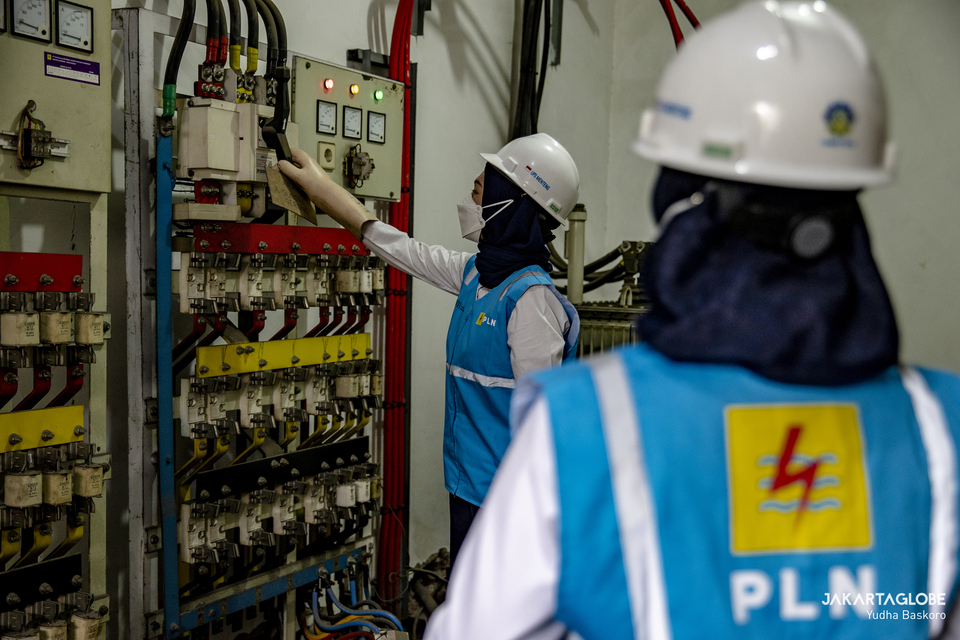
Jakarta. The government's decision to implement a 50 percent discount on electricity tariffs has resulted in a 0.76 percent decrease in consumer prices for January, the Central Statistics Agency (BPS) announced on Monday.
The substantial discount applies to household electricity consumption of up to 2,200 VA and was introduced to mitigate the impact of a recent increase in the value-added tax (VAT) to 12 percent.
As a consequence, the overall electricity tariff decreased by 32.03 percent in January, contributing 1.47 percentage points to the month's deflation rate, according to BPS Acting Head Amalia Adininggar Widyasanti.
“The deflation is mainly attributed to the 50 percent discount in electricity tariffs introduced in January,” Amalia stated during a news conference in Jakarta.
This deflation occurred despite price increases in certain commodities, such as chili, and ongoing inflationary pressures on food, beverages, tobacco, and gasoline products.
Amalia also highlighted other government policies that contributed to the reduction in general prices, including discounts on train and air fares during the holiday seasons.
Throughout 2024, Indonesia experienced notable inflation and deflation trends.
The year-on-year inflation rate in December 2024 was 1.57 percent, with a Consumer Price Index (CPI) of 106.80. This marked the lowest calendar year inflation rate since the 1997-1998 Asian Financial Crisis.
The country recorded deflation in five consecutive months during 2024, with a 0.12 percent deflation in September, marking the fifth deflationary period of the year.
Despite the low headline inflation, core inflation, which excludes volatile food and energy prices, remained higher and healthy at 2.26 percent year-on-year in December 2024.
These trends indicate that while the headline inflation rate was low, primarily due to decreases in energy and food prices, the core inflation rate suggests that underlying economic conditions remained stable.
Tags: Keywords: as a preferred
Related Articles

Indonesia's Q2 GDP Expands 5.29% on Strong Consumption
Indonesia's GDP grew 5.29% in Q2 as household spending and investment strengthened, while mining remained the only sector to contract.
Indonesia Posts 0.14% Deflation in July
Indonesia recorded 0.14% monthly deflation in July as lower food prices outweighed rising transportation and education costs.
LPEM FEB UI Questions Indonesia’s Reported 5.61% Economic Growth
LPEM FEB UI questioned Indonesia’s 5.61% Q1 growth, citing inconsistencies in manufacturing and electricity data.
JCI Rises 1.22% to 7,057 as Q1 GDP Beats Expectations
JCI climbed 1.22% to 7,057 as Q1 GDP growth hit 5.61%, beating forecasts and signaling resilient domestic demand.The Latest

Chandra Asri Group Receives Trade Finance Excellence Award, Reinforcing Its Role in Indonesia’s Industrial Development
Chandra Asri Group receives the Trade Finance Excellence Award at CIMB Niaga Business Summit 2026.
AEON MALL Deltamas Brings 11 Sports and Creative Competitions to AEONLYMPIC 2026
AEON MALL Deltamas hosts AEONLYMPIC 2026, featuring 11 sports and creative competitions, with more than 3,100 participants.
Indonesian Stocks Extend Losses for Third Day, Fall 3.64% to 4,996
Indonesian stocks fell 3.64% on Monday, extending losses for a third straight session amid MSCI concerns and tighter trading limits.
Prabowo Calls Meeting on Forest Fires as Haze Reaches Jakarta, Singapore
Prabowo summons senior officials to discuss forest fires as smoke reaches Jakarta and Malaysia pushes for regional action.
Jakarta Outranks Amsterdam in Global Public Transport Survey
Jakarta climbs two places to 15th in Time Out's 2026 public transport survey, with its governor citing better network integration.Most Popular
