



India Hosts High-Stakes AI Summit, Drawing 20 Leaders and Top Tech CEOs
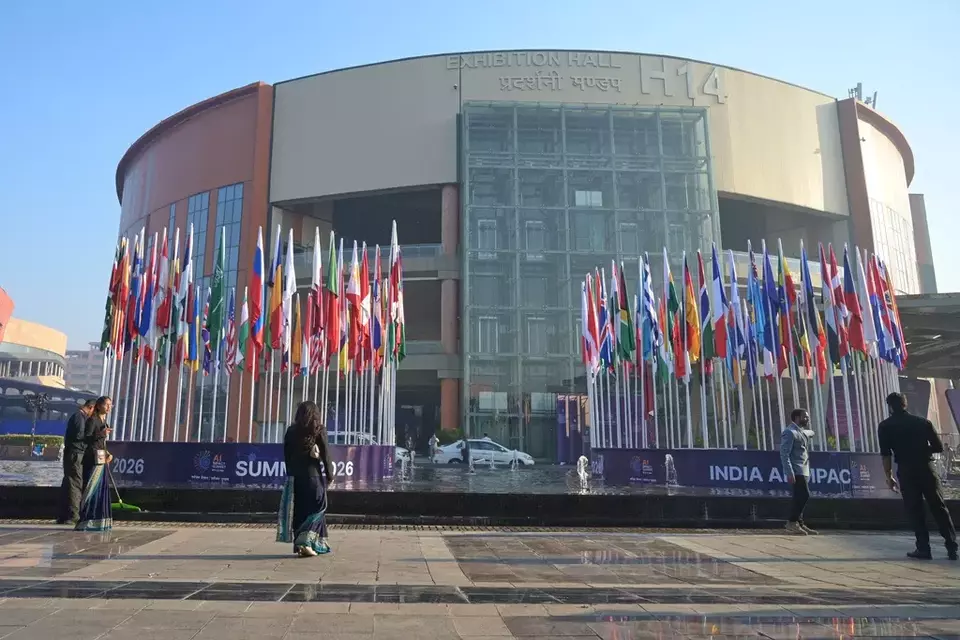
New Delhi. India is hosting an artificial intelligence summit this week, bringing together heads of state, senior officials and tech executives to New Delhi for a five-day gathering highlighting the growing global importance of the technology.
Organizers said the India AI Impact Summit is the first such summit being held in the Global South to discuss the technology developed and dominated by wealthy companies based in rich countries. It comes at a pivotal moment as AI rapidly transforms economies, reshapes labor markets and raises questions around regulations, security, and ethics.
From generative AI tools that can produce text and images to advanced systems used in defense, health care and climate modeling, AI has become a central focus for governments and corporations across the world.
The summit, previously held in France, the UK, and South Korea, has evolved far beyond its modest beginnings as a meeting tightly focused on the safety of cutting-edge AI systems into an all-purpose jamboree trade fair in which safety is just one aspect.
India Aspires to Be a Rising AI Power
India — the world’s most populous nation and one of the fastest-growing digital markets — sees the summit as an opportunity to project itself as a bridge between advanced economies and the Global South.
Officials said the country’s experience in building large-scale digital public infrastructure, including digital identity and payment platforms, offers a model for deploying AI at scale while keeping costs low.
“The goal is clear: AI should be used for shaping humanity, inclusive growth and a sustainable future,” India’s Minister for Electronics and Information Technology Ashwini Vaishnaw said.
The summit begins Monday and will be attended by 20 heads of state and government, including French President Emmanuel Macron and Brazilian President Luiz Inácio Lula da Silva. India’s Prime Minister Narendra Modi will address a session on Thursday.
Google’s Chief Executive Sundar Pichai, Qualcomm’s CEO Cristiano Amon, OpenAI’s CEO Sam Altman, Microsoft’s President Brad Smith, and AMI Labs Executive Chairman Yann LeCun are also expected to attend.
Indian executives are hoping the summit will reflect the country’s recognition as an enabler of national capabilities, economic resilience, and long-term capabilities.
“As India continues on the journey to become a developed nation by 2047, AI has a critical role to play in strengthening large-scale systems, from energy and manufacturing to public infrastructure,” said Sumant Sinha, the CEO of the NASDAQ-listed ReNew, a clean energy company.
Summit to Adopt New Delhi Declaration
Like previous editions, the India AI Impact Summit is not expected to result in a joint binding political agreement. It’s more likely that the event could end with a non-binding pledge or declaration on goals for AI development.
Last year’s edition, the Paris AI Action Summit, was dominated by US Vice President JD Vance’s speech in which he rebuked European efforts to curb AI’s risks by warning global leaders and tech industry executives against “excessive regulation” that could hobble the rapidly growing AI industry.
AI summits have evolved since the first meeting in November 2023, barely a year after the launch of ChatGPT, which stoked both excitement and fear about the capabilities of generative artificial intelligence.
That meeting at a former code-breaking base north of London was attended only by official delegations from 28 countries and the European Union, along with a small number of AI execs and researchers, and was focused on keeping AI safe and reining in its potentially catastrophic risks.
Ahead of the India meeting, a panel of experts released a second annual safety report on the risks posed by the most advanced AI systems, including through misuse, malfunctions and so-called systemic risks.
AI governance efforts are also underway elsewhere, including at the United Nations, which last year adopted a resolution to set up two key bodies on AI — a global forum and an independent scientific panel of experts.
“The whole point of this report is to build an international consensus on the state of the science regarding the emerging risks of AI,” said Yoshua Bengio, a prominent scientist known as one of the “Godfathers of AI” who led the study. “It’s really important that the world continues to have a strong independent scientific evaluation of the risks.”
Reskilling Key to Hedging AI Impact on Jobs
Like elsewhere, there have been concerns in India about AI’s adverse effect on jobs across technology and allied sectors, but experts point to reskilling to hedge risks.
“There is a lot of genuine concern around this theme, and I don’t want to underestimate this impact. But, from an Indian lens, emphasis is on re-skilling programs, and as AI becomes much more mainstream, you will also see newer job roles coming up,” said Sangeeta Gupta, senior vice president at Nasscom, a prominent body representing India’s technology industry.
For 22-year-old Anirudh Singh, pursuing a master’s in social work from Delhi University, AI makes it easier to prepare internship projects.
“I think AI is just reducing the tedious work that students generally had to do,” said Singh.
Tags: Keywords: as a preferred
Related Articles

Indonesia Businesses Urged to Move Beyond AI Pilot Projects
Salesforce warns Indonesian companies risk missing AI productivity gains by delaying deployment and failing to prepare workers.
AI Adoption Exposes Indonesian Firms to Data Leak Risks
AI adoption is surging in Indonesia, raising concerns over data leaks, weak safeguards and the risks of unauthorized AI use.
Indonesia Can Hit 8% Growth With Housing, AI, Green Energy: Hashim
Hashim Djojohadikusumo says housing, AI, digital infrastructure and green energy could help Indonesia achieve 8% economic growth.
Airlangga Urges Indonesia to Catch Up With Vietnam in Digital, AI Industries
Indonesia needs to accelerate digital, semiconductor and AI industries to catch up with Vietnam and achieve its 8% growth target.
AI Data Centers Could Consume 4% of Global Power by 2035, World Bank Says
AI data centers are set to triple global power demand by 2035, putting Southeast Asia’s electricity grids under pressure.
Jakarta Stocks Rise 1.21% as Indonesia Lags in AI Boom
Indonesia’s stocks gained 1.21% as the World Bank said the country is lagging Malaysia and Vietnam in benefiting from the AI boom.
Malaysia, Vietnam Ride AI Boom as Indonesia Misses Out: World Bank
Malaysia and Vietnam are benefiting from the global AI investment boom, while Indonesia has yet to gain from AI value chains.
Cooling the Data Center Debate
Indonesia needs data centers to power its digital economy, but water, energy and community impacts require transparent planning.
Companies Need Real-Time Data to Scale AI, CloudMile Says
Companies need real-time data infrastructure to scale AI adoption and turn investments into measurable business results, CloudMile says.
AI Firm Manus to Resume 'Independent' Operations after China Blocks Meta Deal
Meta agreed to acquire Manus, an artificial intelligence (AI) agent developed by the startup Butterfly Effect, in a $2 billion deal.The Latest

Prabowo Calls Meeting on Forest Fires as Haze Reaches Jakarta, Singapore
Prabowo summons senior officials to discuss forest fires as smoke reaches Jakarta and Malaysia pushes for regional action.
Jakarta Outranks Amsterdam in Global Public Transport Survey
Jakarta climbs two places to 15th in Time Out's 2026 public transport survey, with its governor citing better network integration.
MSCI Concerns, Tighter IDX Trading Rules Send Indonesian Stocks Down 5% by Midday
Indonesian stocks plunge 5% by midday as MSCI concerns weigh on sentiment and the IDX tightens its daily downside limit to 7%.
Jakarta Prepares 367 Health Facilities as Haze Reaches the Capital
Jakarta prepares 367 health facilities to treat potential haze-related illnesses after smoke from Sumatra and Kalimantan crosses the region.
Jakarta Expands Flood Prevention With New Water Storage Ponds
Jakarta opens two East Jakarta water storage ponds as it expands flood prevention efforts through reservoirs and river normalization.Most Popular
