



Navigating the Stormier Weather
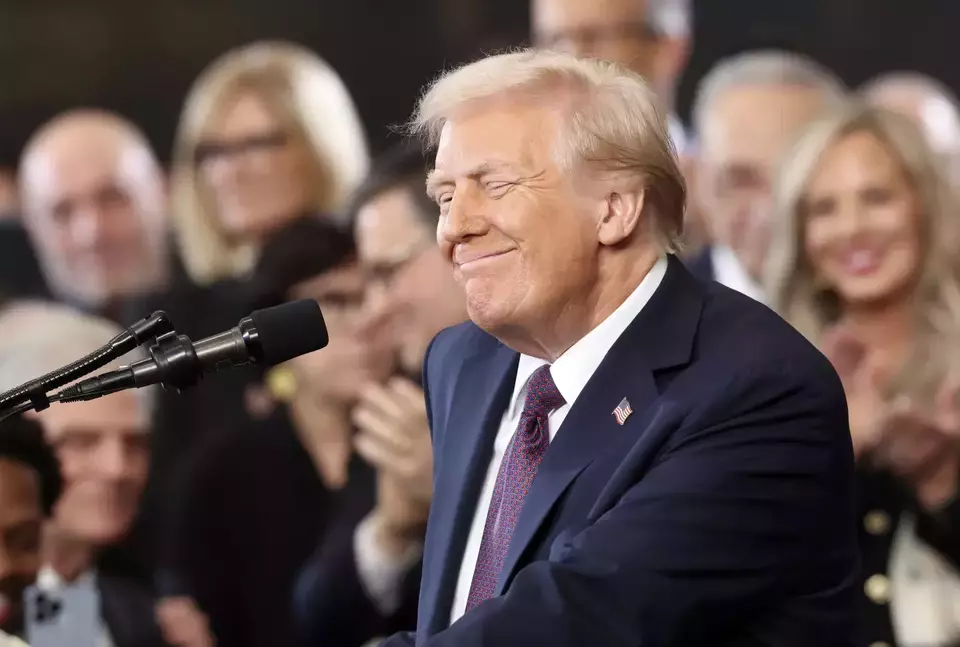
Jakarta. Now that Donald Trump has assumed his term as the 47th President of the US, countries around the globe begin to navigate through yet another five years of tumultuous economic weather. It was reported in domestic as well as foreign media that in anticipation of such a season, Indonesia approached not only the so-called traditional partners such as the US, China, and India but also such mini-lateral groups as BRICS and D-8.
President Prabowo’s visits to many countries and gatherings of groups of countries may be necessary to express Indonesia’s policy of friends to everyone with zero adversaries. However, Indonesia should avoid disrupting its value chains with the rest of the world as doing so could further decline its participation in global value chains (GVCs), which has already been decreasing over the past decade. Indonesia needs a strategic approach to maintain its value chains with the rest of the world amid rising protectionism, potential trade disruptions, and shifting global supply chains.
Maintaining strong international trade relationships will enhance access to markets, technology, and investment, while also leveraging Indonesia's significant resources and demographic advantages. Given its potential as an international trading powerhouse, any disruption could hinder Indonesia’s own economic growth and development.
Indonesia's participation in GVCs offers several significant benefits. Participation in GVCs boosts exports as Indonesian products reach international markets, and growth in industries involved in GVCs can lead to more employment opportunities. Collaboration with foreign firms often leads to knowledge and technology transfer, enhancing local capabilities and skills that are required for Indonesia to become a modern economy. Being part of GVCs can attract FDI as multinational companies seek to leverage Indonesia's resources and workforce. Further, connecting with international suppliers and customers opens up multiple markets, and reduces reliance on local demand, specific export markets, or sources of import. This will help mitigate risks associated with economic downturns in any single region.
GVC participation often encourages adherence to international best standards and sustainability practices which help certain sectors like manufacturing, agriculture, and services to grow more robustly through GVC integration. While being mindful of the unpredicted impacts of geo-political rivalries amongst major countries which are predicted to continue if not getting worse, the following are key strategies Indonesia may pursue rather than pondering around.
The first is diversifying trade partners and strengthening regional cooperation by leveraging the ASEAN Economic Community (AEC) and RCEP (Regional Comprehensive Economic Partnership) to deepen trade ties within the region. In parallel, Indonesia should continue strengthening economic relations with major markets like China, India, the EU, and the Middle East to reduce reliance on the US market while optimizing bilateral trade agreements with key economies that may benefit from US-China trade tensions, such as Japan, South Korea, and Australia. The second is enhancing Indonesia’s supply chain resilience. This can be done by encouraging supply chain localization by developing domestic industries that support key sectors (e.g., electronics, automotive, and pharmaceuticals). The government in Jakarta should promote nearshoring strategies where Indonesia becomes a hub for multinational companies looking to hedge against geopolitical uncertainties. This will require Indonesia to strengthen its logistics infrastructure to improve efficiency in moving goods within and beyond Indonesia.
The third is pursuing trade negotiations with the US. More challenging it might be now, Indonesia should keep engaging proactively with the US to maintain preferential trade treatment, particularly regarding GSP (Generalized System of Preferences) benefits and strategic industries such as semiconductors, textiles, and agriculture. However, if Trump reinstates his aggressive tariffs, Indonesia may explore sectoral exemptions through targeted negotiations with the US. The fourth is boosting national competitiveness and investment appeal. In this regard, Indonesia should continue the Omnibus Law reforms to attract more FDI (Foreign Direct Investment) into manufacturing, green energy, and high-value industries. In the same vein, Indonesia should strengthen ESG (Environmental, Social, and Governance) compliance to ensure Indonesian exports remain attractive to global investors and markets.
And lastly, adapting to a more protectionist US trade policy. Jakarta should monitor US-China relations and potential policy shifts that could affect Indonesian exports and FDI to the country. Indonesia needs to position itself as a neutral trade partner that can bridge supply chains between the US and China. Leveraging the CPTPP (Comprehensive and Progressive Agreement for Trans-Pacific Partnership) can serve as an alternative trade pathway if US trade policy becomes more restrictive.
While a second Trump presidency could create global trade disruptions, Indonesia can adapt and thrive by strengthening regional partnerships, enhancing supply chain resilience, negotiating strategically with the US, and boosting its domestic competitiveness. The key will be agility in trade policies and economic diplomacy to navigate the shifting global landscape. President Prabowo and his team need to capitalize on a pool of officials and specialists—active or retired—to learn from their lifetime experience to navigate through changing global economic landscapes in the past, rather than totally depending on newcomers with only brief experience—if any—to deal with different countries with so diverse characteristics.
---
Iman Pambagyo is a former director general of trade negotiations and an Indonesian ambassador in charge of the WTO.
The views expressed in this article are those of the author.
Tags: Keywords: as a preferred
Related Articles

Trump’s New Press Secretary Out After Less Than a Week
Katie Zacharia’s brief White House tenure ends after less than a week, following a short first briefing and reported tensions over her role.
Defying Trump, Zelensky Says Will Keep Hitting Russian Refineries
Russia on Thursday said Ukraine had attacked an oil refinery in Ryazan, south of the capital, Moscow.
IMF Upgrades Indonesia’s 2026 Growth Forecast to 5.1%
Indonesia has yet to beat Vietnam as the fastest-growing ASEAN economy.
ASEAN Digital Pact to Drive Cross-Border Payments
ASEAN is set to sign its digital economy pact, which Standard Chartered believes will change how the members do business with each other.
Fury as US Federal Agents Search Ilhan Omar's Home
"Make no mistake: this is an attempt to target political enemies and weaponize federal law enforcement," Omar wrote on X.
‘It’s Trump Who Sets Oil Price’: Prabowo’s Brother
Neither the Indonesian government nor OPEC sets the oil price, Hashim Djojohadikusumo says.
Navi Pillay, South African Rights Champion, Wins Nobel Peace Prize
"If you clap a little bit more, I may share this prize with Trump," the 85-year-old said.
Indonesia Races with ASEAN Neighbors for Investments
Indonesia and its ASEAN neighbors are pursuing aggressive reforms to attract foreign investors, according to Investment Minister Rosan.
Trump Vows to Hit Iran 'Very Hard' If Linked to Flydubai Attack
The US leader's threat of retaliation came as he took a harsher tone on the stalled Iran war overall.
ADB to Inject Another $3 Billion to ASEAN Tourism
Between 2015 and 2025, ADB has deployed over $3.7 billion to turn ASEAN into better tourist magnets.The Latest

Jakarta Outranks Amsterdam in Global Public Transport Survey
Jakarta climbs two places to 15th in Time Out's 2026 public transport survey, with its governor citing better network integration.
MSCI Concerns, Tighter IDX Trading Rules Send Indonesian Stocks Down 5% by Midday
Indonesian stocks plunge 5% by midday as MSCI concerns weigh on sentiment and the IDX tightens its daily downside limit to 7%.
Jakarta Prepares 367 Health Facilities as Haze Reaches the Capital
Jakarta prepares 367 health facilities to treat potential haze-related illnesses after smoke from Sumatra and Kalimantan crosses the region.
Jakarta Expands Flood Prevention With New Water Storage Ponds
Jakarta opens two East Jakarta water storage ponds as it expands flood prevention efforts through reservoirs and river normalization.
Press Council Highlights AI Ethics at United Tractors Journalist Workshop
United Tractors’ 2026 journalist workshop highlights ethical AI use and the importance of trust and credibility in journalism.Most Popular
