



Global Trade is Slowing —the World and Indonesia Need to Pay Attention
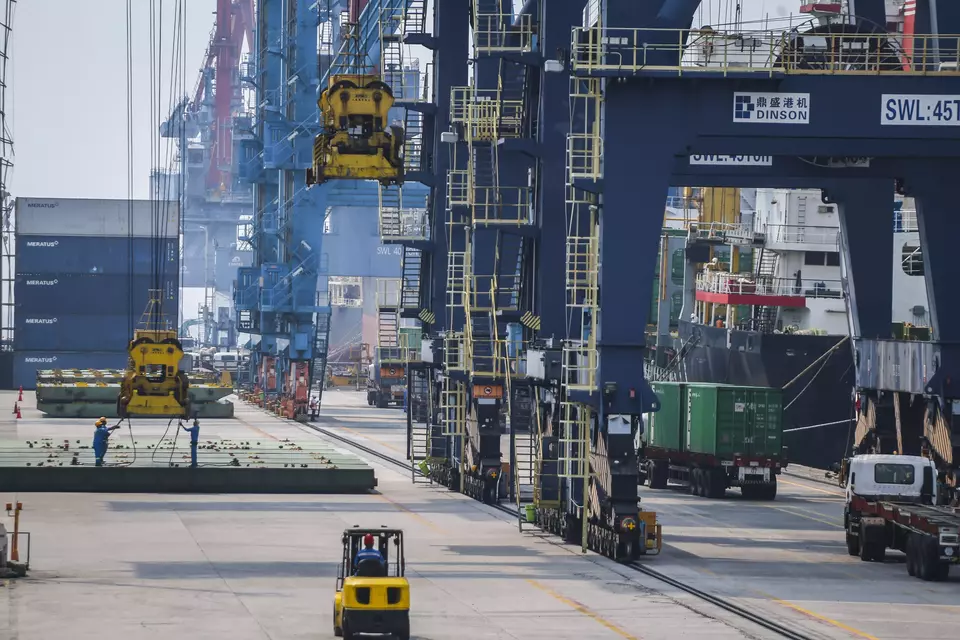
After years of pandemic shocks, war-driven disruptions, and economic recalibration, global trade is once again standing at a crossroads. But this time, the signals are louder: 2025 will not be business as usual. Leading international bodies — from the WTO to the IMF — are sounding the alarm. The World Trade Organization expects global merchandise trade to shrink by 0.2% in 2025. If current geopolitical frictions worsen, that drop could deepen to 1.5%. The IMF is only slightly more optimistic, projecting meager trade growth of 1.7%—a stark departure from the boom years that once defined globalization. The message is clear: global trade is in a slowdown, and policy choices today will shape whether we face a temporary stumble or a long-term unraveling.
We are witnessing a historic shift. The once-dominant ideology of open markets and multilateral trade is giving way to economic nationalism, strategic decoupling, and increasingly interventionist policies. The US, EU, and China are all turning inward — using tariffs, subsidies, and industrial policies to protect key sectors like green energy and semiconductors. “Friend-shoring” and “de-risking” are now the buzzwords of boardrooms and policy circles. In plain terms, this means countries are deliberately choosing to trade only with allies and reduce dependence on single suppliers. It's not just about economics — it’s about control, resilience, and political alignment.
But this shift comes at a cost. As rules-based trade gives way to fragmented, bilateral arrangements, businesses face mounting uncertainty. Supply chains become harder to navigate. And global growth, especially in developing economies that depend on trade, risks being choked off.
Despite the grim outlook, there are areas of resilience. Digital services continue to grow, albeit more slowly. Emerging economies in East and South Asia — notably India, Vietnam, and Malaysia — are stepping up as vital players in supply chain diversification. There’s also a sectoral shift underway. Demand for electric vehicles, green technologies, ICT goods, and pharmaceuticals remains strong. The green and digital transitions, if supported with the right policies, could offer a new foundation for trade growth. But we should be clear-eyed: these are pockets of promise in an otherwise turbulent landscape.
Trade isn’t just about exports and imports. It’s about jobs, innovation, investment, and stability. A global retreat from open markets, especially if driven by politics over pragmatism, will leave everyone worse off, particularly smaller economies that rely on predictable, rules-based systems. If the global community doesn’t act, we may face a world of fragmented blocs, competing standards, and strategic mistrust. The stakes are high, and so is the urgency. We need more than forecasts. We need leadership.
Governments must resist the temptation to weaponize trade. Businesses must double down on resilience and transparency. And multilateral institutions must reclaim their role as stabilizers — not spectators — in this new era of uncertainty. A modest rebound may come in 2026. But let’s not mistake that for a return to normal. The world is rewriting the rules of trade, and we must decide whether we shape that future or become victims of it.
For Indonesia, this fragmentation presents a double-edged sword. On one hand, Indonesia risks being caught in the middle of trade conflicts and supply chain rivalries. On the other hand, Indonesia can position itself as a reliable partner for countries seeking to “de-risk” from geopolitical hot zones. But this requires smart diplomacy, strategic investment, and a long-term trade vision that prioritizes competitiveness and innovation over protectionism. And of course, real action to make it happen.
Indonesia must also look to the future. Global demand is shifting. Electric vehicles, semiconductors, renewable energy technologies, and digital services are sectors where Indonesia has real potential to lead, especially with its reserves of critical minerals like nickel, essential for EV batteries. But Indonesia must move beyond just exporting raw materials. Now is the time to invest in downstream industries, build capacity in green manufacturing, and expand digital infrastructure. Trade policy should be aligned with these national priorities, not just as a reactive tool, but as a proactive strategy for long-term growth.
For Indonesia, trade is not a luxury. It is a necessity. Indonesia’s economic resilience depends on the ability to connect with the world, attract quality investment, and participate in global value chains. While the multilateral system may be under pressure, Indonesia must continue to advocate for open, fair, and rules-based trade, both through ASEAN and global platforms. Indonesia must also nurture its regional relationships. Intra-Asian trade remains one of the most dynamic engines of growth. Strengthening South-South cooperation and deepening ties with emerging economies can provide much-needed stability amid global volatility.
Indonesia cannot afford to be a spectator in this transformation. Indonesia must be bold, strategic, and unafraid to lead. The future of global trade is being rewritten, and with the right policies and mindset, Indonesia can help shape the new rules. Indonesia’s place in the world is not predetermined. It is defined by the choices Indonesia makes today.
---
Iman Pambagyo is the Trade Ministry’s Director General of International Trade Negotiations (2012-2014, 2016-2020) and Indonesia’s Ambassador to the WTO (2014-2015).
The views expressed in this article are those of the author.
Tags: Keywords: as a preferred
Related Articles

Indonesia, Thailand Seek Stronger ASEAN Front as Global Trade Fragments
As global trade fragments, Indonesia and Thailand are seeking closer economic coordination to strengthen ASEAN’s position.
Indonesia Banks On EU as Trump's 10% Tariff Kicks In
Indonesia wants to fast-track its European Union (EU) trade deal as Jakarta tries to find alternatives to the tariff-agressive US.
US Slaps 10% Tariff on Indonesia over Forced Labor
A new 10% tariff on Indonesia following a forced labor probe will take effect on Friday before noon.
From 32% to 10% to 18%: Indonesia Lives Under Trump's Tariff Uncertainties
Indonesia has been trying to navigate US trade uncertainties, but officials are confident that the tariffs won't derail exports.
US to Give Tariff Exemptions for Indonesian Spare Parts, Plantation Commodities
Indonesia has signaled US tariff exemptions for its exports of spare parts and plantation commodities,
Final US Tariff on Indonesia to Reach 18%
Indonesia also says its US-bound textile exports will get tariff reductions.
US Slaps 10% Forced Labor Tariff on Indonesia
The US has slapped an additional 10% tariff on Indonesia for letting imported goods linked with forced labor enter the country.
Global Trade Will Not Return to Normal: Time to Expand Indonesia’s Geoeconomic Strategy
Geopolitics now drives global costs, with energy risks embedding into prices and forcing Indonesia to rethink trade and supply chains.The Latest

Prabowo Calls Meeting on Forest Fires as Haze Reaches Jakarta, Singapore
Prabowo summons senior officials to discuss forest fires as smoke reaches Jakarta and Malaysia pushes for regional action.
Jakarta Outranks Amsterdam in Global Public Transport Survey
Jakarta climbs two places to 15th in Time Out's 2026 public transport survey, with its governor citing better network integration.
MSCI Concerns, Tighter IDX Trading Rules Send Indonesian Stocks Down 5% by Midday
Indonesian stocks plunge 5% by midday as MSCI concerns weigh on sentiment and the IDX tightens its daily downside limit to 7%.
Jakarta Prepares 367 Health Facilities as Haze Reaches the Capital
Jakarta prepares 367 health facilities to treat potential haze-related illnesses after smoke from Sumatra and Kalimantan crosses the region.
Jakarta Expands Flood Prevention With New Water Storage Ponds
Jakarta opens two East Jakarta water storage ponds as it expands flood prevention efforts through reservoirs and river normalization.Most Popular
