



A Journey Towards Indonesia’s Higher Economic Growth
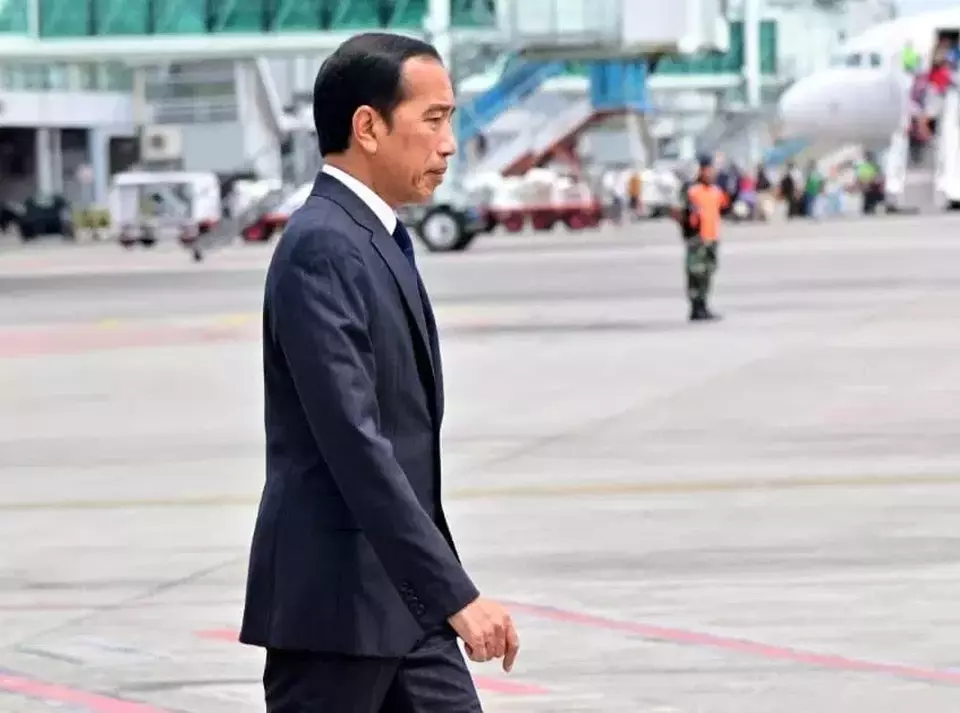
Jakarta. This month's commemoration of Indonesia's 78th independence is a timely moment to reflect on its journey to achieve the vision of "Indonesia Maju" by its centennial in 2045. Despite a rocky journey over the past decade, there have been remarkable milestones in some development aspects, which provide a solid runway for Indonesia's economy to take off.
Previously dubbed the "fragile five" due to a large current account deficit in 2013, Indonesia has become a strong emerging economy with exemplary macroeconomic management.
Marking a solid post-pandemic economic recovery, this year Indonesia has regained its status as an upper-middle-income country with a 2022 per capita income of $4,580.
A Decade of Progress: Infrastructure, Human Capital, and Business Climate
One of the notable milestones of President Joko "Jokowi" Widodo's administration has been its emphasis on physical infrastructure development to drive economic growth.
Massive infrastructure development projects, like roads, ports, airports, and public transportation networks, have been undertaken to enhance connectivity, improve logistics, and encourage more investment. Irrigation capacity has almost tripled since 2014, contributing to stronger national food security, while national power generation capacity has increased by more than 20 gigawatts in the last ten years.
This massive development has pushed Indonesia to place 51st in terms of infrastructure based on the IMD World Competitiveness Ranking 2023. Even though a considerable gap remains, Indonesia ranks better than other major developing economies, like India and Brazil.
Jokowi's economic strategy has also focused on human capital development.
During his term, many initiatives in education, health, and social security have been undertaken to improve human capital quality. Although there are still gaps to close, there has been far-reaching progress in many human capital indicators.
According to the National Statistics Agency (BPS), Indonesia's Human Development Index increased from 68.90 in 2014 to 72.91 in 2022, with an improved education participation rate and educational facilities.
The government’s Education Endowment Fund (LPDP) scholarship program has sent more than 35,000 Indonesian students to continue their studies at reputable domestic and overseas universities.
In the health sector, the number of public hospitals has increased by more than 30 percent since 2014, while the prevalence of stunting for the 2014–2022 period has decreased at a rate of 0.91 percent per year.
In the past decade, we have also witnessed the expansion of social assistance, notably the implementation of the National Social Security System (SJSN). As of July 2023, around 95.74 percent of the population is covered by public health insurance, with more than 90 million poor populations covered under government funding.
Continued efforts to create a more conducive business and investment climate have also been sped up through streamlining bureaucracy, simplifying business processes, and regulatory reforms.
Some notable progress in permit and licensing procedures has been made, particularly with the establishment of Online Single Submission (OSS) and the enactment of the Omnibus Law on Job Creation.
The establishment of a sovereign wealth fund called the Indonesian Investment Authority (INA) also aims to accelerate investment in Indonesia. Quite recently, the government has also enacted the Omnibus Law on Financial Sector Development in an attempt to strengthen and deepen financial markets in Indonesia, which has been lagging compared to other peer countries.
Addressing imminent challenges
Progress often comes with challenges and Indonesia is no exception. Despite the solid economic foundations that have been laid, Indonesia still needs to accelerate its economic growth in order to realize the "Indonesia Maju" vision by 2045.
Apart from consumption, government spending, and exports, investment is crucial in supporting faster economic growth and high-quality job creation. Unfortunately, Indonesia has been experiencing sluggish investment growth, especially after the commodity boom period of 2010–2012, which was then exacerbated by the scarring effects of the pandemic. Indonesia's Incremental Capital Output Ratio (ICOR) during the 2014–2019 period stands at 6.5, higher than the 4.3 ICOR seen in 1990–1996.
At this current juncture, Indonesia needs to optimize its domestic and international efforts. Domestically, Indonesia should continue to proactively pursue effective structural reforms to support its economic transformation.
Structural reform must address three main gaps: infrastructure, human capital, and institutions, to reduce the binding constraints of Indonesia's economic development. More importantly, Indonesia needs to act fast in implementing structural reforms, given that its demographic dividend will not last forever.
In the international arena, Indonesia needs to strengthen its "soft power" amidst an unfavorable global environment. Active participation in the global forums will be beneficial to align international agendas with national interests. Collaboration with wider and more diverse country partners will also enhance Indonesia's market size, which would contribute to improved domestic growth.
Last but not least is environmental sustainability, which has become another challenge that Indonesia must confront going forward.
The recent air pollution in Jakarta illustrates the growing imperative to strike a balance between economic growth and environmental preservation.
Although Indonesia has shown a great commitment to sustainable development in various international forums, it remains to be seen whether Indonesia could set an excellent example for other countries to follow.
---
Wahyu Septia Wijayanti is a policy analyst at the Center for Macroeconomic Policy, which is part of the Finance Ministry's Fiscal Policy Agency.
The views expressed in this article are those of the author.
Tags: Keywords: as a preferred
Related Articles

IMF Upgrades Indonesia’s 2026 Growth Forecast to 5.1%
Indonesia has yet to beat Vietnam as the fastest-growing ASEAN economy.
‘Only Time Will Tell’: Indonesia on World Bank’s 5.2% Forecast
Indonesia aims to grow 5.4% in 2026 and expand further by 6% the following year, topping the World Bank's 5.2% forecasts.
Indonesia Needs Better Investment, Not More, LPS Chairman Says
Indonesia needs to focus on investment productivity, not just volume, to push economic growth beyond 5%, LPS Chairman Anggito Abimanyu says.
Indonesia Already Preparing For Next Pandemic: Prabowo’s Brother
Hashim Djojohadikusumo says that "Indonesia is one of the countries that will survive the next Covid-19 pandemic".
Indonesian Stocks Flat as Investors Await September Inflation Data
Indonesian stocks were flat as investors awaited September inflation data amid concerns over rising oil prices and inflation.
Jokowi Confirms PSI Membership After Months of Speculation
Jokowi confirms he joined PSI in October 2025, ending months of speculation over his political ties to the party.
Investment Grows More Efficient but Creates Fewer Jobs, Economist Says
Indonesia recorded Rp 1.9312 quadrillion ($108.3 billion) in realized investment in 2025, exceeding the government's full-year target.
Economists Urge Prabowo to Set Realistic Targets in 2027 Budget Address
It has been a tradition for Indonesian presidents to lay out their future economic ambitions before the Independence Day on Aug. 17.
How Indonesian Traditions Can Drive Local Economy
The Indonesian government sees opportunities in driving the local economy by preserving local traditions.
Jokowi Launches Nationwide Political Tour Wearing Son’s PSI Party Uniform
Jokowi has begun his first nationwide political tour since leaving office, openly wearing the uniform of the party led by his youngest son.The Latest

Chandra Asri Group Receives Trade Finance Excellence Award, Reinforcing Its Role in Indonesia’s Industrial Development
Chandra Asri Group receives the Trade Finance Excellence Award at CIMB Niaga Business Summit 2026.
AEON MALL Deltamas Brings 11 Sports and Creative Competitions to AEONLYMPIC 2026
AEON MALL Deltamas hosts AEONLYMPIC 2026, featuring 11 sports and creative competitions, with more than 3,100 participants.
Indonesian Stocks Extend Losses for Third Day, Fall 3.64% to 4,996
Indonesian stocks fell 3.64% on Monday, extending losses for a third straight session amid MSCI concerns and tighter trading limits.
Prabowo Calls Meeting on Forest Fires as Haze Reaches Jakarta, Singapore
Prabowo summons senior officials to discuss forest fires as smoke reaches Jakarta and Malaysia pushes for regional action.
Jakarta Outranks Amsterdam in Global Public Transport Survey
Jakarta climbs two places to 15th in Time Out's 2026 public transport survey, with its governor citing better network integration.Most Popular
