



Textile Industry Crisis: Factory Closures and Nearly 14,000 Layoffs Due to Imported Goods
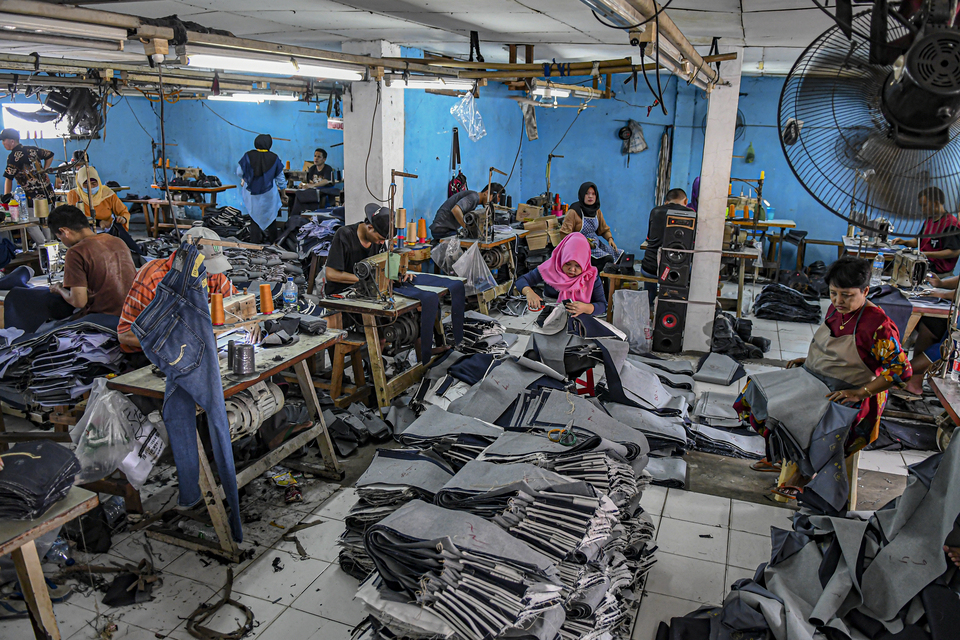
Jakarta. The relaxation of import regulations has led to the closure of several textile companies and significant layoffs in Indonesia. With nearly 14,000 job losses due to declining orders, many factories now face survival challenges.
According to Ristadi, President of the Confederation of Nusantara Workers' Union (KSPN), since the beginning of 2024, 13,800 people have been laid off in Indonesia's textile industry due to plummeting orders, with some companies even experiencing a complete halt. Currently, only textile industries oriented towards the export market are managing to survive.
"Textile factories continue to collapse. Most recently, on June 6, S Dupantex shut down, resulting in layoffs of over 700 workers. This is just at one factory where KSPN members work. Many layoffs involve dozens of workers, but some cases go unreported, and others are dismissed without notice," he said.
Ristadi revealed that companies like Sritex Solo subsidiaries, including Sinar Panca Djaja (Semarang), Bitratex (Semarang), and Johartex (Magelang), have also conducted layoffs.
He urged the government to intervene promptly to prevent further job losses. "Restrict textile imports unless the raw materials are unavailable in Indonesia. Crackdown on illegal imports as they damage the domestic market, causing local products to become increasingly unpopular," he emphasized.
Ristadi said that companies sometimes hesitate to report layoffs due to concerns over banking trust and buyer confidence. "However, if layoffs are not disclosed, mass layoffs may be dismissed as mere speculation. People might think there are no issues in the textile industry, that everything is fine, but little do they know, many workers have fallen victim to layoffs," he said.
The Chairman of the Indonesian Textile Association (API), Jemmy Kartiwa Sastraatmaja, reported that two textile factories have already shut down—one in Bandung and another in Pekalongan. "In Bandung, one factory decided not to reopen after the Eid holiday, effectively closing down. Similarly, a factory in Pekalongan ceased operations on June 6," Jemmy told Investor Daily on Wednesday.
Jemmy warned that if the government does not address this issue, another textile factory might close soon. "I foresee that by the end of August, another major industry could shut down," he said.
The wave of closures is primarily triggered by the Trade Minister Regulation (Permendag) No. 8 of 2024, which amends the previous Trade Minister Regulation No. 36 of 2023 concerning import policies and regulations. According to Jemmy, this regulation is detrimental to the textile sector.
Permendag 8/2024 relaxes import restrictions on ready-made garments, flooding the domestic market with imported clothes that were previously held at ports. This influx of imported goods has reduced the utilization of the local textile industry.
This situation has led to delays or cancellations of orders in small and medium industries or garment manufacturers. Additionally, many local products are unable to compete with cheaper imported goods.
Jemmy explained that order delays or cancellations increase costs for textile manufacturers, who are still struggling to recover from the pandemic. Consequently, many manufacturers are unable to sustain their operations and are forced to close.
Jemmy advocates for a return to the previous regulation, specifically for textiles and textile products. He argued that Permendag 8/2024 favors general importers by removing the technical consideration regulations that were under the Industry Ministry’s authority. These technical regulations were intended to control the flow of imported goods. Without them, imports are uncontrolled, devastating the domestic industry.
In May, the government revised the regulation on import policy in response to import delays. Additionally, the Finance Ministry has issued a new decree reinstating the List of Prohibited and Restricted Import Goods.
The revised regulation has led to the release of several commodity groups that have met the import licensing relaxation requirements, including iron and steel products, textiles, bags, and electronics. The Customs and Excise Directorate has released around 25,000 containers of imported goods that were previously detained.
Tags: Keywords: as a preferred
Related Articles

Indonesia Targets Integrated Textile Industry with Rp 100 Trillion Investment
The initiative is part of a broader strategy to consolidate existing manufacturers and strengthen their competitiveness.
Indonesia’s Textile Sector Employs 4 Million with Room for Further Expansion
Indonesia’s textile industry employs around 4 million people and generates $12 billion in annual exports.
Prabowo Meets BRIN Chief, Ministers to Boost Textile, Footwear Industries
Prabowo meets BRIN chief and ministers to discuss research-driven efforts to strengthen Indonesia’s textile and footwear industries.
Indonesia’s Textile Industry Runs Far Below Capacity Amid Import Pressure
Indonesia’s textile industry eyes export growth and Muslim fashion opportunities despite low utilization and import pressure.
Indonesia's Sportswear Market Projected to Hit $3.3 Billion by 2030
Indonesia's sportswear market is projected to reach Rp 58.6 trillion by 2030, creating new opportunities for local manufacturers.
Indonesia's Industrial Salt Imports Climb Despite Self-Sufficiency Push
Industrial salt imports rose 13.1% in early 2026, prompting calls to review quotas and protect Indonesia's 2027 self-sufficiency goal.The Latest

Chandra Asri Group Receives Trade Finance Excellence Award, Reinforcing Its Role in Indonesia’s Industrial Development
Chandra Asri Group receives the Trade Finance Excellence Award at CIMB Niaga Business Summit 2026.
AEON MALL Deltamas Brings 11 Sports and Creative Competitions to AEONLYMPIC 2026
AEON MALL Deltamas hosts AEONLYMPIC 2026, featuring 11 sports and creative competitions, with more than 3,100 participants.
Indonesian Stocks Extend Losses for Third Day, Fall 3.64% to 4,996
Indonesian stocks fell 3.64% on Monday, extending losses for a third straight session amid MSCI concerns and tighter trading limits.
Prabowo Calls Meeting on Forest Fires as Haze Reaches Jakarta, Singapore
Prabowo summons senior officials to discuss forest fires as smoke reaches Jakarta and Malaysia pushes for regional action.
Jakarta Outranks Amsterdam in Global Public Transport Survey
Jakarta climbs two places to 15th in Time Out's 2026 public transport survey, with its governor citing better network integration.Most Popular
