



Indonesia’s Disaster Resilience Is Key to Economic Competitiveness: Kadin Institute

Jakarta. Indonesia needs to strengthen its ability to keep businesses and critical economic networks running during disasters as the eruption of Mount Anak Krakatau and forest and land fires expose vulnerabilities in transport and logistics, the Kadin Indonesia Institute said.
The institute said disaster preparedness should no longer be viewed solely as a matter of public safety and environmental protection, but also as a key part of Indonesia’s economic competitiveness.
The Anak Krakatau eruption in recent days has disrupted nearly 3,000 flights and affected around 341,000 passengers. Several airports have since resumed operations, although volcanic activity continues to be monitored. Forest and land fires, meanwhile, remain ongoing in several regions.
Fakhrul Fulvian, director of insight at the Kadin Indonesia Institute, said disasters could quickly evolve from local incidents into disruptions across the national economic network.
“Disaster resilience is now an economic competitiveness issue. For businesses, the question is not only how quickly a disaster can be handled, but how quickly workers can return, goods can move again, and business activities can continue when part of the economic network is disrupted,” Fakhrul said in a statement Tuesday.
Indonesia, he said, needs to complement its disaster response capacity with a National Business Continuity Framework connecting the central and regional governments, infrastructure operators and businesses.
The framework should map critical economic nodes, including airports, ports, industrial estates, electricity networks, telecommunications, data centers and logistics routes, as well as alternatives when any of these nodes are disrupted.
“We need to move beyond disaster response toward economic continuity. When an airport is closed, for example, the next question is how passengers and cargo can be diverted. If a logistics route is disrupted, we should already know the alternative routes and available capacity,” he said.
Fakhrul also called for greater involvement from the private sector. Coordination between the government and companies holding land-use rights in handling forest and land fires, he said, could be expanded into broader private-sector preparedness protocols covering different types of disasters.
Mitigation as an Economic Buffer
The Kadin Indonesia Institute also urged the government to view disaster mitigation spending as an economic buffer, rather than simply a cost of disaster management.
Early warning systems, volcanic and weather monitoring, firefighting equipment, evacuation routes, emergency communications and alternative infrastructure all carry economic value because they can reduce potential losses, it said.
“We are very good at calculating the cost of capacity, but we also need to become better at calculating the cost of disruption. Capacity that appears idle on a normal day can become a very valuable economic buffer when a disaster occurs,” Fakhrul said.
Businesses, he added, should also incorporate resilience into investment decisions. Efficiency measures such as maintaining lean inventories or relying on a single supplier or transportation route can increase exposure when disruptions occur.
“Indonesia needs both. Infrastructure must be efficient on normal days, but the economic system must also have enough buffers to keep functioning on days when conditions are not normal,” he said.
Fakhrul said disaster resilience could ultimately become part of Indonesia’s investment appeal. Investors look beyond labor costs, taxes and infrastructure to factors such as electricity reliability, supply chains, worker protection and how quickly business activities can recover after a shock.
The Kadin Indonesia Institute urged the government and businesses to use the Anak Krakatau eruption and forest and land fires as an opportunity to develop a National Business Continuity Framework covering critical infrastructure, alternative capacity, response protocols, budget needs and economic recovery targets.
“The ultimate goal is simple. We cannot eliminate all disasters, but we can reduce how much a disaster disrupts the economy. That is the economic value of resilience,” Fakhrul said.
Tags: Keywords: as a preferred
Related Articles

Mount Semeru Erupts, Sending Ash 900 Meters Above Summit
Mount Semeru Erupts, Sending Ash 900 Meters Above Summit
Indonesia’s Disaster Resilience Is Key to Economic Competitiveness: Kadin Institute
Kadin urges Indonesia to strengthen economic resilience as Anak Krakatau and karhutla disrupt transport and threaten business continuity.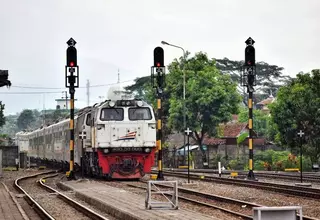
Indonesia’s State Railway Adds Extra Surabaya-Jakarta Train Amid Rising Demand
KAI adds an extra Surabaya-Jakarta train with 582 seats as passenger demand rises amid potential flight disruptions.
Economist Sees Another BI Rate Hike as Indonesia Seeks $11B in Capital
Trimegah Sekuritas expects BI to raise rates by another 25 bps, saying Indonesia still needs $11 billion in foreign capital this year.
Indonesia Must Turn S&P Confidence Into Reform Action, Economist Says
Trimegah says Indonesia must deliver promised reforms and clarify DSI plans after S&P reaffirmed its BBB rating.The Latest

Jakarta Outranks Amsterdam in Global Public Transport Survey
Jakarta climbs two places to 15th in Time Out's 2026 public transport survey, with its governor citing better network integration.
MSCI Concerns, Tighter IDX Trading Rules Send Indonesian Stocks Down 5% by Midday
Indonesian stocks plunge 5% by midday as MSCI concerns weigh on sentiment and the IDX tightens its daily downside limit to 7%.
Jakarta Prepares 367 Health Facilities as Haze Reaches the Capital
Jakarta prepares 367 health facilities to treat potential haze-related illnesses after smoke from Sumatra and Kalimantan crosses the region.
Jakarta Expands Flood Prevention With New Water Storage Ponds
Jakarta opens two East Jakarta water storage ponds as it expands flood prevention efforts through reservoirs and river normalization.
Press Council Highlights AI Ethics at United Tractors Journalist Workshop
United Tractors’ 2026 journalist workshop highlights ethical AI use and the importance of trust and credibility in journalism.Most Popular
