



Illegal Used Clothing Imports Squeeze Indonesia’s Textile Industry
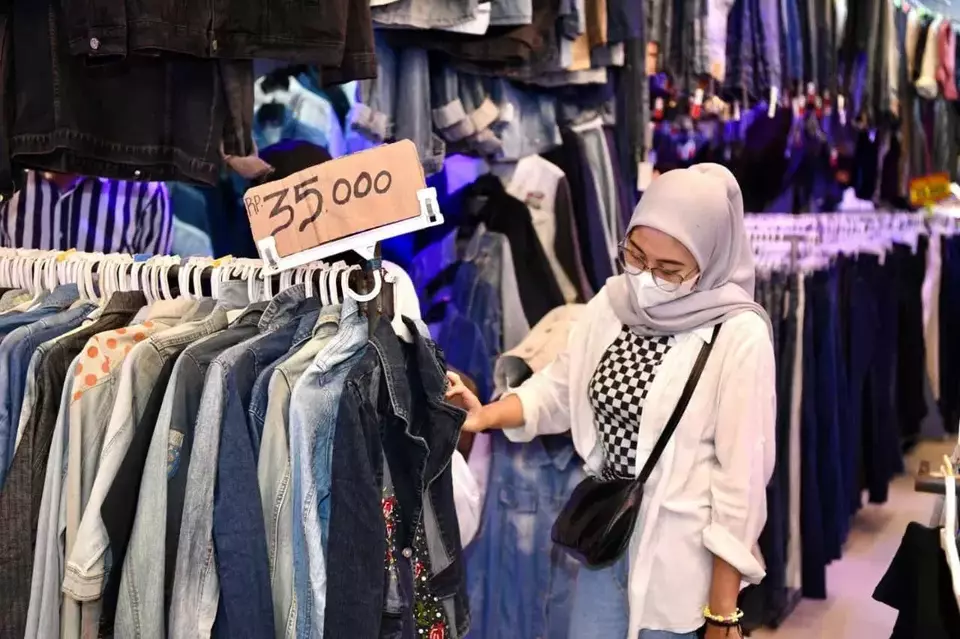
Jakarta. Imported secondhand clothing is squeezing the country’s textile and garment industry while depriving the state of tax revenue, a government official told lawmakers in a hearing on Wednesday.
Deputy Minister of Industry Faisol Reza said used clothing accounted for an average of nearly half of total apparel imports between 2020 and 2025, compared with officially imported new garments. Most of these secondhand items enter the country illegally, bypassing customs duties and taxes, he told lawmakers on Wednesday.
“Beyond the loss of state revenue, these products hit domestic industry directly because they are sold at prices far below locally made goods, which are subject to value-added tax and income tax,” Faisol said during a hearing with the House of Representatives’ Commission VI.
Indonesia has banned imports of used clothing under Trade Ministry Regulation No. 40/2022, reinforcing earlier prohibitions issued in 2015 and 2021. Despite the restrictions, smuggling remains widespread, authorities say.
Faisol said illegal imports are not subject to import duties, additional levies, value-added tax or income tax, giving them a significant price advantage over domestic products. As a result, locally manufactured apparel struggles to compete, even in the domestic market.
The pressure on the industry has already translated into job losses. Data from the Confederation of Indonesian Trade Unions (KSPN) show that more than 126,000 textile and garment workers have been laid off, while the Manpower Ministry recorded 88,519 layoffs in the sector between January and November 2025.
The textile and textile products (TPT) industry remains a key pillar of Indonesia’s manufacturing sector. Faisol said textile exports reached $10.97 billion (Rp 183.97 trillion) as of November 2025, accounting for about 5.33% of national exports. The industry employs roughly 4 million workers — nearly 20% of Indonesia’s manufacturing workforce — and supplies around 70% of domestic clothing demand.
Official data, however, suggest that used clothing continues to enter the country through informal channels. The Central Statistics Agency (BPS) recorded 3,865 tons of secondhand clothing imports in 2024, which the Directorate General of Customs and Excise attributed to passengers’ personal belongings.
Trade discrepancies point to a much larger inflow. Data from Trade Map show a significant gap between Indonesia’s import figures and export data from its trading partners. From Malaysia alone, shipments of used clothing to Indonesia in 2024 reached an estimated 24,000 tons, according to partner-country records.
Faisol said illegally imported secondhand clothing is sold at prices between 10.4 and 19.9 times cheaper than domestic products. The wide range of items, many of them branded, further undermines local manufacturers’ ability to compete.
Despite these pressures, the government sees strong potential in the domestic apparel market. BPS data show that Indonesians spend an average of about Rp35,000 ($2) per capita per month on clothing, footwear, and headwear.
With Indonesia’s population estimated at 281.6 million, total monthly spending on clothing-related items reaches around Rp10 trillion, equivalent to Rp119.8 trillion annually.
“These figures show the domestic market offers enormous potential that can continue to be optimized to strengthen national industry, particularly the textile and garment sector,” Faisol said.
Tags: Keywords: as a preferred
Related Articles

Indonesia Targets Integrated Textile Industry with Rp 100 Trillion Investment
The initiative is part of a broader strategy to consolidate existing manufacturers and strengthen their competitiveness.
Indonesia’s Textile Sector Employs 4 Million with Room for Further Expansion
Indonesia’s textile industry employs around 4 million people and generates $12 billion in annual exports.
Prabowo Meets BRIN Chief, Ministers to Boost Textile, Footwear Industries
Prabowo meets BRIN chief and ministers to discuss research-driven efforts to strengthen Indonesia’s textile and footwear industries.
Indonesia Seizes Illegal Rice, Salt and Used Clothing Worth Rp27.3 Billion
Indonesia seizes illegal rice, salt and used clothing worth Rp27.3 billion in four customs operations.
Indonesia’s Textile Industry Runs Far Below Capacity Amid Import Pressure
Indonesia’s textile industry eyes export growth and Muslim fashion opportunities despite low utilization and import pressure.
Indonesia's Sportswear Market Projected to Hit $3.3 Billion by 2030
Indonesia's sportswear market is projected to reach Rp 58.6 trillion by 2030, creating new opportunities for local manufacturers.
Indonesian Customs Seizes 43 Containers of Illegal Used Clothing Imports
The Jakarta case stemmed from intelligence reports regarding suspected shipments of used clothing aboard the cargo vessel KM Eden Mas.The Latest

Jakarta Outranks Amsterdam in Global Public Transport Survey
Jakarta climbs two places to 15th in Time Out's 2026 public transport survey, with its governor citing better network integration.
MSCI Concerns, Tighter IDX Trading Rules Send Indonesian Stocks Down 5% by Midday
Indonesian stocks plunge 5% by midday as MSCI concerns weigh on sentiment and the IDX tightens its daily downside limit to 7%.
Jakarta Prepares 367 Health Facilities as Haze Reaches the Capital
Jakarta prepares 367 health facilities to treat potential haze-related illnesses after smoke from Sumatra and Kalimantan crosses the region.
Jakarta Expands Flood Prevention With New Water Storage Ponds
Jakarta opens two East Jakarta water storage ponds as it expands flood prevention efforts through reservoirs and river normalization.
Press Council Highlights AI Ethics at United Tractors Journalist Workshop
United Tractors’ 2026 journalist workshop highlights ethical AI use and the importance of trust and credibility in journalism.Most Popular
