



TKDN Relaxation for Renewable Energy Projects: Legal and Trade Challenges
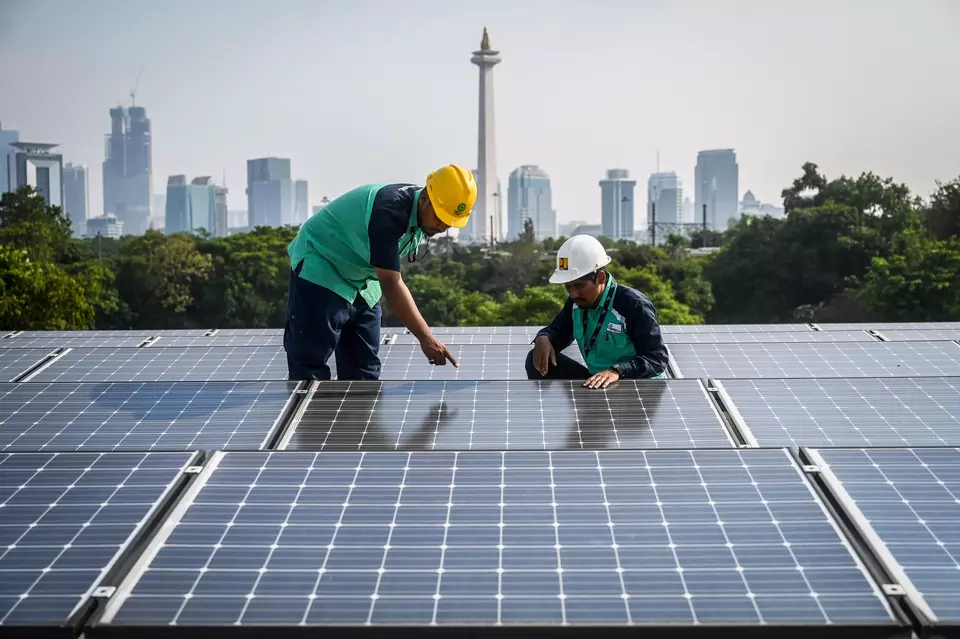
Indonesia’s transition to renewable energy stands at a pivotal moment. As the country works to meet its climate goals, the government recently took bold steps to adjust its long-standing local content requirements for renewable energy projects, particularly in the solar power sector. While these changes are designed to accelerate investment, they bring with them significant legal and trade implications that require careful attention.
Indonesia has a long history of relying on local content policies as part of its industrial strategy. In fact, the country’s first case in World Trade Organization (WTO) dispute settlement in 1996 revolved around its local content policy in the automotive industry. Following the 1998 Asian financial crisis, Indonesia scaled back its use of such policies due to economic reforms mandated by the International Monetary Fund. However, in 2009, the government revived these policies under the name Domestic Component Level (TKDN), which now applies to various strategic sectors, including renewable energy.
The transition to renewable energy is crucial for Indonesia to meet its climate targets and reduce reliance on fossil fuels. However, building a domestic renewable energy sector requires substantial investment, an area where strict local content requirements have often posed significant barriers. Local content requirements mandate the use of local goods, services, and labor in the production process. Countries like Indonesia have implemented local content requirements to support domestic industries, but these policies can also lead to economic inefficiencies and deter foreign investment.
Recognizing these challenges, Indonesia made a significant move in mid-2024 by relaxing its local content requirements for renewable energy projects through Minister of Energy and Mineral Resources (ESDM) Regulation No. 11/2024. The regulation, aimed at speeding up the development of electricity infrastructure, continues to prioritize the use of domestic products but allows for flexibility, in particular for solar power plant (PLTS) projects.
This regulation allows solar projects to use imported solar modules, provided they meet specific conditions, including approval by the minister for energy affairs, having signed power purchase agreements before the end of 2024, and beginning commercial operations by June 2026. Solar module production must comply with TKDN regulations by 31 December 2025.
In August 2024, ESDM issued Decree No. 191.K/EK.01/MEM.E/2024, lowering the minimum threshold for TKDN in electricity infrastructure projects than previously regulated in Minister of Industry (MOI) Regulation No. 54/2012. The new decree set the TKDN minimum threshold at 20 percent for solar plant, a significant drop from the 53.07 percent requirement stipulated in MOI Regulation No. 54/2012 for communal solar power plant. In July 2024, MOI formally revoked Regulation No. 54/2012 and its amendments by issuing MOI Regulation No. 33/2024. This revocation leaves the TKDN threshold for electricity infrastructure projects now governed solely by the ESDM Decree.
This policy shift presents two issues for the Indonesian government to consider. First, the legal implications of using a ministerial decree pose questions about its binding authority. Unlike ministerial regulations, which are publicly promulgated and have general binding authority, decrees are not. Their bindingness is either individually or within a limited scope. Under Law No. 12 of 2011, promulgation is required to ensure public awareness and general applicability. Without this process, a regulation’s binding effect is limited to governmental institutions. This raises the question of whether the TKDN threshold is only binding internally to ESDM and applies only to the projects under ESDM's direct oversight.
Secondly, the TKDN relaxation for solar power plants could lead to trade discrimination concerns under WTO rules, as it may favor solar modules from specific countries. This risks violating the non-discrimination principle, a key tenet of the WTO Agreement, which prohibits members from enacting policies that discriminate based on product origin. While the policy’s temporary nature may reduce the likelihood of a formal WTO challenge, the government must remain cautious about unintended trade consequences.
In conclusion, while the temporary TKDN relaxation and lower threshold for solar power plants may accelerate renewable energy development, it introduces potential legal and trade challenges that the government will need to navigate carefully. These issues, particularly the binding effect of ministerial decrees and concerns over trade discrimination, highlight the complexities involved in formulating effective renewable energy transition policies.
---
Michelle Limenta is an Associate Professor of Law at Universitas Pelita Harapan (UPH) and the Director of the UPH Center for International Trade and Investment (UPH CITI).
Jennifer Junardi Chua is a student at Universitas Pelita Harapan and a research assistant at UPH CITI.
Tags: Keywords: as a preferred
Related Articles

Indonesian-Made Batteries Could Help Imported EVs Meet 60% Content Rule
Indonesia plans to raise the minimum domestic-content requirement for electric vehicles to 60% in 2027, up from the current 40%.
New Renewable Energy Law Still Unfinished as House Extends Deliberations Again
The House has again extended deliberations on Indonesia’s New and Renewable Energy Bill, leaving the proposed rules still under discussion.
Let PLN Rent Out the Grid It Already Owns
Indonesia can unlock billions in solar investment by letting companies lease PLN’s grid to buy renewable power directly.
Prabowo Launches 100 GW Solar Power Program
President Prabowo launches Indonesia’s 100 GW solar program, with 14 initial projects worth Rp135 trillion and a 2029 completion target.
Indonesia Eases Local Content Certification for Small Industries
Indonesia makes local content certification free and simpler for small industries to boost access to government procurement.The Latest

UN Boss Wants to Fix Security Council as Indonesia Seeks Seat
Outgoing UN chief Guterres says the current permanent member setup at the Security Council fails to reflect today's realities.
Saudi Flagship Investment Conference Pushed to 2027 after Houthi Attacks
The annual Future Investment Initiative (FII), often dubbed "Davos in the Desert", was originally scheduled to take place from October 26-29
Government Sets Aside Rp 1.3 Quadrillion for Final-Quarter Spending
Government spending has reached Rp 2.66 quadrillion, equivalent to 69.2% of the full-year budget target of Rp 3.84 quadrillion.
Indonesia Probes 98 Corporate Wildfire Cases, Including Possible Foreign Links
Police investigate 98 corporate-related wildfire cases, including possible links to investors from neighboring countries.
Students Plan Jakarta Protests to Mark Two Years of Prabowo's Presidency
Police have advised the public to avoid areas around the House of Representatives complex, the National Monument and the State Palace.Most Popular
