



Second Semester 2025: a Test of Economic Resilience

After a turbulent first half of 2025, Indonesia enters the second semester with hopes of recovery. Yet, much like a boat navigating choppy waters during the eastern monsoon season, the national economy must still weather global uncertainties, weakening commodity prices, and unresolved domestic challenges.
The government remains optimistic, maintaining its full-year growth target of 5.2 percent, supported by expectations of increased public spending, fiscal stability, and stronger household consumption.
However, the reality on the ground demands a more careful and realistic reading -- especially so that businesses are not lulled into complacency by overly upbeat narratives.
Take government spending, for instance. As of June, only Rp 1,407.1 trillion -- 38.8 percent of the 2025 budget -- had been disbursed.
Meanwhile, household consumption grew at a slower pace in the first half compared to 2024, due to weakening purchasing power, a rising consumption-to-income ratio (indicating falling savings), and a modest increase in imported consumer goods. While consumer optimism remains, it is less robust than in the first half of 2024, marked by cautious sentiment and pressure on job markets.
The Economy Not Yet as Strong as Hoped
Bank Indonesia projects growth in the second semester to range between 4.6 percent and 5.4 percent. However, international institutions such as the World Bank, the IMF, and the OECD are more conservative, projecting growth rates of 4.7 percent to 4.8 percent.
These figures reflect a slowdown already evident from the start of the year. First-semester growth reached only 4.87 percent (yoy), far below what is needed to meet the annual target unless corrective action is taken soon.
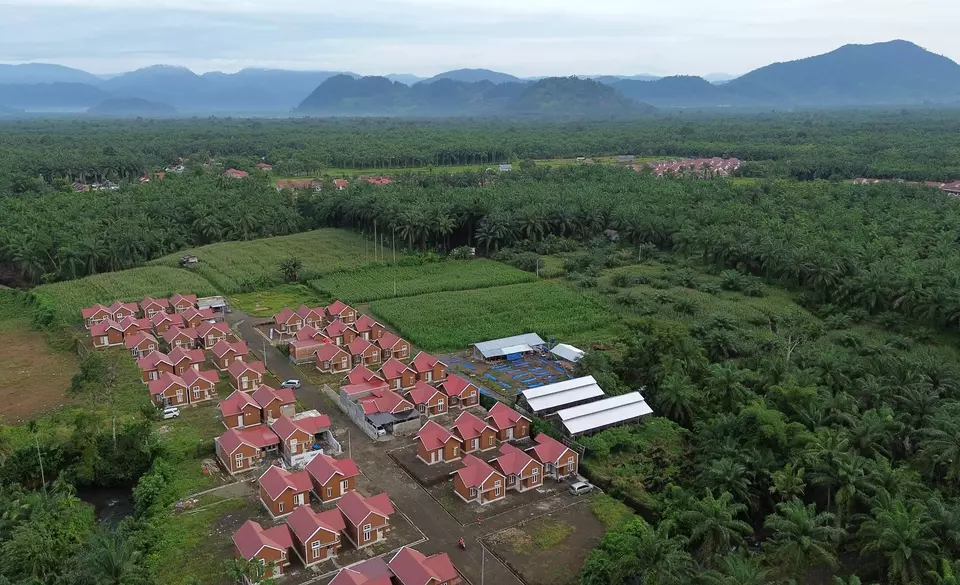
The sources of the slowdown are clear: sluggish household consumption, a still-recovering private investment climate, and declining export commodity prices. On the fiscal side, major government initiatives -- such as the Free Nutritious Meals program and affordable housing development -- have yet to deliver a significant short-term impact.
Key challenges come from abroad: escalating geopolitical tensions in the Middle East and East Asia, China's slowing economy, and a possible tariff policy shift in the United States.
Domestically, pressure arises from the VAT hike, a persistently weak rupiah, and the potential for food price spikes later this year. That said, there are opportunities to seize. Bank Indonesia's recent interest rate cut to 5.25 percent offers breathing room for businesses and banks to stimulate lending. Controlled inflation, forecast between 2.2 percent and 2.6 percent, helps sustain consumer purchasing power.
The expansion of social assistance and transport subsidies targeting lower-income groups also brings positive sentiment. The question is: are these measures sufficient to bring the economy back on a sustainable 5 percent + growth track?
Trade Diversification
One aspect that has not received much attention in various mid-year economic reviews is Indonesia’s trade outlook -- despite the fact that this sector has been a vital pillar since the pandemic.
As of June 2025, Indonesia’s trade balance recorded a surplus of $19.47 billion, an increase of $3.90 billion or approximately 25 percent compared to the surplus in the first half of 2024. However, several reports suggest that this increase was largely driven by “early buying” actions taken by importers in China and the United States, who sought to secure their inventories ahead of the widespread implementation of Trump’s high tariffs.
This mid-year surplus growth alone will not be sufficient to support overall economic growth unless new strategies are promptly adopted, especially since demand for products such as textiles, furniture, as well as palm oil and its derivatives, is expected to weaken in the coming months from key markets including China, the United States, Europe, and Japan.
Still, not all news is grim. Trade agreements that came into effect this year, such as the Indonesia-UAE Comprehensive Economic Partnership Agreement (IUAE-CEPA), have opened new doors in the Middle East. The ratification of the trade pillar under the Indo-Pacific Economic Framework (IPEF) also holds promise for deeper regional supply chain integration. A front-loading export strategy to the United States ahead of potential tariff hikes has helped sustain certain sectors such as footwear, garments, and electronics.
Going forward, Indonesia must adopt a more adaptive and proactive export strategy amid global trade fragmentation. This includes maximizing the benefits of existing bilateral agreements with partners such as Australia, South Korea, Japan, Chile, Mozambique, and the EFTA countries.
Many of these deals remain underutilized, especially by SMEs and labor-intensive manufacturing sectors. At the same time, regional trade architecture -- like ASEAN, the ASEAN+1 FTAs, and the Regional Comprehensive Economic Partnership (RCEP) -- should no longer be seen merely as diplomatic platforms but as concrete economic tools.
As ASEAN’s largest economy, Indonesia holds a strategic position to lead the effective utilization of these regional deals for market expansion, supply chain integration, and investment promotion. Under RCEP, for example, vast opportunities arise from market integration covering nearly a third of global GDP. However, better policy coordination is needed across trade, logistics, and export facilitation to ensure businesses can truly benefit.

Our trade diplomacy must shift from merely opening market access to enhancing utilization -- through technical cooperation, integrated trade promotion, and export support focused on priority sectors. Having FTAs is not enough. The real value lies in extracting tangible economic benefits from them.
A critical step expected from the Trade Ministry is to better synchronize and implement joint programs among the Directorate General of International Trade Negotiations (as the lead negotiator), the Directorate General of Foreign Trade (as facilitator of trade flows), and the Directorate General of National Export Development (as the marketing arm). Only then can Indonesia fully capitalize on the agreements it has signed.
2026: The Year of Political Economy
The second half of 2025 is a pivotal moment to strengthen economic resilience and, if needed, recalibrate our course. Not just to meet this year’s targets, but to lay the groundwork ahead of what is expected to be a politically charged 2026.
Indonesia’s economic and trade outlook for the second half of 2025 faces no shortage of external headwinds. Global uncertainty will persist, especially surrounding the direction of US policy after its election, volatile commodity prices, and the ongoing fragmentation of the multilateral trading system.
Against this backdrop, 2026 is likely to be a year of “political economy” both globally and domestically. In the US, midterm political calculations may once again trigger inward-looking, protectionist economic policies.

At home, early 2026 will mark the first full year of a new government -- one where campaign promises must begin translating into concrete, effective policies.
The draft 2026 state budget (RAPBN), which will be the first to be fully designed by President Prabowo’s administration, will be a key indicator of development priorities: will the government pursue supply-chain-based structural reform, strengthen downstream industries, and expand incentives for digital and green transformation? In many ways, 2026 could prove a turning point -- whether Indonesia adapts to a more fragmented and competitive global economy, or risks falling further behind.
There is still momentum to build on. The 34th APINDO National Work and Consultation Meeting (RAKERKONAS), held August 4-6, 2025, at eL Hotel Bandung, offers an excellent opportunity to keep the momentum going.
In partnership with the government, APINDO -- which represents labor-intensive manufacturing sectors -- needs to recalibrate not only revenue and investment projections, but also strategies for export expansion, supply chain digitalization, and cost efficiency. On the government’s part, excessive optimism must be avoided. Every fiscal and monetary policy tool must be targeted and impactful.
---
Iman Pambagyo is the Trade Ministry’s Director General of International Trade Negotiations (2012-2014, 2016-2020) and Indonesia’s Ambassador to the WTO (2014-2015).
The views expressed in this article are those of the author.
Tags: Keywords: as a preferred
Related Articles

DBS Cuts Indonesia’s 2026 Growth Forecast to 5.1% Amid Slowing Momentum
DBS lowered Indonesia’s 2026 growth forecast, warning that strong early momentum may weaken amid rising external pressures.The Latest

Jakarta Outranks Amsterdam in Global Public Transport Survey
Jakarta climbs two places to 15th in Time Out's 2026 public transport survey, with its governor citing better network integration.
MSCI Concerns, Tighter IDX Trading Rules Send Indonesian Stocks Down 5% by Midday
Indonesian stocks plunge 5% by midday as MSCI concerns weigh on sentiment and the IDX tightens its daily downside limit to 7%.
Jakarta Prepares 367 Health Facilities as Haze Reaches the Capital
Jakarta prepares 367 health facilities to treat potential haze-related illnesses after smoke from Sumatra and Kalimantan crosses the region.
Jakarta Expands Flood Prevention With New Water Storage Ponds
Jakarta opens two East Jakarta water storage ponds as it expands flood prevention efforts through reservoirs and river normalization.
Press Council Highlights AI Ethics at United Tractors Journalist Workshop
United Tractors’ 2026 journalist workshop highlights ethical AI use and the importance of trust and credibility in journalism.Most Popular
