



How Xi Can Win Trump’s Trade War
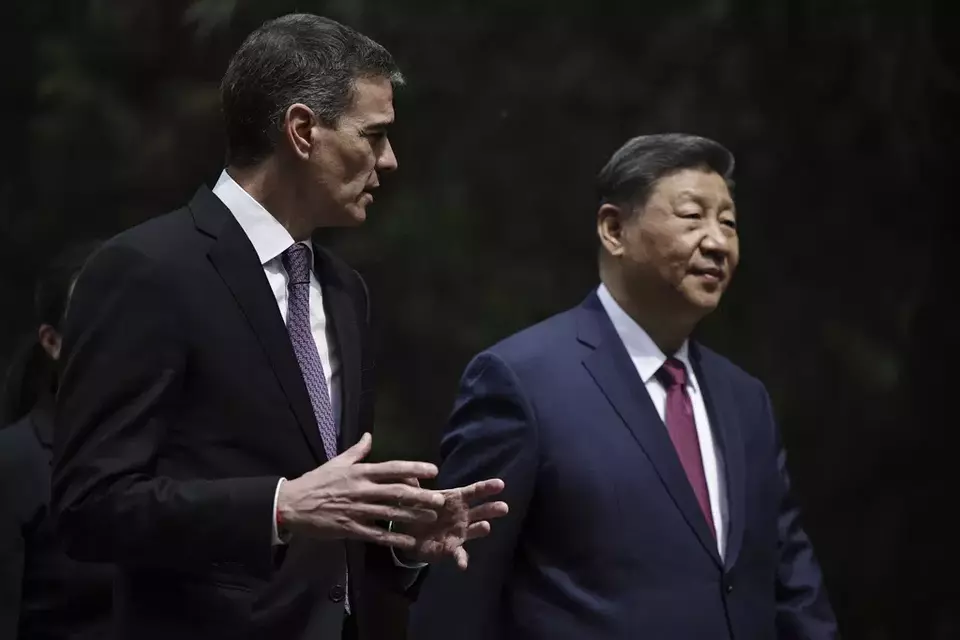
As the world observes the return of Donald Trump to the US presidency, his economic strategy against China --indeed, against much of the world -- has become as aggressive and unpredictable as ever. With sweeping tariffs now aimed at 185 countries, new investment restrictions, and escalating threats of financial decoupling, Trump is once again playing what may be his most US self-destructive game -- one with deep consequences for the global economy.
Yet, despite Washington’s bluster, Beijing may well hold the stronger hand. Over the past decade, President Xi Jinping has quietly and systematically prepared China to withstand economic coercion. If Trump chooses to continue -- or even escalate-- the current confrontation, can Beijing endure?
First, one of the most overlooked yet powerful tools at China’s disposal is its dominance over the global supply of rare earth elements. These 17 critical metals are indispensable in everything from electronic devices and electric vehicles to wind turbines, guided missiles, and military aircraft.
Today, China processes more than 90 percent of the world’s rare earth elements, giving it extraordinary influence over supply chains vital to the US tech and defense sectors. In 2023 alone, 78 percent of US rare earth imports originated from China (USGS, 2023).
One of Beijing’s recent retaliation measures to Trump’s 145 percent tariff on Chinese imports is imposing restrictions on these elements -- Dysprosium, Gadolinium, Lutetium, Samarium, Scandium, Terbium, and Yttrium. If Beijing continues these export curbs, it will take years for the United States to develop alternative refining capacity --even assuming sufficient reserves and friendly suppliers.
While Washington can turn to domestic sources and modest imports from Australia, scaling up would demand not just capital but time -- something American manufacturers lack. For China, the short-term cost would be modest; for the US, potentially devastating.
Second, China also holds significant financial leverage through its holdings of US Treasury securities. As of December 2024, Beijing owned approximately $759 billion in US government debt, making it the second-largest foreign creditor after Japan (US Treasury, 2025). Altogether, foreign countries hold more than $8.5 trillion in US debt.
If China were to divest even a portion of its holdings, US Treasury yields would surge, depressing bond prices, disrupting capital markets, and potentially undermining the dollar’s global role. Although China has been gradually reducing its holdings -- down from a peak of $1.3 trillion in 2013 -- the mere possibility of strategic divestment remains a potent threat. While such a move would not come lightly, in the context of an extended trade war, Beijing might be willing to rattle financial markets to signal its strength. With high deficits and slowing growth already plaguing the U.S. economy, this leverage remains significant.
Third, at the heart of China’s longer-term resilience lies its increasingly advanced and independent technological ecosystem. While both the Trump and Biden administrations have sought to decouple the US from Chinese tech, China has surged ahead in artificial intelligence, semiconductors, and green technologies.
Under the “New Generation Artificial Intelligence Development Plan,” China aims to become the global AI leader by 2030. Already, it graduates over 1.4 million engineers annually -- more than any other country (UNESCO, 2023). This deep talent pool fuels innovation across defense, manufacturing, and digital services.
Chinese firms like Huawei, BYD, and Baidu are no longer followers; they are global innovators. Huawei has built 5G networks in over 100 countries. BYD is the world’s largest EV maker by volume. Huawei’s 5G networks now span over 100 countries, and BYD is the world’s largest electric vehicle maker by volume. Meanwhile, homegrown digital platforms -- from TikTok to Alipay -- have established global reach. Despite US blacklists and export controls, China has developed domestic alternatives to most key Western technologies, reducing its dependency on Silicon Valley.
Fourth, none of this progress is accidental. Through the “dual circulation strategy,” China has prepared for decoupling by reducing reliance on exports and foreign capital while strengthening domestic demand and technological self-sufficiency. This strategy is already bearing fruit.
In 2023, over 60 percent of China’s GDP growth was driven by domestic consumption (World Bank, 2024). At the same time, China has pursued deeper economic integration with the rest of the world. The Regional Comprehensive Economic Partnership (RCEP), now the world’s largest trade bloc, exemplifies China’s pivot toward Asia.
Beijing has also strengthened Comprehensive Economic Partnership Agreements (CEPAs) with ASEAN, South Korea, and several Middle Eastern economies while negotiating new agreements in Africa and Latin America. These diversified trade and investment channels buffer China from US pressure.
Last, Xi has consolidated political and institutional authority to support these strategic shifts. Unlike Trump, whose second term is already marked by legal turmoil, party infighting, and policy volatility, Xi presides over a centralized and disciplined system that enables long-term planning. This brings risks of its own, but it also allows Beijing to pursue large-scale industrial policies, invest in frontier technologies, and maintain macroeconomic stability.
Xi’s anti-corruption campaign has tightened party control and enforced policy coherence across provinces and ministries. Domestically, the Communist Party retains strong legitimacy, bolstered by decades of poverty reduction and state-led modernization.
Trump, by contrast, faces mounting economic and political headwinds. His new tariffs have already begun to stoke inflation and deepen uncertainty. The evidence is piling up: rising prices for raw materials and intermediate goods, roiled financial markets, eroding business confidence, and a growing risk of recession.
The Federal Reserve has warned that tariffs could push inflation back toward 4 percent. At the same time, risk premiums on US assets are climbing, the dollar has slid to its lowest level in three years, and a broad sell-off has put Treasuries on track for their worst week since 2019.
American agricultural exports and automobile producers are once again bearing the brunt of retaliatory tariffs. Meanwhile, with the 2026 midterms on the horizon, Trump’s approval ratings are slipping among independents and suburban voters. If these economic pressures persist, Republicans risk losing control of Congress -- further constraining Trump’s capacity to govern.
In conclusion, as we look ahead, it is clear that the outcome of this economic standoff will be determined not by protectionist measures, but by forward-looking strategy, preparation, leverage, and resilience. Ultimately, the overall outcome will ultimately be measured by how much global damage is done along the way.
Prolonged trade and tech wars between the world’s two largest economies will fragment global supply chains, stoke inflation, depress investment, and weaken the global economy over time. No one wins -- not Xi, not Trump -- and certainly not the global economy. The longer this war continues, the more likely we all become its casualties. Unless the U.S. swiftly recalibrates its strategy, Trump’s unjustified economic war may well become a self-defeating exercise -- with America hit the hardest.
---
Lili Yan Ing is the Secretary General of the International Economic Association (IEA).
The views expressed in the article are those of the author.
Tags: Keywords: as a preferred
Related Articles

'AI Development Should Not Be a Solo Performance by Any Single Country,' Says Xi Jinping
Over the next five years, he said, China will provide 5,000 training opportunities on artificial intelligence to developing countries.
Chinese Court Hands Former Local Official Death Sentence in $325M Bribery Case
The graft case is one of the most dramatic corruption scandals in recent years in terms of the sheer scale of the bribes involved.
Does G7 Make Sense Without China?
China's exclusion looks odd, given its now immense sway over the world's economic well-being and affairs.
Xi Jinping to Visit North Korea Next Week
The announcement came a day after North Korea unveiled a new facility to produce the ingredients for nuclear bombs.
Hegseth Reassures Pacific Allies While Softening China Rhetoric
Hegseth reassured Indo-Pacific allies of U.S. commitment while adopting a more measured tone toward China.
China's Rise: What Indonesia Can Learn
China’s experience suggests that the debate between the state and the market is rarely black-and-white.
The Differences -- and Similarities -- In the Trump and Putin Visits to China
China and Russia reached more than 40 cooperation agreements covering areas including trade, technology and media exchanges.
Trump-Xi Meeting Opens in Beijing With Low Expectations on Trade, Security
Trump met Xi in Beijing as both sides opened talks, with little expectation of breakthroughs on Iran, Taiwan and trade.
JCI Falls 0.68% as US-Iran Tensions and Rupiah Weakness Trigger Sell-Off
JCI closed lower Tuesday as renewed US-Iran tensions and a weakening rupiah fueled risk aversion across Indonesian equities.
JCI Rebounds 0.6% Amid Oil Rally and MSCI Rebalancing Concerns
JCI rose 0.6% at the open as investors weighed Iran tensions, soaring oil prices, and looming MSCI rebalancing risks.The Latest

Chandra Asri Group Receives Trade Finance Excellence Award, Reinforcing Its Role in Indonesia’s Industrial Development
Chandra Asri Group receives the Trade Finance Excellence Award at CIMB Niaga Business Summit 2026.
AEON MALL Deltamas Brings 11 Sports and Creative Competitions to AEONLYMPIC 2026
AEON MALL Deltamas hosts AEONLYMPIC 2026, featuring 11 sports and creative competitions, with more than 3,100 participants.
Indonesian Stocks Extend Losses for Third Day, Fall 3.64% to 4,996
Indonesian stocks fell 3.64% on Monday, extending losses for a third straight session amid MSCI concerns and tighter trading limits.
Prabowo Calls Meeting on Forest Fires as Haze Reaches Jakarta, Singapore
Prabowo summons senior officials to discuss forest fires as smoke reaches Jakarta and Malaysia pushes for regional action.
Jakarta Outranks Amsterdam in Global Public Transport Survey
Jakarta climbs two places to 15th in Time Out's 2026 public transport survey, with its governor citing better network integration.Most Popular
