



Can ASEAN be an Epicentrum of Growth?
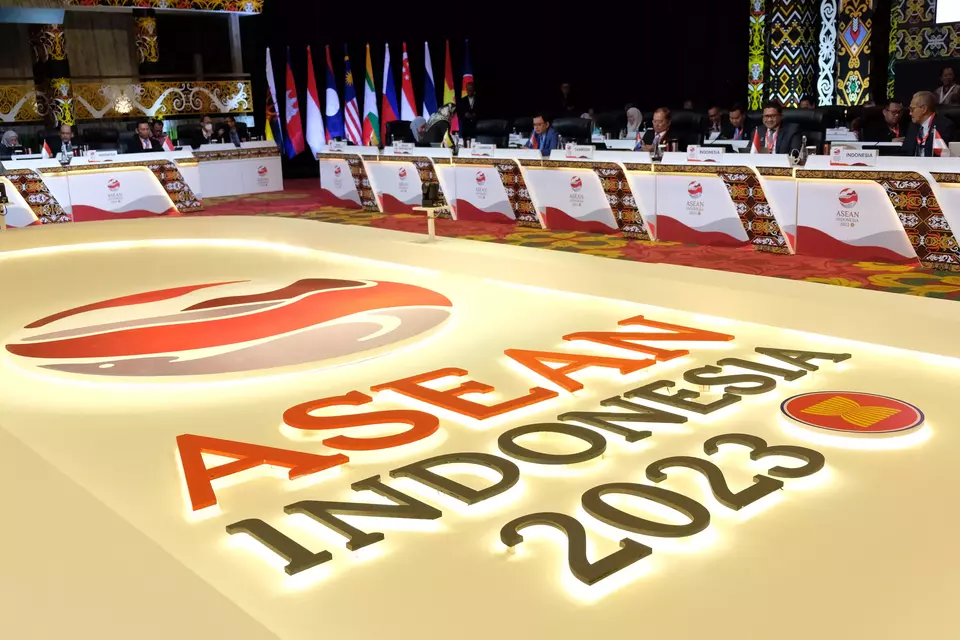
'ASEAN as an Epicentrum of Growth’ is the theme of Indonesia’s 2023 ASEAN Chairmanship. Is it a reliable and attainable vision? Whilst some may be optimistic about the vision’s potential, for us, it sounds more like jargon than a vision.
Let’s begin by examining some of the key economic indicators that the optimistic side might have considered, which render the Association of Southeast Asian Nations (ASEAN) a potential epicentrum of growth.
First, ASEAN has recorded impressive economic performance and demographic profile over the last two decades.
The region has recorded average economic growth of 5 percent, amongst the highest in the world from 2000-2022. As of 2022, ASEAN’s population stood at 672 million, about 9 percent of the world’s total population, and the region contributed 6.4 percent to global GDP.
Excluding data from Cambodia, ASEAN recorded labor productivity growth of 3.2 percent from 2000 to 2022.
Notably, based on a simple average for the year 2022, about 68 percent of the population in the six largest economies in the ASEAN region—Indonesia, Malaysia, the Philippines, Thailand, Singapore, and Viet Nam— are within the working age range of 15 to 64 years old.
Combined with a stable political situation, those factors place ASEAN as one of the most attractive trade and investment partners globally.
Second, ASEAN has posed promising trade and investment over the same period. As of 2022, ASEAN's total trade accounted for 7.7 percent of the world's total trade or 17.6 percent of East Asia's total trade.
In the same year, ASEAN's total foreign direct investment (FDI) accounted for 26.7 percent of total FDI in East Asia and 11.6 percent of total FDI in the rest of the world.
Third, lately, ASEAN has shown impressive development in the digital era. World’s digital trade is estimated to reach US$10 trillion by 2030, of which US$1 trillion or 10 percent will be contributed by ASEAN. In 2020, about 80 percent of internet users in ASEAN engaged in online shopping (Ing and Markus, 2023).
Beyond trade, digital innovation, including artificial intelligence (AI), has the potential to reshape and revolutionize various industries and sectors, ranging from healthcare and education to finance, energy, and transport, amongst others.
Despite possessing key growth driving factors to be an epicentrum of growth, ASEAN faces at least three key challenges.
The first challenge is the rising geopolitical tensions.
The ongoing US–China trade tensions, which have now extended to technology and security, are unlikely to ease regardless of which political administration holds power in the US.
The ongoing war in Ukraine since 2014 (and hopefully not in Taiwan any time soon) has complicated the global geopolitical landscape, which has placed ASEAN in the crosshairs of these tensions.
The region is frequently pressured to choose a side amidst growing strategic competition.
Second, ASEAN centrality is increasingly tested as there has been a growing number of developed countries-led economic frameworks and/or economic cooperation initiatives.
One of the recently launched initiatives is the US-led Indo-Pacific Economic Framework (IPEF), which has left ASEAN divided.
IPEF is open (and with political consideration) only to relatively developed and upper-middle-income ASEAN countries, thus excluding Cambodia, the Lao People’s Democratic Republic, and Myanmar. Keep in mind that IPEF is not a trade agreement, and it does not offer preferential market access.
Critics point out that IPEF is more symbolic for US domestic votes than an effective policy measure for its members.
Such divisions within ASEAN may lead to greater economic and political disparities and potentially create a divergence in regional policies that will bring less-favorable consequences economically and politically.
Last, ASEAN faces inconsistencies in its domestic policies. In addition to dealing with international complications, ASEAN's domestic policies are, to some extent, perceived as uncertain and inconsistent across provinces, institutions, and in relation to its international and regional commitments.
The inconsistencies are often reflected in policies that favor certain sectors through heavy support and subsidies as well as non-tariff barriers, local content requirements, and complicated and costly cross-border customs clearance.
Such policies may lead to uneven economic development within the region and potentially hinder ASEAN's ability to fully realize its potential as a unified economic bloc.
To ensure its success on the international front, ASEAN should prioritize maintaining its centrality and solidarity as a united entity instead of hastily joining numerous developed country–led trade agreements or economic frameworks.
It is crucial for ASEAN to carefully consider what matters for the region by emphasizing the effectiveness of the agreements and cooperation mechanisms in promoting ASEAN's development and improving the well-being of its people, rather than the number of free trade agreements, comprehensive economic partnership agreements, or trade frameworks of which ASEAN is (or a few ASEAN countries are) part of.
ASEAN must manage its openness in trade and investment and ensure its consistency with its bilateral, regional, and multilateral commitments.
It needs to emphasize that it is an active peace promoter and a rising middle power with a demographic dividend and promising growth supported by a stable macroeconomic environment and growing trade and investment.
This is the time for ASEAN to stand up for the best interests of its people and embrace policies that are most beneficial to them.
On the domestic front, ASEAN should step away from ‘vote buying’ or ‘populism policies’ such as fuel subsidies, subsidies to state-owned enterprises, or any form of subsidies only to particular industries. Instead, it should allocate the resources to investment in infrastructure, institution building, and education.
The latest policies may be unpopular with current political leaders as the current investment will be enjoyed only by future leaders.
But remember, only true leaders can leave a legacy. In the end, the key to development in the age of AI and digital technology is ‘human capital’.
If ASEAN fails to take the bitter pill of massive development of infrastructure, education, and digital connectivity, and prepare for the robot and AI era, ASEAN as an epicentrum of growth may just be wistful thinking, if not a myth.
---
Lili Yan Ing is Secretary General of the International Economic Association (IEA) and Lead Advisor for the Southeast Asia region of the Economic Research Institute for ASEAN and East Asia (ERIA).
Yessi Vadila is a Trade Specialist at ERIA.
The views expressed here are those of the authors.
 as a preferred
Related Articles

IMF Upgrades Indonesia’s 2026 Growth Forecast to 5.1%
Indonesia has yet to beat Vietnam as the fastest-growing ASEAN economy.
ASEAN Digital Pact to Drive Cross-Border Payments
ASEAN is set to sign its digital economy pact, which Standard Chartered believes will change how the members do business with each other.
Indonesia Races with ASEAN Neighbors for Investments
Indonesia and its ASEAN neighbors are pursuing aggressive reforms to attract foreign investors, according to Investment Minister Rosan.
ADB to Inject Another $3 Billion to ASEAN Tourism
Between 2015 and 2025, ADB has deployed over $3.7 billion to turn ASEAN into better tourist magnets.
‘ASEAN Members Don’t Always Agree, But We Stay Together’: Indonesia
Indonesia says ASEAN members “choose to keep talking, even when agreement is difficult”.
Indonesia Wants to Link QR Payment with Timor-Leste
In ASEAN, Indonesia's QRIS payment system is already available in Singapore, Thailand, and Malaysia.
Hong Kong Investors Gain Equal Treatment in New ASEAN Deal
ASEAN has promised not to treat Hong Kong investors differently under a freshly inked deal.
Indonesia Says Still No Protests from ASEAN Neighbors over Haze
Indonesia maintains "good relations" with its ASEAN neighbors on tackling the transboundary haze, according to the Foreign Ministry.
Vietnam’s $80 Billion EU Trade Shows Indonesia’s Untapped Potential: Ambassador
Indonesia-EU trade remains below its potential, with the bloc's ambassador pointing to Vietnam's $80 billion trade benchmark.
ASEAN Has a Haze Agreement But Regional Action Is Still Limited
ASEAN mechanism might be a realistic way to combat the region’s haze, although it comes with limitations, according to experts.The Latest

Prabowo Calls Meeting on Forest Fires as Haze Reaches Jakarta, Singapore
Prabowo summons senior officials to discuss forest fires as smoke reaches Jakarta and Malaysia pushes for regional action.
Jakarta Outranks Amsterdam in Global Public Transport Survey
Jakarta climbs two places to 15th in Time Out's 2026 public transport survey, with its governor citing better network integration.
MSCI Concerns, Tighter IDX Trading Rules Send Indonesian Stocks Down 5% by Midday
Indonesian stocks plunge 5% by midday as MSCI concerns weigh on sentiment and the IDX tightens its daily downside limit to 7%.
Jakarta Prepares 367 Health Facilities as Haze Reaches the Capital
Jakarta prepares 367 health facilities to treat potential haze-related illnesses after smoke from Sumatra and Kalimantan crosses the region.
Jakarta Expands Flood Prevention With New Water Storage Ponds
Jakarta opens two East Jakarta water storage ponds as it expands flood prevention efforts through reservoirs and river normalization.Most Popular
