



Bahrain’s Coal-Free Commitment and Why Indonesia Should Pay Attention
November 22, 2025 | 10:34 am
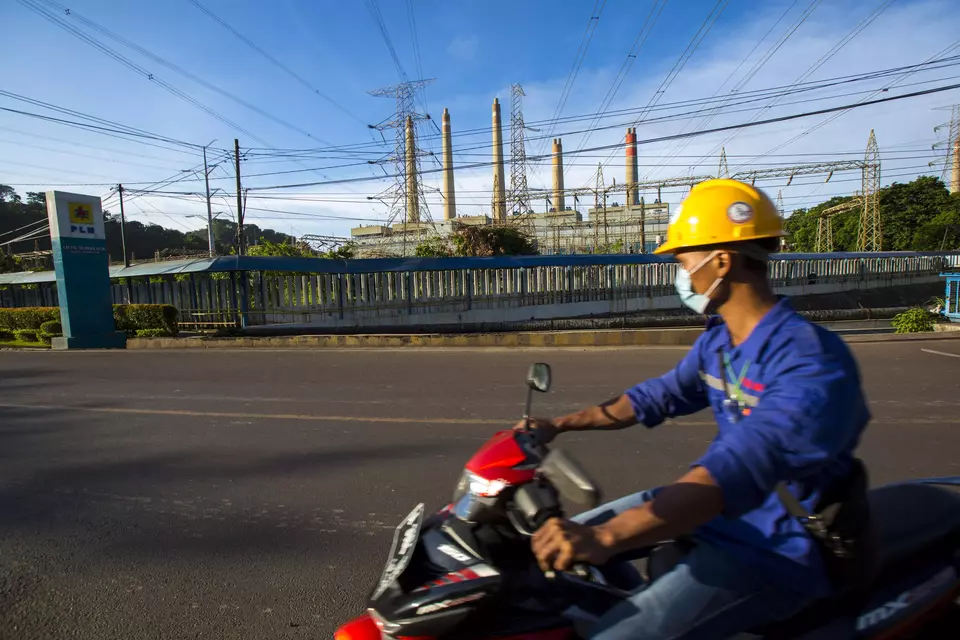
At COP30, amid the parade of climate pledges made by powerful emitters, one of the most quietly significant announcements came from Bahrain. The small Gulf nation, better known for its reliance on natural gas and LNG than for its climate diplomacy, joined the Powering Past Coal Alliance (PPCA) with a clear commitment: Bahrain will never build a coal-fired power plant. That pledge comes despite the fact that Bahrain, like other Gulf economies, could have turned to coal as a way to conserve domestic gas or diversify its power mix. It chose instead to make coal a permanent part of its past, without ever having used it.
For Indonesia, a country whose identity and economy are deeply intertwined with coal, Bahrain’s decision offers a powerful lesson. It shows that even fossil-fuel-producing states can draw a firm line against the dirtiest fuel, and that doing so can help shape international perceptions, financial flows and climate cooperation.
Indonesia has long sent mixed messages about its energy future. It has pledged to phase out coal eventually, but continues to approve new coal plants under the “captive” loophole and maintains a vast export-driven coal economy. Bahrain, by contrast, has opted for clarity. It is saying, simply and confidently, that its future will not include coal. In a global climate arena filled with ambiguous timelines and conditional promises, such clarity carries weight. Investors and rating agencies pay attention when a country writes coal out of its story. Indonesia, with its much larger energy footprint, would send a far stronger signal if it made a similarly definitive commitment.
Bahrain’s stance also has implications for its financial sector, and this is where Indonesia should be especially alert. Membership in the PPCA implies that Bahrain’s banks, sovereign wealth funds, and investment houses will align with a coal-free future, avoiding investments not only in domestic coal projects, which do not exist, but also in coal projects abroad. For Indonesia, whose coal expansion has been supported by foreign capital, including from Gulf countries, this shift could reshape investment patterns. Rather than viewing it as a threat, Indonesia should see a rare opportunity. Bahrain’s financiers, particularly those committed to Islamic finance frameworks and low-carbon portfolios, will increasingly seek climate-aligned investments. Indonesia’s renewable energy sector, from geothermal fields to solar parks, could become a magnet for that capital, but only if the government signals that it is decisively turning toward clean energy.
Diplomatically, Bahrain’s role could be even more consequential. Now inside the PPCA, Bahrain has committed not just to staying coal-free at home but to helping accelerate the coal-to-clean transition abroad. Indonesia has long hesitated to join the alliance, concerned about energy security, political resistance from the coal industry, and the economic disruption that would accompany an early phase-out. Coming from Western governments, pressure to join the PPCA can feel heavy-handed. But Bahrain, as a fellow Muslim-majority nation and a Global South energy producer, can communicate the benefits in different terms. Its voice carries credibility in regions where climate diplomacy is often viewed with suspicion. Bahrain could help Indonesia see PPCA membership not as a Western demand but as a strategic step toward unlocking investment, gaining international support, and accelerating the retirement of aging coal plants.
There is another area where Bahrain and Indonesia could collaborate with outsized impact: credit rating reform. One of the quiet barriers preventing countries from phasing out coal is the fear of how rating agencies will interpret the move. Many governments worry that shutting down coal plants or reducing coal exports will be seen as undermining fiscal stability, leading to higher borrowing costs. Bahrain has already highlighted this issue, arguing that climate responsibility should not be punished by the financial system. Because Bahrain is small, flexible, and well-connected in global finance, it is well-positioned to advocate for new rating methodologies that recognize the economic prudence of transitioning away from coal. Indonesia, facing far greater exposure to coal-related credit risk, would benefit immensely from standing alongside Bahrain in this effort. A joint push from two energy-producing nations—one heavily coal-reliant, the other gas-driven but coal-free—could make the case that the global financial system must evolve if the world expects developing countries to transition quickly.
In the end, Bahrain’s decision underscores a broader truth that Indonesia must confront sooner or later: even nations built on fossil fuels can choose a different path. Bahrain produces and consumes substantial amounts of gas and LNG, yet refuses to lean on coal as a crutch. It sees prosperity not in expanding fossil footprints, but in positioning itself for a clean-energy future. Indonesia has far greater renewable potential, from abundant geothermal reserves to vast solar opportunities across its islands. It has far more to gain, economically and diplomatically, from committing to a coal-free future than from clinging to an industry whose global decline is already accelerating.
Bahrain’s move is quiet, simple, and definitive. It is a reminder that climate leadership does not always come from the biggest players or the loudest voices. Sometimes it comes from those who make the clearest choices. And Indonesia, if it chooses to, can learn from Bahrain not just how to exit coal, but how to enter a future that promises greater prosperity, stability, and international respect.
----
The opinion article is authored by Bhima Yudhistira Adhinegara, Executive Director of CELIOS, and Muhammad Zulfikar Rakhmat, Director of China-Indonesia Desk, CELIOS.
The views expressed in this article are those of the authors.
 as a preferred
Related Articles

Bahlil: Coal Quotas Needed to Protect Indonesia’s Pricing Power
Bahlil says tighter coal quotas are needed to control supply, prevent oversupply and strengthen Indonesia’s influence over coal prices.
Thousands of Indonesian Coal Workers Face Layoffs as Mining Permits Stall
More than 15,000 coal mining jobs in East Kalimantan are at risk as delays in permit renewals force companies to halt operations.
JCI Crashes 3.5% as Prabowo’s Export Control Plan Sparks Market Selloff
JCI plunged 3.54% as investors reacted to Prabowo’s tighter control over strategic commodity exports and rupiah weakness.
World Bank Sees Coal Prices Rising 20%, Nickel 12%
World Bank projects higher coal and nickel prices, pointing to stronger Indonesia exports amid global energy and demand shifts.
Indonesia Could Forfeit Rp 67 T a Year Without Windfall Profit Tax, Indef Warns
Commodity boom lifts revenue, but Indef says Indonesia still loses massive gains without windfall tax reform.The Latest

Jakarta Outranks Amsterdam in Global Public Transport Survey
Jakarta climbs two places to 15th in Time Out's 2026 public transport survey, with its governor citing better network integration.
MSCI Concerns, Tighter IDX Trading Rules Send Indonesian Stocks Down 5% by Midday
Indonesian stocks plunge 5% by midday as MSCI concerns weigh on sentiment and the IDX tightens its daily downside limit to 7%.
Jakarta Prepares 367 Health Facilities as Haze Reaches the Capital
Jakarta prepares 367 health facilities to treat potential haze-related illnesses after smoke from Sumatra and Kalimantan crosses the region.
Jakarta Expands Flood Prevention With New Water Storage Ponds
Jakarta opens two East Jakarta water storage ponds as it expands flood prevention efforts through reservoirs and river normalization.
Press Council Highlights AI Ethics at United Tractors Journalist Workshop
United Tractors’ 2026 journalist workshop highlights ethical AI use and the importance of trust and credibility in journalism.Most Popular
