



Prabowo-Gibran Approval Holds Above 70% Despite Economic Concerns: Survey
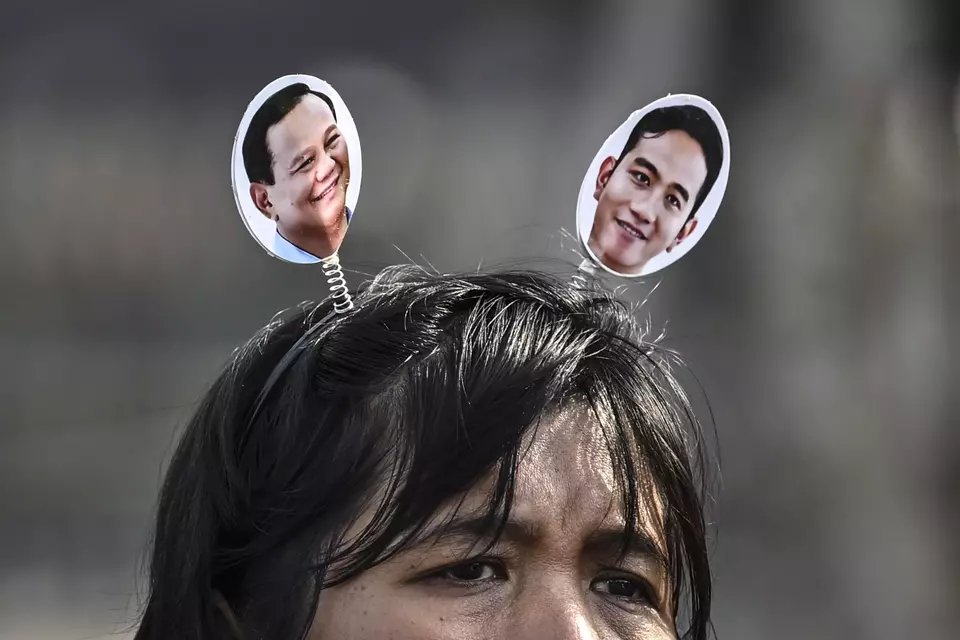
Jakarta. Public approval of President Prabowo Subianto's administration remains strong despite mounting concerns over the economy and rising living costs, according to a national survey released by pollster Poltracking Indonesia on Thursday.
"Public satisfaction with the Prabowo Subianto–Gibran Rakabuming Raka administration remains relatively high, as its approval rating is still above 70%," Poltracking Indonesia's lead researcher, Masduri Amrawi, said on Thursday.
The survey found that 72.2% of respondents were satisfied with the performance of the Prabowo-Gibran Rakabuming Raka administration, while 74.2% said they trusted the government.
The poll, conducted between May 11 and May 17, surveyed 1,220 respondents across all 38 provinces using face-to-face interviews. It has a margin of error of plus or minus 2.9 percentage points at a 95% confidence level.
According to Poltracking, the three main factors driving public satisfaction were well-targeted government assistance programs, cited by 14% of respondents, followed closely by the government's flagship Free Nutritious Meals (MBG) program at 13.8% and perceptions of Prabowo's firm leadership style at 10.6%.
The survey showed the highest satisfaction ratings in the healthcare sector, where 75.4% of respondents expressed approval. Defense and security followed at 74.5%, while education received a 72.5% approval rating. Satisfaction was lower for political stability and governance at 69.1% and for law enforcement and anti-corruption efforts at 64.5%.
"Economic management emerged as the administration's weakest area, with only 59.2% of respondents expressing satisfaction," Masduri said.
Support for the government remained relatively consistent across Indonesia's major regions, including Sumatra, Java, Kalimantan, Sulawesi, Bali-Nusa Tenggara, and eastern Indonesia, as well as across all major demographic groups, from Generation Z to Baby Boomers.
The survey also highlighted the popularity of the government's flagship social programs. The Free Nutritious Meals initiative was identified as the program delivering the greatest benefits, cited by 27.6% of respondents, followed by the Indonesia Health Card (11.1%), the Indonesia Smart Card education program (10.1%), free healthcare services (8.5%), and wage subsidy (8.3%).
Awareness of the Free Nutritious Meals program was exceptionally high, with 92.1% of respondents saying they knew about it. Among those familiar with the initiative, 55.6% said they were satisfied with its implementation, while 41.2% expressed dissatisfaction.
Despite the government's strong overall ratings, economic pressures continue to dominate public concerns. More than one-third of respondents, or 37.5%, identified rising food prices as the country's most pressing issue. Difficulty finding jobs ranked second at 9.2%, followed by the high cost of healthcare at 7.8%.
"The survey also found broad public support for tighter regulation of social media use among minors, with 77.4% backing restrictions on children under the age of 16," Masduri said.
Meanwhile, respondents said the recent increase in non-subsidized fuel prices had primarily affected household budgets through higher food prices, cited by 53.8% of those surveyed. Higher transportation costs and declining purchasing power were the next most commonly reported impacts.
Among state institutions, the Indonesian Military (TNI) recorded the highest approval rating at 78.9%, followed by the presidency at 70.7% and the Election Supervisory Agency (Bawaslu) at 70.1%.
The House of Representatives (DPR) ranked lowest, with an approval rating of 57.3%. Public satisfaction with the legislature's core functions — including government oversight, lawmaking, budget formulation, and representing public aspirations — remained below 60%.
Tags: Keywords: as a preferred
Related Articles

Prabowo Calls Meeting on Forest Fires as Haze Reaches Jakarta, Singapore
Prabowo summons senior officials to discuss forest fires as smoke reaches Jakarta and Malaysia pushes for regional action.
Books on Prabowo's Ideas Distributed Free at Jakarta Car-Free Day
Prabowo, who took office on Oct. 20, 2024, will mark the second anniversary of his presidency on Tuesday.
Two Years Into Prabowo Presidency, Infrastructure Takes Back Seat
Prabowo’s social spending push raises concerns over infrastructure delays and uneven growth beyond Java.
Prabowo, Egypt’s Sisi Talk Trade Pact for $5 Billion Commerce
Egypt's Sisi tells Prabowo that he wants to see annual trade to reach $5 billion by 2030 as Jakarta seeks tariff deals.
Egypt's Sisi Arrives in Indonesia for Talks With Prabowo
Egyptian President Abdel Fattah el-Sisi arrives in Indonesia for talks with Prabowo Subianto to strengthen strategic ties.
Prabowo to Launch Indonesia’s First Electric Vehicle Battery Export
Indonesia is set to export its first electric vehicle batteries as Prabowo launches a $10.2 billion industrial program.
Bahlil Signals More Ministries May Join New Downstream Coordination
Bahlil signals one or two more ministries could join the new downstream coordination, with the Industry Ministry among those considered.
Prabowo to Inaugurate Six New Military Commands on TNI Anniversary
Prabowo will inaugurate six new military commands and dozens of other units as Indonesia’s TNI marks its 81st anniversary.
Big Spending, Limited Revenue: Economists Question Prabowo’s Economic Strategy
Prabowo’s flagship programs face scrutiny as rising spending, weak job creation and deindustrialization threaten Indonesia’s growth.
Breaking: Prabowo Reportedly Set to Reshuffle Energy, Foreign Affairs Ministerial Posts
Prabowo reshuffles energy and foreign affairs portfolios as Bahlil and Sugiono are set for new roles in his seventh cabinet reshuffle.The Latest

Chandra Asri Group Receives Trade Finance Excellence Award, Reinforcing Its Role in Indonesia’s Industrial Development
Chandra Asri Group receives the Trade Finance Excellence Award at CIMB Niaga Business Summit 2026.
AEON MALL Deltamas Brings 11 Sports and Creative Competitions to AEONLYMPIC 2026
AEON MALL Deltamas hosts AEONLYMPIC 2026, featuring 11 sports and creative competitions, with more than 3,100 participants.
Indonesian Stocks Extend Losses for Third Day, Fall 3.64% to 4,996
Indonesian stocks fell 3.64% on Monday, extending losses for a third straight session amid MSCI concerns and tighter trading limits.
Prabowo Calls Meeting on Forest Fires as Haze Reaches Jakarta, Singapore
Prabowo summons senior officials to discuss forest fires as smoke reaches Jakarta and Malaysia pushes for regional action.
Jakarta Outranks Amsterdam in Global Public Transport Survey
Jakarta climbs two places to 15th in Time Out's 2026 public transport survey, with its governor citing better network integration.Most Popular
