



Landmark Climate Change Case to Open at Top UN Court as Island Nations Fear Rising Seas
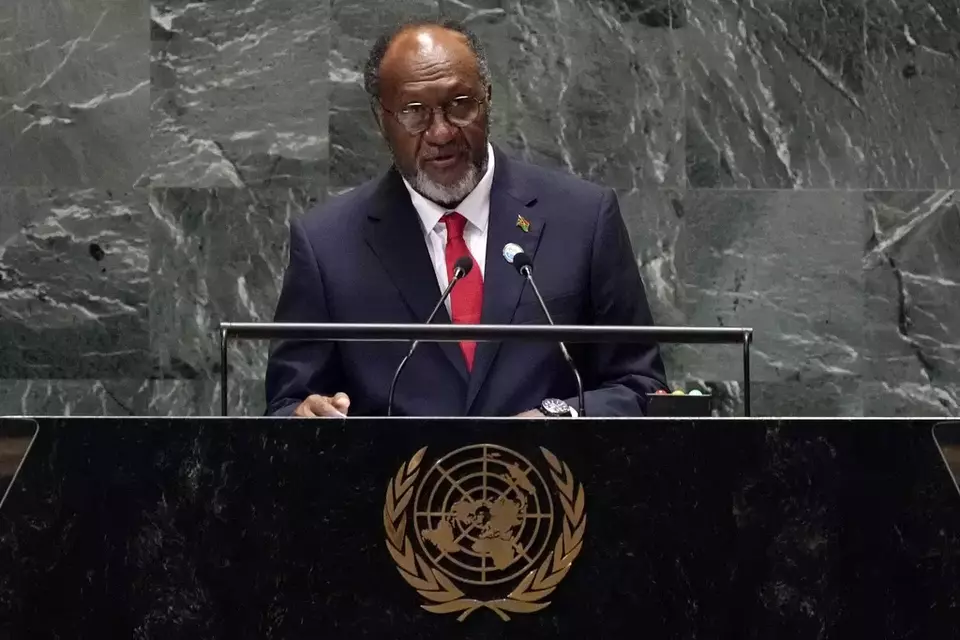
The Hague, Netherlands. The top United Nations court will take up the largest case in its history on Monday, when it opens two weeks of hearings into what countries worldwide are legally required to do to combat climate change and help vulnerable nations fight its devastating impact.
After years of lobbying by island nations who fear they could simply disappear under rising sea waters, the UN General Assembly asked the International Court of Justice last year for an opinion on “the obligations of States in respect of climate change.”
“We want the court to confirm that the conduct that has wrecked the climate is unlawful,” Margaretha Wewerinke-Singh, who is leading the legal team for the Pacific island nation of Vanuatu, told The Associated Press.
In the decade up to 2023, sea levels have risen by a global average of around 4.3 centimeters (1.7 inches), with parts of the Pacific rising higher still. The world has also warmed 1.3 degrees Celsius (2.3 Fahrenheit) since pre-industrial times because of the burning of fossil fuels.
Vanuatu is one of a group of small states pushing for international legal intervention in the climate crisis.
“We live on the front lines of climate change impact. We are witnesses to the destruction of our lands, our livelihoods, our culture and our human rights,” Vanuatu’s climate change envoy Ralph Regenvanu told reporters ahead of the hearing.
Any decision by the court would be non-binding advice and unable to directly force wealthy nations into action to help struggling countries. Yet it would be more than just a powerful symbol since it could serve as the basis for other legal actions, including domestic lawsuits.
On Sunday, ahead of the hearing, advocacy groups will bring together environmental organizations from around the world. Pacific Islands Students Fighting Climate Change — who first developed the idea of requesting an advisory opinion — together with World Youth for Climate Justice plan an afternoon of speeches, music and discussions.
From Monday, the Hague-based court will hear from 99 countries and more than a dozen intergovernmental organizations over two weeks. It’s the largest lineup in the institution’s nearly 80-year history.
Last month at the United Nations’ annual climate meeting, countries cobbled together an agreement on how rich countries can support poor countries in the face of climate disasters. Wealthy countries have agreed to pool together at least $300 billion a year by 2035 but the total is short of the $1.3 trillion that experts, and threatened nations, said is needed.
“For our generation and for the Pacific Islands, the climate crisis is an existential threat. It is a matter of survival, and the world’s biggest economies are not taking this crisis seriously. We need the ICJ to protect the rights of people at the front lines,” Vishal Prasad, of Pacific Islands Students Fighting Climate Change, told reporters in a briefing.
Fifteen judges from around the world will seek to answer two questions: What are countries obliged to do under international law to protect the climate and environment from human-caused greenhouse gas emissions? And what are the legal consequences for governments where their acts, or lack of action, have significantly harmed the climate and environment?
The second question makes particular reference to “small island developing States” likely to be hardest hit by climate change and to “members of “the present and future generations affected by the adverse effects of climate change.”
The judges were even briefed on the science behind rising global temperatures by the U.N.’s climate change body, the Intergovernmental Panel on Climate Change, ahead of the hearings.
The case at the ICJ follows a number of rulings around the world ordering governments to do more to reduce greenhouse gas emissions.
In May, a UN tribunal on maritime law said that carbon emissions qualify as marine pollution and countries must take steps to adapt to and mitigate their adverse effects.
That ruling came a month after Europe’s highest human rights court said that countries must better protect their people from the consequences of climate change, in a landmark judgment that could have implications across the continent.
The ICJ’s host country of The Netherlands made history when a court ruled in 2015 that protection from the potentially devastating effects of climate change is a human right and that the government has a duty to protect its citizens. The judgment was upheld in 2019 by the Dutch Supreme Court.
Tags: Keywords: as a preferred
Related Articles

Earth Headed for Record Heat Through 2030, UN Climate Agency Says
The World Meteorological Organization said there is an 86 % chance a new hottest year on record will occur before the end of the decade.The Latest

UN Boss Wants to Fix Security Council as Indonesia Seeks Seat
Outgoing UN chief Guterres says the current permanent member setup at the Security Council fails to reflect today's realities.
Saudi Flagship Investment Conference Pushed to 2027 after Houthi Attacks
The annual Future Investment Initiative (FII), often dubbed "Davos in the Desert", was originally scheduled to take place from October 26-29
Government Sets Aside Rp 1.3 Quadrillion for Final-Quarter Spending
Government spending has reached Rp 2.66 quadrillion, equivalent to 69.2% of the full-year budget target of Rp 3.84 quadrillion.
Indonesia Probes 98 Corporate Wildfire Cases, Including Possible Foreign Links
Police investigate 98 corporate-related wildfire cases, including possible links to investors from neighboring countries.
Students Plan Jakarta Protests to Mark Two Years of Prabowo's Presidency
Police have advised the public to avoid areas around the House of Representatives complex, the National Monument and the State Palace.Most Popular
