



Israel's Open Attack on Iran Targets Missile Sites and Spares Oil and Nuclear Ones
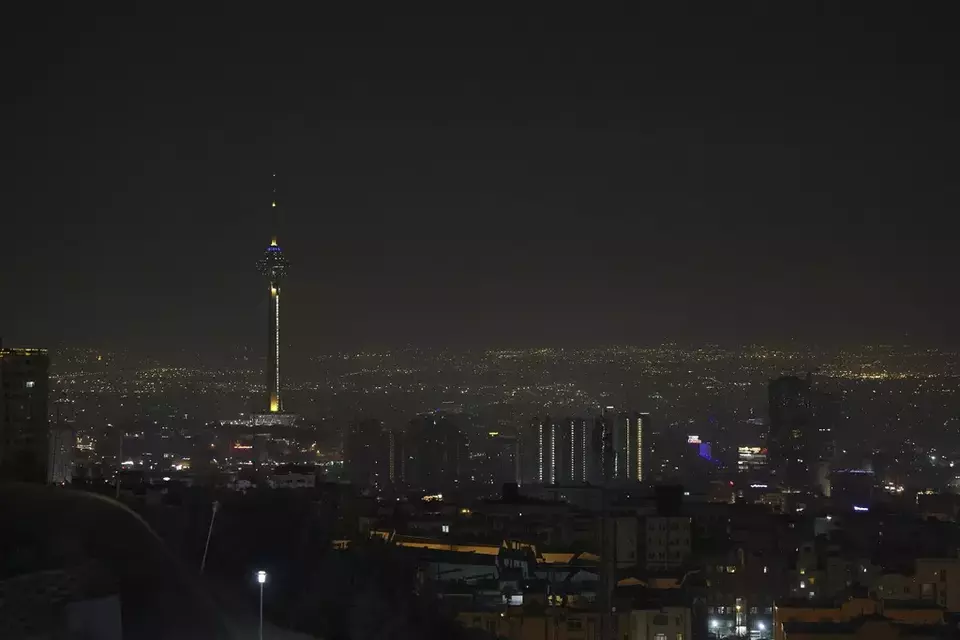
Tel Aviv. Israel attacked military targets in Iran with pre-dawn airstrikes Saturday in retaliation for the barrage of ballistic missiles the Islamic Republic fired on Israel earlier this month. The strikes marked the first time Israel’s military has openly attacked Iran.
Following the airstrikes, Iran’s Foreign Ministry said it had a right to self-defense, and “considers itself entitled and obligated to defend against foreign acts of aggression.” There was no official statement by the Revolutionary Guard’s commanders.
Israel's military said it targeted facilities that Iran used to make the missiles fired at Israel as well as surface-to-air missile sites. There was no immediate indication that oil or nuclear sites were hit, which would have marked a much more serious escalation.
Explosions could be heard in Tehran until sunrise. The Islamic Republic said the attacks caused “limited damage." Iran’s military said the strikes targeted military bases in Ilam, Khuzestan and Tehran provinces, without elaborating. Iran’s army said two soldiers were killed, Iran’s Al-Alam television reported.
The strikes risk pushing the archenemies closer to all-out war at a time of spiraling violence across the Middle East, where militant groups backed by Iran -- including Hamas in Gaza and Hezbollah in Lebanon -- are already at war with Israel.
US President Joe Biden told reporters Israel gave him a heads-up before the strikes and said it looked like “they didn’t hit anything but military targets.” He said he had just finished a call with intelligence officials.
“I hope this is the end,” he said.
Israel's First Open Attack on Iran
Iran hadn’t faced a sustained barrage of fire from a foreign enemy since its 1980s war with Iraq.
On Oct. 1, Iran launched at least 180 missiles into Israel in retaliation for devastating blows Israel landed against Hezbollah. They caused minimal damage and a few injuries. Prime Minister Benjamin Netanyahu said Iran “made a big mistake.”
Israel is also widely thought to be behind a limited airstrike in April near a major air base in Iran that hit the radar system for a Russian-made air defense battery. Iran had fired a wave of missiles and drones at Israel in April, causing minimal damage, after two Iranian generals were killed in an apparent Israeli airstrike on an Iranian diplomatic post in Syria.
“Iran attacked Israel twice, including in locations that endangered civilians, and has paid the price for it,” Israeli military spokesperson Rear Adm. Daniel Hagari said. He added: “If the regime in Iran were to make the mistake of beginning a new round of escalation, we will be obligated to respond.”
Images released by Israel’s military showed members preparing to depart for the strikes in American-made F-15 and F-16 warplanes.
Israel’s attack did not take out highly visible or symbolic facilities that could prompt a significant response from Iran, said Yoel Guzansky, a researcher at Tel Aviv’s Institute for National Security Studies who formerly worked for Israel’s National Security Council.
It also gives Israel room for escalation if needed, and targeting air defense systems weakens Iran’s capabilities to defend against future attacks, he said, adding that if there is Iranian retaliation, it should be limited.
Israel has again shown its military precision and capabilities are superior to Iran's, said Sanam Vakil, the director of the Middle East and North Africa program at the London-based think tank Chatham House.
“By targeting military sites and missile facilities over nuclear and energy infrastructure, Israel is also messaging that it seeks no further escalation for now," Vakil said. "This is a sign that the diplomacy and back-channel efforts to moderate the strike were successful.”
Biden’s administration won assurances from Israel in mid-October that it would not hit nuclear facilities and oil installations.
After the strikes, the streets in Iran's capital were calm and children went to school and shops opened. There were long lines at the gas stations -- a regular occurrence in Tehran when military violence flares as people stock up on fuel.
Tags: Keywords: as a preferred
Related Articles

Indonesian Delegates Walk Out of Netanyahu UN Speech
Israeli Prime Minister Benjamin Netanyahu slam those who walk out of the UN hall as "moral cowards".
Netanyahu Says No Diplomatic Deal Possible with Iran 'Savages'
The war has become even more personal for Netanyahu as he revealed Monday that Iran tried to kill one of his sons.
Trump Envoy Says Hamas Disarmament Could Begin within 30 Days
Kushner, Trump's son-in-law, met Netanyahu in Jerusalem a day after holding rare direct talks in Egypt with Hamas.
US, Iran Reach Interim Deal Aimed at Ending War
The US and Iran reach an interim deal aimed at ending the war and reopening the Strait of Hormuz.
A War Neither Side Can Control: The Political Costs for Trump and Netanyahu
The US retains military superiority over Iran, but the political trajectory of the war is increasingly slipping beyond its control.The Latest

Chandra Asri Group Receives Trade Finance Excellence Award, Reinforcing Its Role in Indonesia’s Industrial Development
Chandra Asri Group receives the Trade Finance Excellence Award at CIMB Niaga Business Summit 2026.
AEON MALL Deltamas Brings 11 Sports and Creative Competitions to AEONLYMPIC 2026
AEON MALL Deltamas hosts AEONLYMPIC 2026, featuring 11 sports and creative competitions, with more than 3,100 participants.
Indonesian Stocks Extend Losses for Third Day, Fall 3.64% to 4,996
Indonesian stocks fell 3.64% on Monday, extending losses for a third straight session amid MSCI concerns and tighter trading limits.
Prabowo Calls Meeting on Forest Fires as Haze Reaches Jakarta, Singapore
Prabowo summons senior officials to discuss forest fires as smoke reaches Jakarta and Malaysia pushes for regional action.
Jakarta Outranks Amsterdam in Global Public Transport Survey
Jakarta climbs two places to 15th in Time Out's 2026 public transport survey, with its governor citing better network integration.Most Popular
