



A War Neither Side Can Control: The Political Costs for Trump and Netanyahu
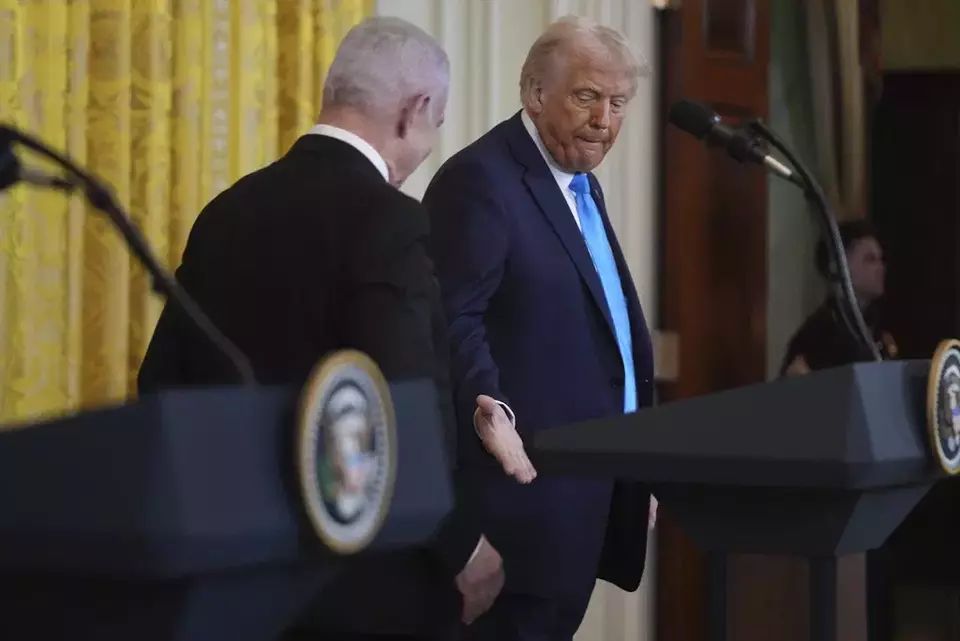
Three months into the conflict, the United States and Israel retain military superiority over Iran, but the political trajectory of the war is increasingly slipping beyond their control.
War often reveals the difference between power and control. Three months into the conflict with Iran, the United States and Israel still possess overwhelming military superiority. Yet neither Washington nor Tel Aviv appears to control the political trajectory of the war.
Iran and Israel have once again exchanged direct blows. Israel recently struck Hezbollah targets on the outskirts of Beirut in southern Lebanon, prompting Iran to respond with ballistic missile attacks on northern Israel. Israel then retaliated with strikes on military targets in Tehran, Tabriz, and Isfahan. While the exchanges have not amounted to a full-scale return to war, they underscore a fundamental reality: the conflict never truly ended.
This dilemma lies at the heart of President Donald Trump’s Iran strategy. Trump has repeatedly suggested that a peace agreement with Tehran is within reach, but developments on the battlefield continue to outpace diplomacy. Iran has maintained that its acceptance of a ceasefire was contingent upon a cessation of hostilities on all fronts, including Lebanon. Yet Israel continues military operations against Hezbollah and maintains a presence in parts of southern Lebanon. As long as those conditions persist, Tehran has both strategic and political incentives to delay a comprehensive agreement with Washington.
A Shared War, Diverging Endgames
The deeper challenge is that the United States and Israel are no longer pursuing identical objectives.
Israel’s goals remain expansive: weaken Iran, degrade Hezbollah, decapitate hostile leadership networks, and create conditions that could ultimately destabilize or significantly weaken the Islamic Republic.
Washington’s objectives have become more transactional. The Trump administration seeks to use military pressure to secure a deal that would reopen the Strait of Hormuz, reduce the nuclear threat, stabilize energy markets, and allow the president to claim a diplomatic victory.
These differing objectives increasingly create tensions between the two allies. Israel’s campaign of targeted killings and military escalation narrows the space for diplomacy by eliminating or intimidating potential interlocutors within Iran. Conversely, Trump’s willingness to negotiate undermines Israel’s broader logic of regime change by offering Tehran a diplomatic alternative to continued confrontation.
Why a Trump Deal Alarms Netanyahu
This divergence helps explain reports of growing friction between Washington and Tel Aviv.
According to recent intelligence reporting, US agencies have expressed concern about increased Israeli efforts to monitor American officials involved in negotiations with Iran. Reports indicate that the Defense Intelligence Agency elevated Israel’s threat rating from “high” to “critical,” reflecting mounting anxieties within parts of the US security establishment.
At the center of these concerns is the possibility that a US-Iran agreement could undermine Netanyahu politically. A settlement that ends major hostilities, restores shipping through the Strait of Hormuz, and leaves both the Iranian regime and Hezbollah intact would be viewed by much of Israel’s political right as a strategic failure.
Iran Turns Survival Into Leverage
Iran, meanwhile, appears to have learned an important lesson: survival itself can be a source of power.
Washington and Tel Aviv may have hoped that military pressure would trigger internal fragmentation within the Islamic Republic. Instead, Iran has demonstrated resilience. The death of Supreme Leader Ali Khamenei did not produce institutional collapse. Rather, it accelerated the emergence of a new leadership structure centered on Mojtaba Khamenei and a younger generation of Islamic Revolutionary Guard Corps-linked commanders and security technocrats.
The result is a regime that appears more centralized, more security-oriented, and more nationalist than its predecessor.
Although many Iranians remain dissatisfied with their government, foreign military attacks have blurred the distinction between opposition to the regime and defense of the nation. Tehran has used the conflict to strengthen nationalist sentiment, consolidate authority, and suppress dissent.
Iran cannot match American and Israeli airpower. Yet it retains an asymmetric advantage. By threatening or disrupting the Strait of Hormuz, Tehran can raise global energy prices, damage Gulf economies, increase costs for Asian importers, and inject uncertainty into international markets.
Recent gains in Brent crude prices following renewed missile exchanges illustrate how sensitive markets remain to instability in the Gulf. In this sense, Iran’s leverage extends beyond the battlefield. Tehran is no longer negotiating merely to relieve pressure; it is using its capacity to endure and disrupt as a bargaining tool.
---
Didin Nasirudin is a doctoral candidate in Political Communications and Diplomacy at Sahid University, with a research focus on US politics. The views expressed in this article are those of the author.
 as a preferred
Related Articles

Trump’s New Press Secretary Out After Less Than a Week
Katie Zacharia’s brief White House tenure ends after less than a week, following a short first briefing and reported tensions over her role.
Defying Trump, Zelensky Says Will Keep Hitting Russian Refineries
Russia on Thursday said Ukraine had attacked an oil refinery in Ryazan, south of the capital, Moscow.
Fury as US Federal Agents Search Ilhan Omar's Home
"Make no mistake: this is an attempt to target political enemies and weaponize federal law enforcement," Omar wrote on X.
‘It’s Trump Who Sets Oil Price’: Prabowo’s Brother
Neither the Indonesian government nor OPEC sets the oil price, Hashim Djojohadikusumo says.
Navi Pillay, South African Rights Champion, Wins Nobel Peace Prize
"If you clap a little bit more, I may share this prize with Trump," the 85-year-old said.
Trump Says US Moved All B-1 Bombers from UK after 'Threats'
Iran's embassy in London said it "categorically rejects and strongly condemns" speculation that Tehran was involved.
Trump Vows to Hit Iran 'Very Hard' If Linked to Flydubai Attack
The US leader's threat of retaliation came as he took a harsher tone on the stalled Iran war overall.
Trump Slammed for 'Illegal' US TV Ads Funded by Taxpayers
Mike Levin, a Democratic member of the House of Representatives, said: "It’s propaganda, and you’re paying the bill."
Iran Stands Firm on Hormuz Plan after US Rejection
Tehran demands the release of frozen Iranian assets, the lifting of sanctions on Iranian oil and an end to the US naval blockade.
Trump Rejects Iran Proposal for Deal to Reopen Hormuz
"They want to make a deal where they open the Strait immediately because they're losing so badly," said Trump.The Latest

Students Plan Jakarta Protests to Mark Two Years of Prabowo's Presidency
Police have advised the public to avoid areas around the House of Representatives complex, the National Monument and the State Palace.
UN Boss Commends Indonesian Forest Protection Despite Persistent Haze Problem
Outgoing UN boss António Guterres' comment comes at an ironic time amid Indonesia's struggle with forest fires.
Indonesia Must Benefit Most From Its Minerals: UN Chief
Outgoing UN chief António Guterres says that Indonesia must "retain a far greater share of the economic value" from its minerals.
Chandra Asri Group Receives Trade Finance Excellence Award, Reinforcing Its Role in Indonesia’s Industrial Development
Chandra Asri Group receives the Trade Finance Excellence Award at CIMB Niaga Business Summit 2026.
AEON MALL Deltamas Brings 11 Sports and Creative Competitions to AEONLYMPIC 2026
AEON MALL Deltamas hosts AEONLYMPIC 2026, featuring 11 sports and creative competitions, with more than 3,100 participants.Most Popular
