



Health Groups Urge Govt to Regulate E-Cigarette Packaging
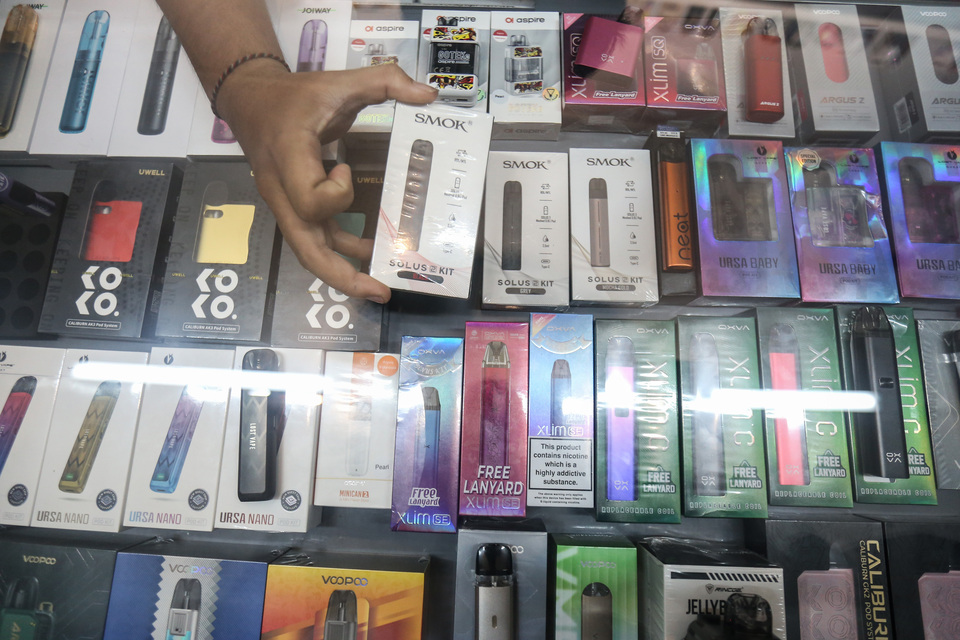
Jakarta. Health groups call for the Health Ministry to immediately issue technical rules requiring pictorial health warnings and standardized packaging for electronic cigarettes, citing rising use among young people.
The call was made by the Indonesian Health Policy Room (RUKKI), the Tobacco Control Support Center – Indonesian Association of Public Health Experts (TCSC–IAKMI), and the Center for Indonesia's Strategy Development Initiatives (CISDI). The groups said stronger and more consistent regulation is needed to protect young people from nicotine addiction and long-term health risks.
They also highlighted the misuse of e-cigarettes, including liquids mixed with illegal addictive substances and synthetic narcotics, warning that regulatory gaps and weak packaging standards increase exposure risks among adolescents.
The statement comes amid a research report from the National Research and Innovation Agency (BRIN), which found that e-cigarettes produce aerosols containing lower levels of certain toxic substances compared with conventional cigarettes. Public health experts cautioned, however, that lower levels do not equate to safety.
“A reduction in certain toxic substances does not mean the product is safe. There is no safe threshold for exposure to addictive or harmful additives in tobacco and electronic cigarette products,” said Kiki Soewarso of TCSC–IAKMI.
Experts further warned that framing lower toxic levels as a harm-reduction strategy could be misleading. Laboratory comparisons, they said, do not necessarily reflect real-world public health impacts, particularly given dual-use patterns and the rising prevalence of e-cigarette use among teenagers.
Data from the 2023 National Health Survey released by the Ministry of Health estimates that Indonesia has around 70 million active smokers, with 7.4% aged 10–18. Meanwhile, the Global Youth Tobacco Survey recorded an increase in smoking prevalence among students aged 13–15 from 18.3% in 2016 to 19.2% in 2019. The 2023 survey also identified those aged 15–19 as the largest group of smokers, followed by children aged 10–14.
The organizations said colorful, lifestyle-oriented e-cigarette packaging further fuels youth appeal, normalizing the products as trendy items rather than high-risk addictive substances.
RUKKI stressed the need for firm enforcement, active monitoring, and transparency to close regulatory gaps. The three groups also urged the Health Minister, along with the Minister of Communication and Digital Affairs, to issue technical rules banning the advertising, promotion, and sponsorship of e-cigarettes on social media platforms.
Tags: Keywords: as a preferred
Related Articles

Indonesia to Step Up Surveillance of Vape
Watchdog BPOM plans to step up its surveillance of vapes, but not planning a total ban on e-cigarettes.The Latest

Prabowo Calls Meeting on Forest Fires as Haze Reaches Jakarta, Singapore
Prabowo summons senior officials to discuss forest fires as smoke reaches Jakarta and Malaysia pushes for regional action.
Jakarta Outranks Amsterdam in Global Public Transport Survey
Jakarta climbs two places to 15th in Time Out's 2026 public transport survey, with its governor citing better network integration.
MSCI Concerns, Tighter IDX Trading Rules Send Indonesian Stocks Down 5% by Midday
Indonesian stocks plunge 5% by midday as MSCI concerns weigh on sentiment and the IDX tightens its daily downside limit to 7%.
Jakarta Prepares 367 Health Facilities as Haze Reaches the Capital
Jakarta prepares 367 health facilities to treat potential haze-related illnesses after smoke from Sumatra and Kalimantan crosses the region.
Jakarta Expands Flood Prevention With New Water Storage Ponds
Jakarta opens two East Jakarta water storage ponds as it expands flood prevention efforts through reservoirs and river normalization.Most Popular
