



Free Meal Program: How Countries Make Sure Kids Learn on a Full Stomach
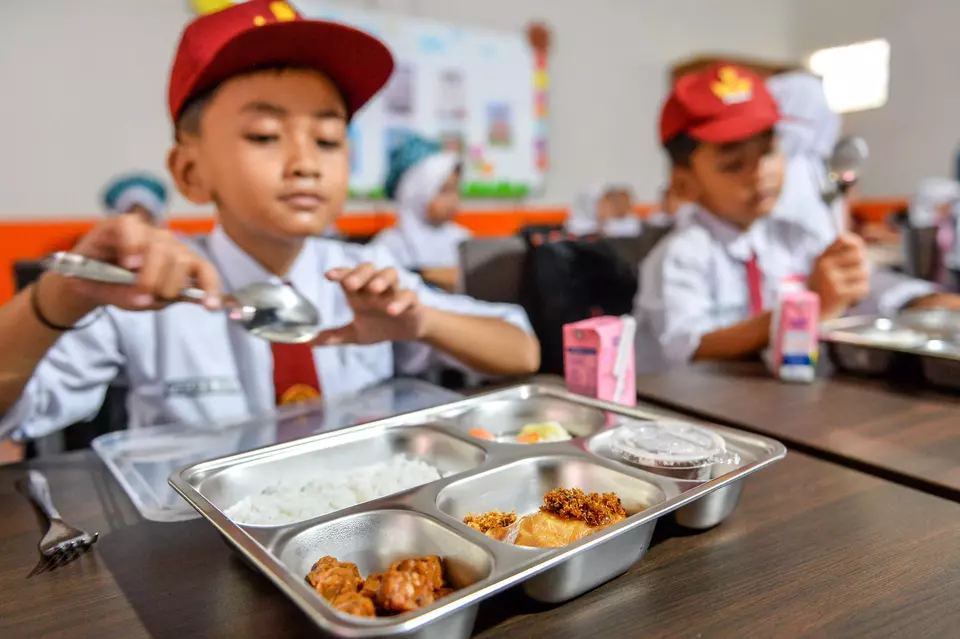
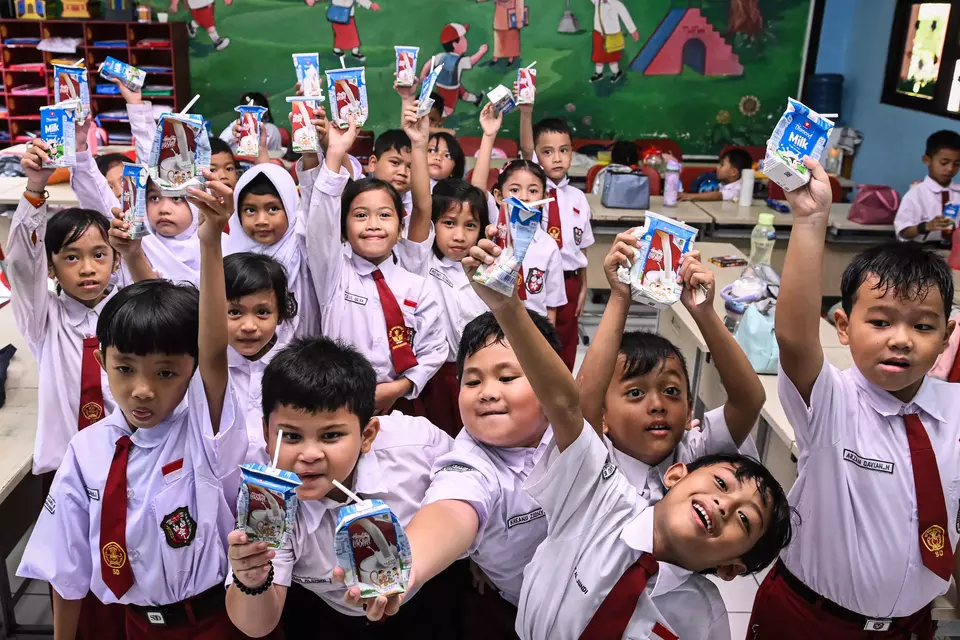
Jakarta. In about two weeks from now, Indonesian kitchens will get busier than ever as they cook meals for school children across the archipelago. The government has its eyes set on launching a nationwide free nutritious meal program on Jan. 6, slightly delayed by four days from the original starting date. The program will not only make sure that kids do not go to class hungry but have an overarching goal of bringing down the national stunting rate and building the country’s human capital.
The free meal program was at the heart of President Prabowo Subianto’s election campaign. The government is currently sparing no effort to help Prabowo deliver his campaign promise of feeding over 80 million people, including schoolkids and pregnant women, a nutrient-dense lunch. It is not just the preschoolers, but the older students up to those enrolled in high schools are getting free meals consisting, for example, rice, chicken, vegetable side dish, banana, and milk.
Prabowo has allocated Rp 71 trillion (nearly $4.4 billion) to run the program for 2025 alone. The amount of money that the government is willing to spend per child has been subject to change over the past few months, starting from around Rp 15,000 (around $0.93) to recently being cut to Rp 10,000. But then again, Indonesia will likely have to wait until the program starts to see the actual cost per meal. However, presidential spokesman Hasan Nasbi claimed that Rp 10,000 was already enough to cook a 600-700 calorie meal in Java.
Indonesia, however, is not the first country to roll out such a nationwide school-feeding scheme. Other countries across the globe have been running a similar program -- some even for decades.
India
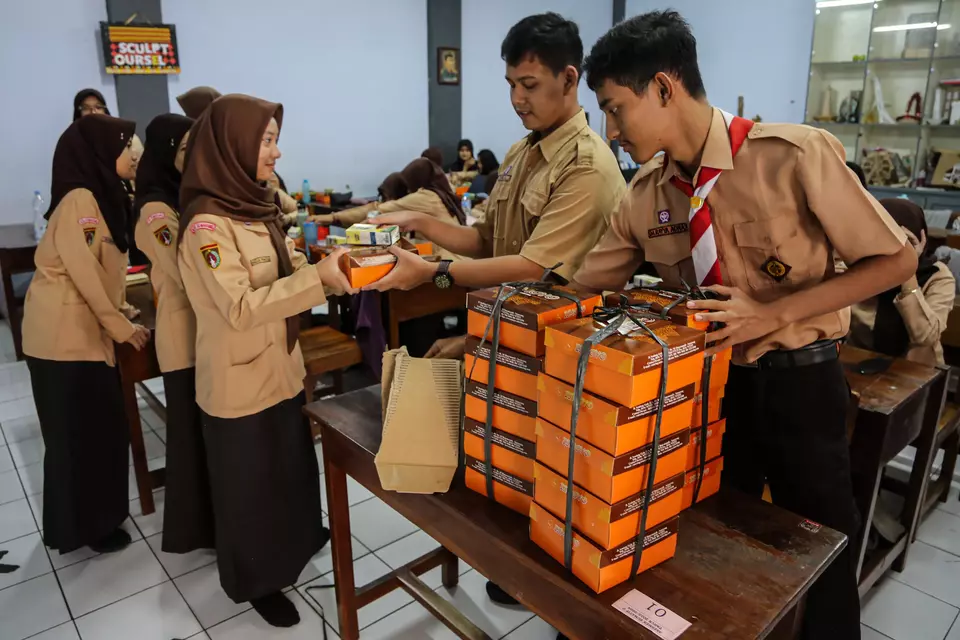
Prabowo first announced his free meal dream when he ran for president in the February election. His camp’s economist Dradjad H Wibowo admitted at the time that the Indian school feeding campaign had inspired Prabowo. The government had even sent a high-level delegation to India to learn how the South Asian country fed its kids.
India’s Midday Meal Scheme is the world’s largest of its kind, feeding 120 million students in government and government-aided schools every day. Its launch dates back to 1995. Aside from making sure that kids grow up healthy, the campaign aims to boost enrollment. The government also engages non-governmental organizations in the program.
India has even set dietary guidance that lays out the minimum calorie intake for each meal which they provide for free. Data shows that New Delhi is spending far less compared to what Jakarta is planning to do.
For first and fifth graders, a lunch plate must provide no less than 450 calories and 12 grams of protein. The meals provided to the upper primary students -- namely sixth and eighth graders -- should include at least 700 calories and 20 grams of protein content, according to the Indian Education Ministry. The per child per day cooking cost is around Rs 4.97 ($0.06) for primary students, and about Rs 7.45 for the upper primary level as of April 2020. The spending includes ingredients such as pulses, vegetables, cooking oil, other condiments, and fuel. For comparison sake, that is around Rp 1,000 for the first graders, a tiny fraction of Indonesia’s proposed budget. Each child gets between 100 and 150 grams of food grains with the costs varying on its type: Rs 1 per kilogram of coarse grain, Rs 2 per kilogram for wheat, and Rs 3 per kilogram per rice.
The cook-cum-helpers get paid an honorarium of Rs 1,000 a month for 10 months in a year. In the 2024-2025 interim budget, the government granted PM Poshan Rs 12,467 crore or approximately $1.4 billion in state budget -- almost a quarter of what Prabowo had set aside for his free meal program. The central and state governments share the PM Poshan costs. The larger part of the financing comes from the central government.
Brazil
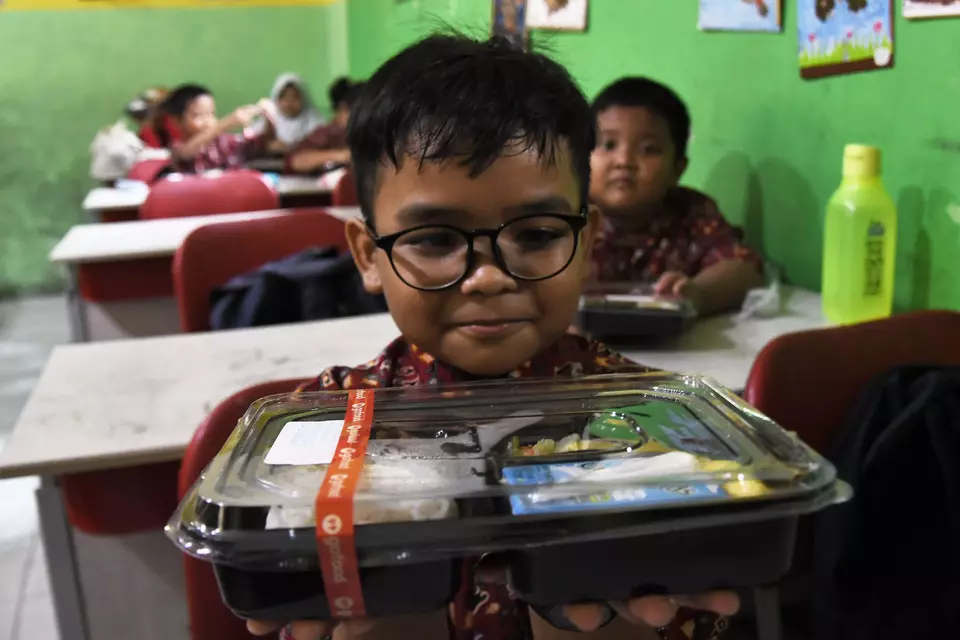
The Brazilian Constitution ensures the universal right of free meals in public schools. The country is now providing nutritious lunches to 40 million students under its so-called National School Feeding Program (PNAE). The government earmarks 4.1 billion in Brazilian real or approximately $673.7 million each year for the program that has now reached over 160,000 schools.
In 2020, Brazil introduced some guidelines on how they should spend the PNAE funding to make sure that the kids are getting fresh lunches instead of highly processed food. About 75 percent of the funding must go to buying fresh or minimally processed foods. The government assigns a 5 percent cap on the spending used for processed culinary ingredients.
Brazil -- in which its agricultural sector contributes to 24.1 percent of the national economy -- banks on the PNAE to drive its smallholder farms. A government regulation stipulates that the school feeding program should acquire at least 30 percent of its food from family farms, which reached 1.6 billion Brazilian reals in 2023.
Finland
In the 1940s, Finland launched a free-of-charge school feeding program that initially targeted children of disadvantaged families. The campaign later expanded to all children attending pre-primary, basic, and upper-secondary education. Every school day, nearly 850,000 meals are served in Finnish schools. The typical lunch plate generally includes typical Finnish foods as a way to introduce kids to local food cultures. The government has also included the school-feeding campaign into the national curricula.
Finland does not have a special budget allocated for the free meal program. But the money comes from the general budget for education, which will get distributed to municipalities through the government transfer system. Unlike other countries, there are also no fixed costs per meal, but it all depends on the size of the municipality. The larger the municipality, the cheaper it is to prepare a single lunch plate. But the National Agency for Education (NEA) data shows that the average meal can have a price tag of 2.80 euros (approximately $2.92) per day.
The Finnish government claimed that feeding students highly nutritious meals had boosted brain power, leading to high scores in Program for International Student Assessment (PISA) reviews. These reviews assess the skills of 15-year-old students across the globe in mathematics, reading, and science.
According to the 2022 survey, Finland's average PISA score in reading stood at 490. Finnish students recorded 484 points in mathematics and scored 511 in science -- far surpassing Indonesian 15-year-olds. Indonesia’s scores across all three subjects were only above the 350-mark, namely 359 (reading), 366 (mathematics), and science (383).
China
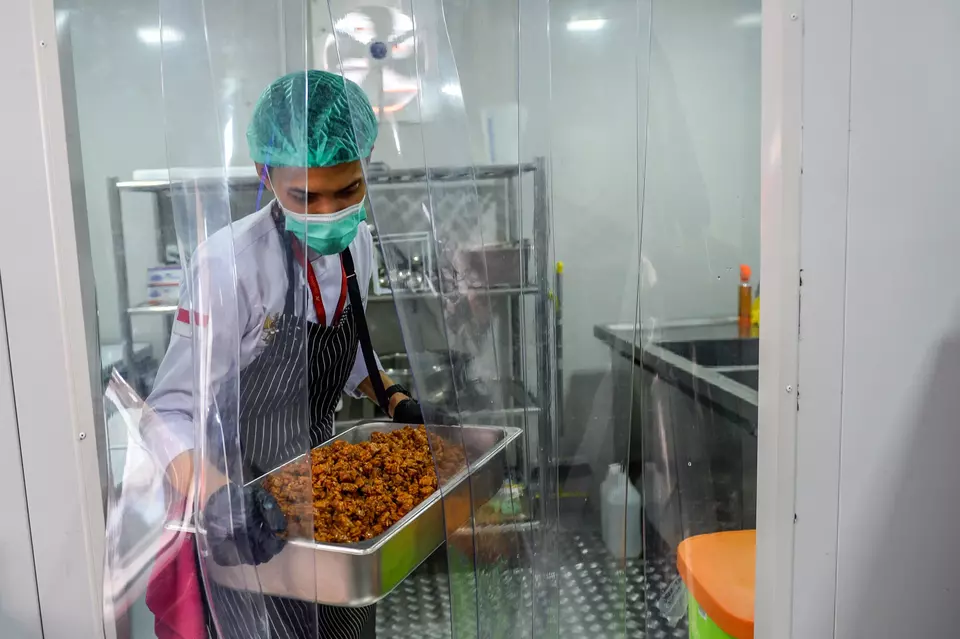
In 2011, economic superpower China launched a school-feeding program that mainly targeted children in rural regions enrolled in primary and secondary education. The program provided a daily lunch subsidy of 3 yuan ($0.41), and the allowed spending was raised to 5 yuan in 2021. The government had spent 147.2 billion yuan or approximately over $20 billion up to the end of 2019. China also claimed that the campaign had improved rural kids’ average height and weight, even exceeding the national average growth.
But the campaign, which has fed over 40 million students, is not free from problems. About 66 counties got caught misusing 1.95 billion yuan meant for the program between 2021 and August 2023. They were mainly using the money to pay back local government debt. China recently punished 1,200 individuals involved in the funds' misuse.
Japan
Japan initially focused on distributing meals to impoverished children. However, following World War II, Japan decided to upscale school lunch distribution across the country. As of May 2023, 98.8 percent of all Japanese elementary schools and 89.8 percent of junior high schools gave their students free meals.
The school establishments bear the costs for facilities, while parents pay for the cooking ingredients cost. But low-income families get support through education allowance and school expense subsidies via social welfare services. A 2021 government survey shows the average monthly cost paid by parents could reach 4,477 Japanese yen (around $28.59) in public elementary schools. The price tag can rise to 5,121 Japanese yen in public lower secondary schools. Japan’s School Lunch Program Act also stipulates the standards for the necessary nutritional intake in each meal.
Tags: Keywords:
 as a preferred
Related Articles

AGO Probes Alleged Fraud in $72 Million Free Meal Motorcycle Deal
Five suspects are detained in Indonesia’s $72 million motorcycle procurement probe, with cash, aircraft and vehicles seized
Little Economic Progress, Tight Budgets Cloud Prabowo’s Second Year
UGM economists say Indonesia has seen little economic improvement under Prabowo, warning of fiscal risks in flagship programs.
Indonesia Spends Almost $7.6 Billion on Free School Lunch
By August 31, Indonesia spent around Rp 134.2 trillion or almost $7.6 billion to keep the program running.
BPOM’s Rp 1.2 Trillion MBG Budget Request Cut to Rp 509 Billion
BPOM will rely on random food sample testing to monitor the MBG program in 2027 after lawmakers cut its Rp 1.2 trillion budget request.
256 Students Affected by Suspected Free Meal Poisoning
Several Karo students remain under treatment weeks after 256 students fell ill in a suspected free nutritious meal poisoning incident.
Widespread Food Poisoning Cases Hit Indonesia’s Free Meals Program
Hundreds of schoolchildren across Indonesia have fallen ill after consuming meals from the government’s Free Nutritious Meals (MBG) program.
567 Students Fall Ill in Suspected MBG Food Poisoning Case in E. Java
At least 567 students in Sidoarjo have received medical treatment after suspected food poisoning linked to the MBG meal program.
Free Meal Program Gets Lion’s Share of BGN’s $13.6 Billion 2027 Budget
Indonesia’s Nutrition Agency gets Rp 240 trillion for 2027, with 97% earmarked for the government’s free nutritious meal program.
Nutrition Agency Chief Threatens Dismissal for MBG Program SOP Violations
Indonesia’s nutrition agency chief threatens dismissals over violations in Prabowo’s flagship free meal program.
Indonesia Proposes $46b Education Budget, Including Free Meals Program
Indonesia proposes Rp820.9 trillion for education in 2027, up 13.9%, with free meals still included.The Latest

AEON MALL Deltamas Brings 11 Sports and Creative Competitions to AEONLYMPIC 2026
AEON MALL Deltamas hosts AEONLYMPIC 2026, featuring 11 sports and creative competitions, with more than 3,100 participants.
Indonesian Stocks Extend Losses for Third Day, Fall 3.64% to 4,996
Indonesian stocks fell 3.64% on Monday, extending losses for a third straight session amid MSCI concerns and tighter trading limits.
Prabowo Calls Meeting on Forest Fires as Haze Reaches Jakarta, Singapore
Prabowo summons senior officials to discuss forest fires as smoke reaches Jakarta and Malaysia pushes for regional action.
Jakarta Outranks Amsterdam in Global Public Transport Survey
Jakarta climbs two places to 15th in Time Out's 2026 public transport survey, with its governor citing better network integration.
MSCI Concerns, Tighter IDX Trading Rules Send Indonesian Stocks Down 5% by Midday
Indonesian stocks plunge 5% by midday as MSCI concerns weigh on sentiment and the IDX tightens its daily downside limit to 7%.Most Popular
