



Forestry Minister: Forests to Stay Intact in Food and Energy Security Program
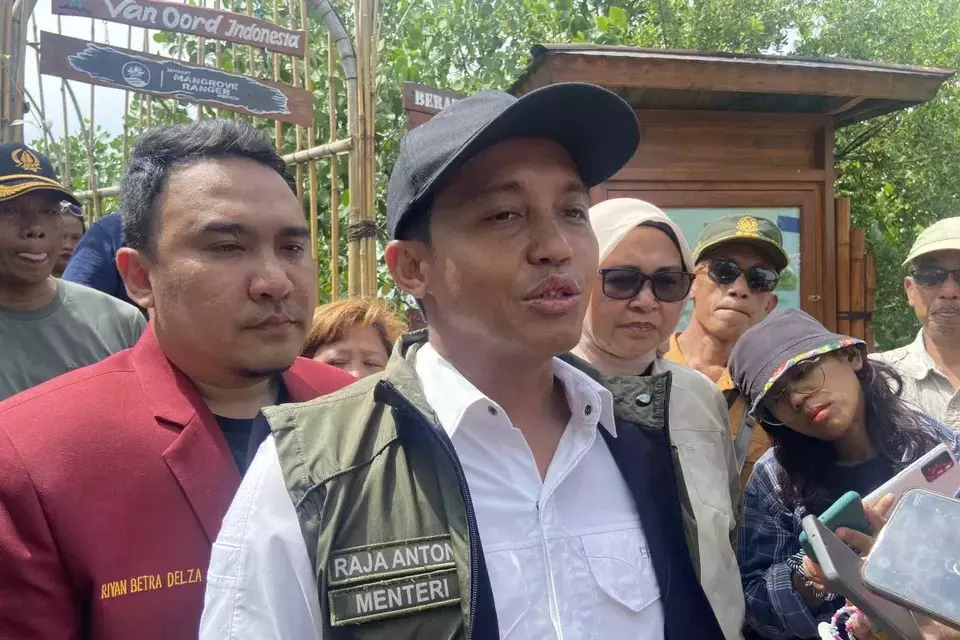
Bali. Forestry Minister, Raja Juli Antoni, clarified that the government has no plans to engage in deforestation or convert 20.6 million hectares of forest into food and energy plantations.
Raja Juli explained that the government intends to adopt intercropping patterns that preserve forests while optimizing their functions.
“The concept is that these 20.6 million hectares will remain forested areas—untouched, undamaged, and not deforested. Instead, their functions will be maximized,” he said during a press conference in Bali on Thursday.
The approach, according to Raja Juli, involves agroforestry—a system where large trees such as teak or sengon are planted alongside food crops like rice or corn. This method ensures forests are preserved, ecosystem functions are maintained, and food production is increased.
“This is done through intercropping. For instance, teak or sengon can be planted while upland rice or corn grows underneath,” he explained.
The government has identified 20.6 million hectares of forest land with potential for agroforestry. Initially categorized as food and water reserve forests, these areas can support both food and energy crop production while maintaining forest functions.
Raja Juli said this initiative aims to achieve food self-sufficiency. For example, planting rice on 1 million hectares of forest land could yield 3.5 million tons of rice annually—equivalent to Indonesia’s rice imports in 2023.
“We’ve calculated with the Agriculture Ministry that our 2023 rice imports totaled 3.5 million tons. By intercropping in forest areas, 1 hectare could produce 3.5 tons of rice. This would eliminate the need for imports,” he said.
He added that this strategy would enable Indonesia to achieve food self-sufficiency while preserving forests and minimizing deforestation.
“To be clear, we are not opening or clearing forests. These are existing forested areas where we’ll plant dense trees again, and beneath them, food crops that benefit the people. The logic is that food reserve forests will actually reduce deforestation,” Raja Juli explained.
The identified forest areas span across Indonesia, with the first planting phase scheduled to begin on 50 hectares of land on January 22.
The government has prioritized food self-sufficiency as a pillar of national sovereignty, as outlined in the 2025-2029 National Development Agenda. President Prabowo emphasized that food self-sufficiency is essential for ensuring the well-being and security of the population.
Beyond rice, the government also plans to plant sugar palm trees as a source of bioethanol. According to Raja Juli, one hectare of the trees can produce 24,000 kiloliters of bioethanol. Planting 1.5 million hectares could yield 24 million kiloliters of bioethanol, potentially replacing the 26 million kiloliters of fuel imports.
Tags: Keywords: as a preferred
Related Articles

Gov't Revokes Permits of Five Companies over Kalimantan Forest Fires
The government revoked 5 forestry permits covering 92,464 hectares after fires were recorded within company concessions across Kalimantan.
Indonesia Seals 21 Companies in Kalimantan, Sumatra Over Forest Fires
Indonesia has sealed 21 companies across seven provinces over suspected links to forest and land fires, with more under investigation.
Indonesia Blames Deliberate Burning for Most Forest and Land Fires
Indonesia says most fires in Sumatra and Kalimantan were deliberately set as authorities brace for heightened fire risks in September.
Bromo Wildfire Burns 520 Hectares, Forces Closure of Tourist Area
A week-long wildfire has burned 520 hectares around Mount Bromo, forcing authorities to close all four entrances to tourists.
Indonesia Opens Forestry Carbon Market to Communities, Businesses
Indonesia launches new forestry carbon trading rules, opening participation to communities and businesses to boost emissions cuts and greenThe Latest

Prabowo Calls Meeting on Forest Fires as Haze Reaches Jakarta, Singapore
Prabowo summons senior officials to discuss forest fires as smoke reaches Jakarta and Malaysia pushes for regional action.
Jakarta Outranks Amsterdam in Global Public Transport Survey
Jakarta climbs two places to 15th in Time Out's 2026 public transport survey, with its governor citing better network integration.
MSCI Concerns, Tighter IDX Trading Rules Send Indonesian Stocks Down 5% by Midday
Indonesian stocks plunge 5% by midday as MSCI concerns weigh on sentiment and the IDX tightens its daily downside limit to 7%.
Jakarta Prepares 367 Health Facilities as Haze Reaches the Capital
Jakarta prepares 367 health facilities to treat potential haze-related illnesses after smoke from Sumatra and Kalimantan crosses the region.
Jakarta Expands Flood Prevention With New Water Storage Ponds
Jakarta opens two East Jakarta water storage ponds as it expands flood prevention efforts through reservoirs and river normalization.Most Popular
