



Industrial Zones, Not Forests: The Disappearing Orangutan Habitat in East Kutai
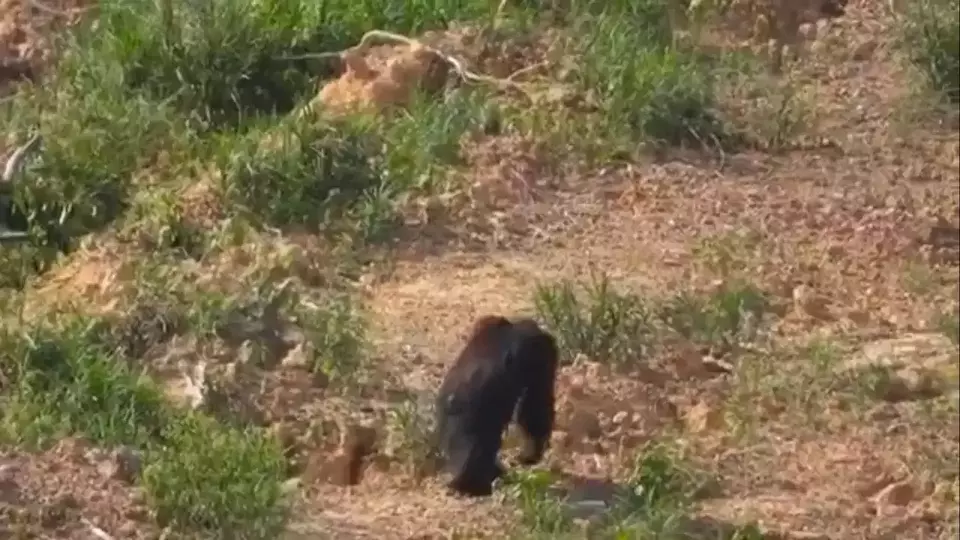
East Kutai. The sound of coal mining machinery echoes along the Bengalon-Muara Wahau main road in East Kutai Regency, East Kalimantan. Few trees remain, providing limited shade for the workers.
Locals refer to this stretch as the Perdau Area, which the East Kalimantan Natural Resources Conservation Agency (BKSDA) identifies as a significant orangutan habitat. Reports of orangutan sightings in Perdau often circulate online, fueling the belief that the region is home to a diverse range of protected wildlife, including hornbills, sun bears, deer, and crocodiles.
To investigate these claims, the Jakarta Globe, in collaboration with the National Journalists Forum, conducted a field exploration. The recurring appearance of orangutans in mining sites, plantations, and even residential areas -- often going viral on social media -- has largely been traced back to this region.
A Habitat That No Longer Exists
Starting at the Perdau intersection (KM 70) on the Bengalon road, the group traveled north toward Muara Wahau, expecting dense forests. Instead, they found an industrial landscape dominated by coal mining and oil palm plantations. The remaining forest patches were sparse, consisting mostly of sengon and macaranga trees -- both favored by orangutans as food sources.
At KM 80, orangutan nests were spotted, and soon, the branches of a tree began shaking. A mother orangutan with her baby appeared, foraging for food. As cameras zoomed in, she quickly moved away, skillfully swinging from tree to tree before pausing to eat in a more secluded spot -- just five meters from the road. Despite the traffic and the constant roar of mining machinery, she seemed unfazed, indicating that orangutans in the area have adapted to the industrial noise.
"We wanted to see for ourselves if this area truly has a high density of orangutans, which explains why they frequently appear in coal mining zones," said Awal Jalil, a national television journalist participating in the exploration.
Continuing on foot, the group encountered another orangutan foraging just 20 meters away. In total, three orangutans were observed, along with numerous nests, highlighting the high orangutan population in the area --though the exact numbers remain unconfirmed.
Struggling for Survival
About five kilometers from the first sighting, the group stopped by a roadside meatball restaurant owned by Ahmad Karsoe, who has witnessed firsthand the plight of the local orangutan population.
"In the afternoons, orangutans often wander onto the road, searching for food. They are thin, not like the well-fed ones in the past. Some males are quite large, but many have lost fur," Karsoe shared.
Living in the area for years, Karsoe has become familiar with the orangutans’ faces and behaviors. He noted that some appear during the morning, others in the afternoon, and some -- particularly males -- during drizzly weather.
"They sometimes just stand by the roadside, watching vehicles pass. Others come out only when it’s mealtime. I’ve even memorized a few of them because I see them so often," he said.
The four-day exploration confirmed a consistent orangutan presence every morning and evening, reinforcing concerns that their habitat is nearly gone.
Not a Habitat, Just a Nesting Ground
Residents of East Kutai understand that orangutans are protected but also recognize that the animals no longer have a place to live. With their natural habitat destroyed, they are forced into coal mining sites and palm oil plantations.
"Don't call it a habitat -- there’s no more forest. Perdau is no longer an orangutan habitat; it’s just a nesting area," said Muhammad Rusli, a community leader in Sepaso Barat Village.
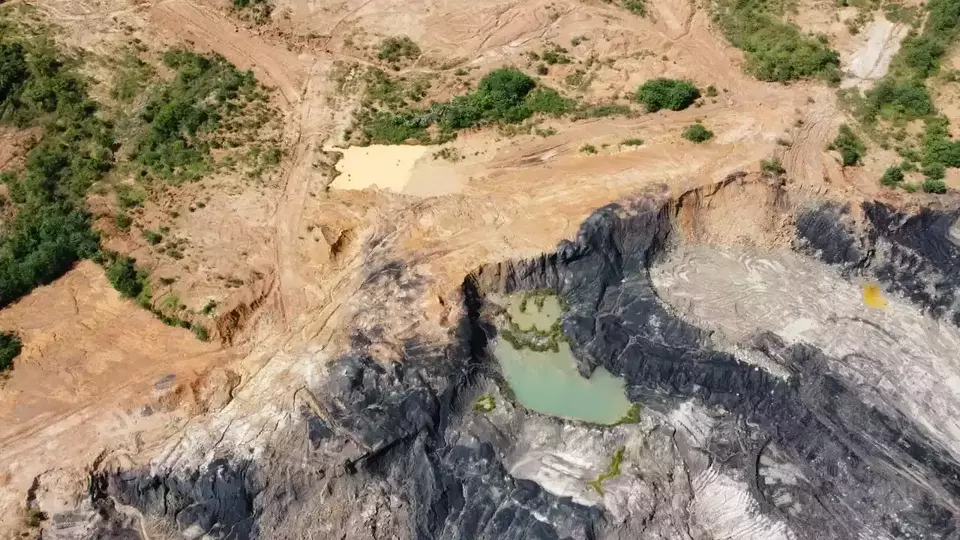
He recalled that in the 1980s, orangutans were rarely seen despite their large numbers, as the forests were still intact. However, as mining and plantations expanded, orangutans became more visible, frequently appearing morning, noon, and night.
"The forest here is only 200 meters wide. That’s not a habitat -- it’s just the last patch of trees left for them," Rusli lamented.
As their space diminishes, competition for food intensifies. Stronger orangutans dominate the remaining forested areas, while weaker ones are forced into the mines, roadsides, and plantations.
"The saddest sight is when they can’t find food. Some scavenge on the ground, while others beg along the road, hoping for human kindness," he said.
Rusli has witnessed the worsening human-wildlife conflict firsthand. Sandwiched between palm oil plantations and mining sites, orangutans are often seen as pests rather than endangered animals. Other species, like monkeys and long-tailed macaques, are facing similar struggles, with food scarcity making them more aggressive.
A Call for Action
The increasing visibility of orangutans in industrial areas signals an ecological crisis. While locals sympathize, they feel powerless to help.
"If they can be relocated, please do it. Otherwise, they will starve to death," Rusli urged.
Authorities acknowledge the situation but report no official cases of human-orangutan conflict.
"So far, there have been no reported violations related to orangutans," said Chandra Hermawan, Head of the Kutai Timur Police Department.
Despite this, the police continue monitoring the area, emphasizing that orangutans remain under global protection.
"We must ensure there are no violations against protected wildlife, especially orangutans. These animals are not just Indonesia’s concern but the world’s," Chandra said.
Tags: Keywords: as a preferred
Related Articles

Two Orangutans Rescued From Burning Forest in Central Kalimantan
Two orangutans were rescued from a fire-ravaged forest in Sampit, Central Kalimantan, and are now under medical observation.The Latest

Prabowo Calls Meeting on Forest Fires as Haze Reaches Jakarta, Singapore
Prabowo summons senior officials to discuss forest fires as smoke reaches Jakarta and Malaysia pushes for regional action.
Jakarta Outranks Amsterdam in Global Public Transport Survey
Jakarta climbs two places to 15th in Time Out's 2026 public transport survey, with its governor citing better network integration.
MSCI Concerns, Tighter IDX Trading Rules Send Indonesian Stocks Down 5% by Midday
Indonesian stocks plunge 5% by midday as MSCI concerns weigh on sentiment and the IDX tightens its daily downside limit to 7%.
Jakarta Prepares 367 Health Facilities as Haze Reaches the Capital
Jakarta prepares 367 health facilities to treat potential haze-related illnesses after smoke from Sumatra and Kalimantan crosses the region.
Jakarta Expands Flood Prevention With New Water Storage Ponds
Jakarta opens two East Jakarta water storage ponds as it expands flood prevention efforts through reservoirs and river normalization.Most Popular
