



Indonesia Bets on National Car Project to Cut Import Dependence
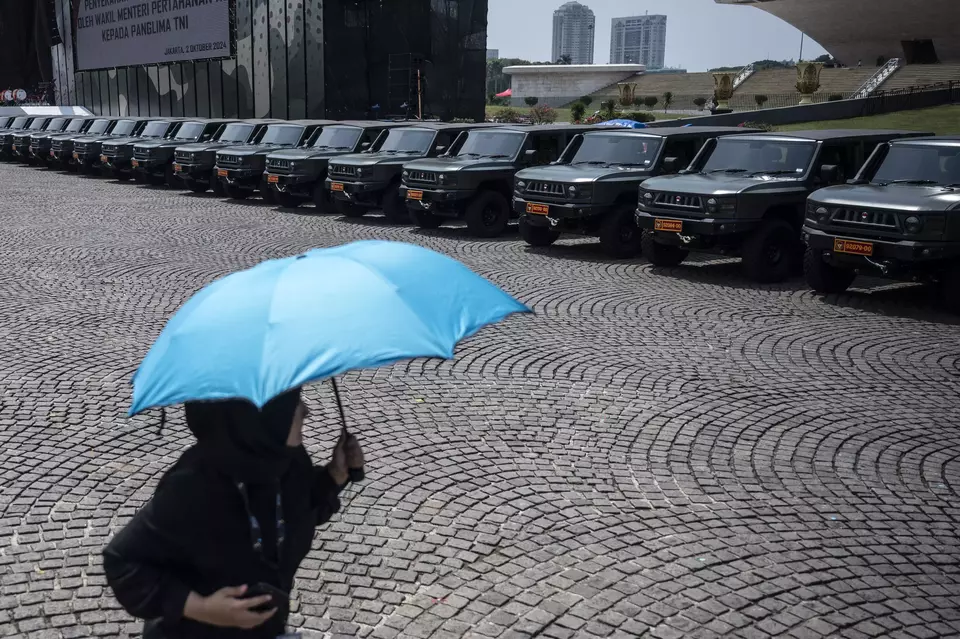
Subang, W. Java. Indonesia is accelerating efforts to build a domestic automotive industry hub, with Defense Minister Sjafrie Sjamsoeddin on Wednesday reviewing the progress of the country’s National Car project in Subang, West Java.
The strategic project is designed to become an integrated automotive manufacturing center with production capacity targeted at 300,000 vehicles annually, as Indonesia seeks to strengthen industrial self-sufficiency and electric vehicle development.
Sjafrie, accompanied by Deputy Indonesian Military Commander Gen. Tandyo B. Revita and Defense Facilities Agency head Air Marshal Yusuf Jauhari, said the project would play a key role in supporting national industrial resilience and technological capabilities.
“The National Car area is a strategic installation that plays an important role in strengthening national industry, technological mastery, and the development of an integrated manufacturing ecosystem,” Sjafrie said, according to state news agency Antara.
The government plans to develop the 539-hectare site into more than just an assembly plant. The complex is expected to include vehicle engineering centers, testing facilities, and research and development operations.
Officials estimate the project could create around 2,000 jobs for engineers, technicians, and university graduates.
Pindad President Director Sigit Santosa said construction would take place in three phases between 2026 and 2028.
The initial phase will focus on developing 60 hectares of land, with production capacity targeted at 50,000 vehicles annually by 2028. Capacity is expected to gradually increase to 300,000 units per year in later stages.
“We have invested in human resource development for several years, ranging from planners and technicians to experts, to support the large-scale development of this industry,” Sigit said.
The project forms part of Indonesia’s broader push to reduce dependence on imported vehicles and foreign automotive components while building a stronger domestic supply chain.
The government also sees the initiative as a key platform for advancing electric vehicle technology and accelerating technology transfer from global automotive manufacturers.
Located in Subang, an emerging industrial hub in West Java, the project is expected to support broader regional economic development and strengthen Indonesia’s position in Southeast Asia’s automotive and EV manufacturing sector.
The involvement of state-owned defense manufacturer Pindad highlights the government’s strategy of using state enterprises to drive industrial development, technological capability, and long-term economic value creation.
Tags: Keywords: as a preferred
Related Articles

No J-10 Talk: Indonesia, China to Build Ammunition Factory
Defense Minister Sjafrie Sjamsoeddin says that the China-backed ammunition factory will enter operations by 2027.
Indonesia and China Agree on More Joint Military Drills and Personnel Exchanges
The cooperation will also expand to include human resource development through joint exercises, military education, and personnel exchanges.
US Won’t Set Up Military Base in Indonesia, Gov’t Says
Defense Minister Sjafrie says that cooperation will focus on personnel training, among others, following talks with a Pentagon official.
Indonesia Bets on National Car Project to Cut Import Dependence
Indonesia is developing a national car manufacturing hub in Subang targeting annual production of 300,000 vehicles.
Japan to Possibly Transfer Asagiri Destroyers to Indonesia
Indonesia and Japan have agreed to enter talks for an Asagiri-class destroyer transfer, including on the vessel's maintenance.
Indonesia’s C-130 Hercules Repair Center to See Progress by 2028
Washington has picked Indonesia to be Asia’s hub for maintenance, repair, and overhaul (MRO) of the C-130 Hercules.
Qatar and Indonesia Want to Be Defense Industry Partners, No Contract Yet
Indonesia says there are plans for a defense industry cooperation with Qatar, but they are not bound to a contract yet.
Is Tokyo Becoming Jakarta’s New Security Anchor?
Japan is seeking to play a more proactive role in upholding the vision of a Free and Open Indo-Pacific (FOIP).
No Rupiah Spent: US to Fund Search for Fallen Soldiers in Indonesia
The US will bankroll the project aimed at bringing home its fallen World War II personnel from Indonesia.
US Wants Indonesia to Be Asian Hub for C-130 Plane Maintenance
Indonesia says the C-130 Hercules maintenance center will likely be established in West Java's Kertajati airport.The Latest

UN Boss Wants to Fix Security Council as Indonesia Seeks Seat
Outgoing UN chief Guterres says the current permanent member setup at the Security Council fails to reflect today's realities.
Saudi Flagship Investment Conference Pushed to 2027 after Houthi Attacks
The annual Future Investment Initiative (FII), often dubbed "Davos in the Desert", was originally scheduled to take place from October 26-29
Government Sets Aside Rp 1.3 Quadrillion for Final-Quarter Spending
Government spending has reached Rp 2.66 quadrillion, equivalent to 69.2% of the full-year budget target of Rp 3.84 quadrillion.
Indonesia Probes 98 Corporate Wildfire Cases, Including Possible Foreign Links
Police investigate 98 corporate-related wildfire cases, including possible links to investors from neighboring countries.
Students Plan Jakarta Protests to Mark Two Years of Prabowo's Presidency
Police have advised the public to avoid areas around the House of Representatives complex, the National Monument and the State Palace.Most Popular
