



Indef Warns Cutting EV Incentives Could Undercut Surging Sales
Jakarta. Institute for Development of Economics and Finance (Indef) has warned that any move to halt electric vehicle (EV) incentives could slow Indonesia’s energy transition and add pressure to the state budget, amid lingering global economic uncertainty.
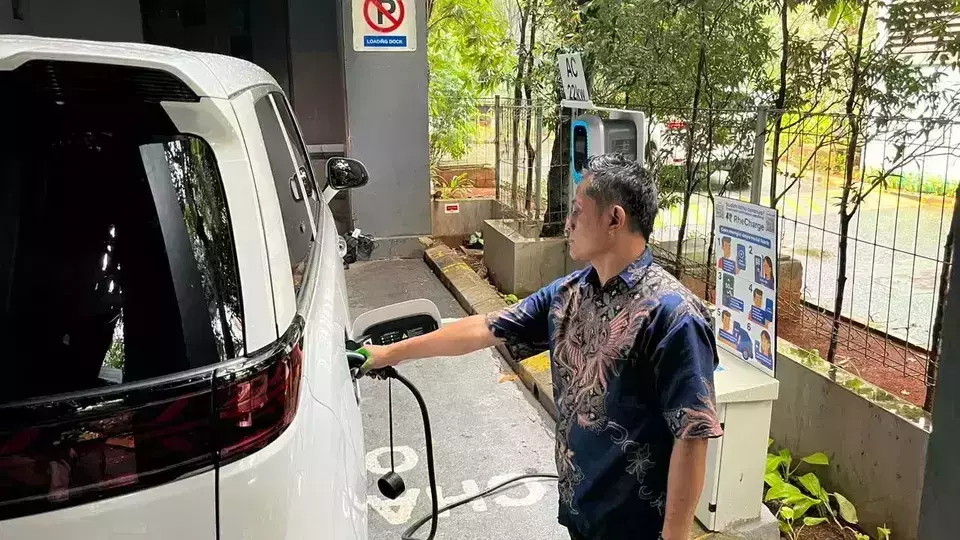
Abra Talattov, head of Indef’s Center of Food, Energy and Sustainable Development, said EV adoption in Indonesia has continued to show steady growth. During the 2026 Christmas and New Year holiday period, the country recorded 234,136 EV charging transactions, with total electricity consumption reaching 5,619 megawatt hours (MWh).
“This achievement reflects a shift in the transportation sector toward cleaner energy sources,” Abra said. However, he stressed that Indonesia’s EV market is currently at a critical phase that requires policy certainty.
“EV growth momentum that has already been formed must be maintained so Indonesia does not return to deeper dependence on fossil fuels,” he said. “Electric vehicles play a strategic role in reducing fossil energy consumption. If this momentum is disrupted, pressure on energy subsidies could actually increase.”
EV sales have also surged. Wholesale electric car sales reached 103,931 units last year, jumping about 141% from the previous year. The figure accounts for nearly 13% of the national automotive market, signaling wider public acceptance of EVs.
Abra said the development of the EV ecosystem is not limited to vehicle sales alone. “It also includes strengthening the national automotive industry, accelerating nickel and battery downstreaming, expanding public charging stations, and ensuring reliable electricity supply,” he said.
On the external front, Abra warned that rising global geopolitical tensions could push up world oil prices, directly affecting domestic fuel prices and increasing the government’s energy subsidy burden.
“In an uncertain global situation, Indonesia needs anticipatory steps to protect the state budget,” he said. “Encouraging electric vehicle adoption is one strategic instrument to achieve that.”
Indef therefore urged the government to consider maintaining fiscal incentives, including the government-borne value-added tax (PPN DTP) scheme for electric vehicles and supporting components that meet local content requirements.
“Electric vehicle incentives do not only stimulate demand,” Abra said. “They also contribute to job creation, faster investment inflows, and reduced pressure on energy subsidies in the medium term.”
Energy subsidies for 2026 are projected to reach around Rp 210 trillion ($12.39 billion), with the fiscal deficit at risk of nearing, or potentially exceeding, 3% of gross domestic product.
“Over the medium term, expanding the use of electric vehicles can help contain surging fuel and electricity subsidies, while strengthening the competitiveness of Indonesia’s automotive and battery industries,” Abra said.
Tags: Keywords: as a preferred
Related Articles

Indonesia Ends Flat Rp 6 Million Incentive for Free Meal Kitchens
Indonesia will replace the Rp 6 million daily incentive for free meal kitchens with Rp 2,000 per portion served from Oct. 5.
Businesses Back Mandatory Halal Rules, Warn of Rising Compliance Costs
Businesses support Indonesia’s mandatory halal rules but urge simpler certification and lower compliance costs to protect MSMEs and consumer
Indonesia Adds Rp 29.5 Trillion to Regional Transfers for Disaster Relief, Salaries
Indonesia raises regional transfers to Rp 715.34 trillion, adding Rp 29.5 trillion for disaster relief and regional employee salaries.
Indonesia Disburses $18.7 Billion in Energy Subsidies, Compensation
Indonesia disbursed Rp 331.4 trillion in energy subsidies and compensation to PLN and Pertamina as of August, up 52.1% year-on-year.
BPOM’s Rp 1.2 Trillion MBG Budget Request Cut to Rp 509 Billion
BPOM will rely on random food sample testing to monitor the MBG program in 2027 after lawmakers cut its Rp 1.2 trillion budget request.
Golkar Lawmaker Wants to Break Indonesia’s 3% Deficit Rule
Indonesia’s parliament is weighing a more flexible budget deficit rule as lawmakers seek fiscal room to boost economic growth.
Jakarta Governor, Finance Ministry Differ Over Rp 5.6 T Bond Plan
Jakarta will proceed with a Rp5.6 trillion bond plan as the Finance Ministry urges caution over regional borrowing and fiscal risks.
Govt Plans to Pull Back Rp 100 T in Idle Local Funds
Indonesia plans to reclaim Rp 100 trillion in local government funds sitting idle in banks and return them at the start of 2027.
Indonesian Stocks Rise as Fed Bets and MBG Savings Lift Sentiment
Indonesian stocks opened higher Friday as Wall Street gains and expectations of MBG budget savings boosted investor sentiment.
Egg, Chicken Price Slump Spurs Push for Processing Industry
Surplus egg and chicken supply is dragging down farm-gate prices, prompting calls for stronger processing capacity and government absorptionThe Latest

Jakarta Outranks Amsterdam in Global Public Transport Survey
Jakarta climbs two places to 15th in Time Out's 2026 public transport survey, with its governor citing better network integration.
MSCI Concerns, Tighter IDX Trading Rules Send Indonesian Stocks Down 5% by Midday
Indonesian stocks plunge 5% by midday as MSCI concerns weigh on sentiment and the IDX tightens its daily downside limit to 7%.
Jakarta Prepares 367 Health Facilities as Haze Reaches the Capital
Jakarta prepares 367 health facilities to treat potential haze-related illnesses after smoke from Sumatra and Kalimantan crosses the region.
Jakarta Expands Flood Prevention With New Water Storage Ponds
Jakarta opens two East Jakarta water storage ponds as it expands flood prevention efforts through reservoirs and river normalization.
Press Council Highlights AI Ethics at United Tractors Journalist Workshop
United Tractors’ 2026 journalist workshop highlights ethical AI use and the importance of trust and credibility in journalism.Most Popular
