



No CNG Allocation in 2027 Budget as Indonesia Seeks to Cut LPG Imports
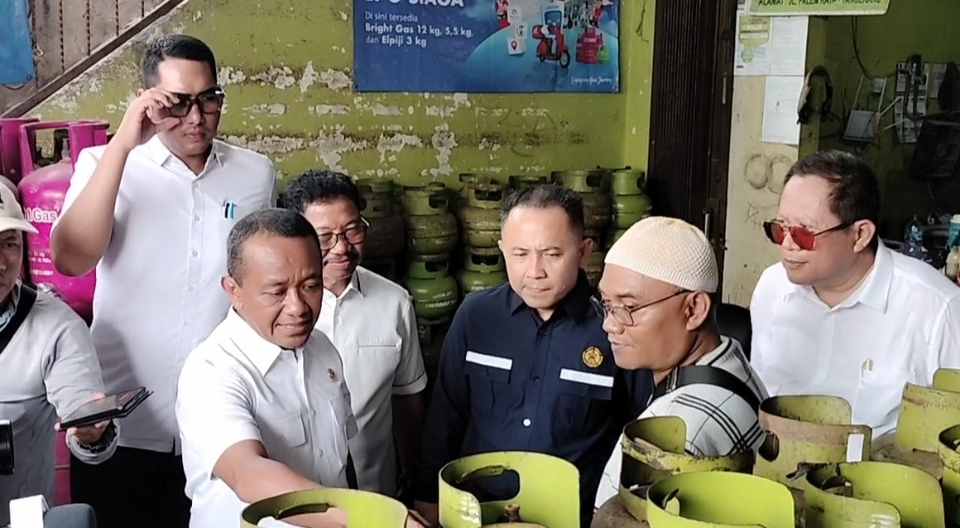
Jakarta. Indonesia’s 2027 state budget plan does not yet include funding for the government’s proposed compressed natural gas (CNG) program aimed at reducing household reliance on subsidized liquefied petroleum gas (LPG), despite growing concerns over rising import costs.
The baseline assumptions for the 2027 draft state budget (RAPBN) maintain the subsidized LPG allocation at 8 million metric tons, unchanged from this year.
Instead, the Energy and Mineral Resources Ministry (ESDM) is focusing on expanding city gas networks and promoting electric stoves to curb consumption of 3-kilogram LPG cylinders.
Instead, the Energy and Mineral Resources Ministry (ESDM) is focusing on expanding piped natural gas networks (Jargas) and promoting electric stoves to curb the use of subsidized 3-kilogram LPG cylinders.
Under the ministry’s indicative budget ceiling, Rp 5.2 trillion ($293 million) in multi-year funding has been allocated to develop 959,232 household gas connections through 2028, while Rp 815.6 billion is earmarked for electric stove programs.
The ministry’s total indicative budget for 2027 stands at Rp 27.33 trillion. During a meeting with the House of Representatives Commission XII on Monday, lawmakers agreed that 82% of the budget, or Rp 22.48 trillion, should be directed toward programs that deliver direct benefits to the public.
Bisman Bakhtiar, executive director of the Center for Energy and Mining Law Studies (PUSHEP), said any energy substitution program should be reflected in the state budget to support infrastructure development and potential subsidy schemes.
“The absence of a dedicated allocation does not necessarily mean the CNG program has been canceled. The funding could be placed under another budget item or introduced through a budget revision mechanism,” Bisman told B-Universe on Tuesday.
The ESDM Ministry is preparing a pilot project for household CNG use by importing 100,000 three-kilogram CNG cylinders from China, citing the domestic industry’s inability to manufacture containers that meet the required specifications.
Pri Agung Rakhmanto, founder of ReforMiner Institute, said CNG could replace LPG and strengthen Indonesia’s energy security by utilizing domestic natural gas resources.
“However, the supporting infrastructure must be developed first, including gas compression facilities and distribution pipelines to end users,” Pri Agung said.
He added that expanding Jargas would require substantial state funding, as relying solely on private sector investment would depend on commercial viability and investment returns.
“The key advantage of CNG is its supply source. It can be sourced entirely from domestic gas reserves, eliminating the need for imports. But the infrastructure must be prepared,” he said.
Energy Minister Bahlil Lahadalia said the LPG-to-CNG conversion program remains in the testing phase, with the government focusing on ensuring the safety of lightweight three-kilogram CNG cylinders for household use.
“CNG cylinders weighing 12 kilograms and 20 kilograms are already used in hotels and restaurants and have proven to be more efficient. But households need lighter cylinders, which is what we are currently testing,” Bahlil said recently.
Bahlil said that Indonesia spends around Rp 140 trillion annually on LPG imports exceeding 8 million metric tons, with the burden increasing when global oil prices rise.
“There is no other way to improve efficiency except by utilizing domestic resources to replace imported LPG. We are now waiting for the results of the three-kilogram cylinder trials,” he said.
Tags: Keywords: as a preferred
Related Articles

Indonesia Says Subsidized Fuel Stocks Cover 16–18 Days
Indonesia says fuel reserves remain adequate, with Pertalite stocks covering 16–18 days as Pertamina boosts deliveries.
Indonesia Opens New LPG Plant in West Java to Reduce Import Dependence
Bahlil said the plant was expected to supply around 15% of LPG demand in Jakarta and West Java.
Indonesia Aims $45 Billion Nickel Exports in 2026
Indonesia's nickel exports neared $34 billion in 2024, government data showed.
Bahlil Says B50 Program Shields Indonesia from Diesel Import Disruptions
Indonesia says its B50 biodiesel program has ended diesel imports, even as Middle East tensions threaten global oil supplies.
‘It’s Trump Who Sets Oil Price’: Prabowo’s Brother
Neither the Indonesian government nor OPEC sets the oil price, Hashim Djojohadikusumo says.
Indonesia Rewrites Its Economic Model to Power Faster Growth
Indonesia bets on investment, downstream industries and clean energy to achieve 8% economic growth.
The Blind Spot in Indonesia's Clean Energy Story
One of the biggest obstacles to renewable energy development is the lack of adequate transmission and distribution infrastructure.
Indonesia Insists on Deciding Singapore Power Export Price
Senior minister Bahlil Lahadalia says that Indonesia doesn't want to sell its electricity cheaply.
Indonesia’s 1M-Bpd Oil Import Gap Is ‘Miserable’, Bahlil Says
Indonesia’s oil lifting meets the 2025 target, but Bahlil calls the 1M-bpd import gap “miserable” as demand hits 1.6M bpd.
Bahlil Signals More Ministries May Join New Downstream Coordination
Bahlil signals one or two more ministries could join the new downstream coordination, with the Industry Ministry among those considered.The Latest

Jakarta Outranks Amsterdam in Global Public Transport Survey
Jakarta climbs two places to 15th in Time Out's 2026 public transport survey, with its governor citing better network integration.
MSCI Concerns, Tighter IDX Trading Rules Send Indonesian Stocks Down 5% by Midday
Indonesian stocks plunge 5% by midday as MSCI concerns weigh on sentiment and the IDX tightens its daily downside limit to 7%.
Jakarta Prepares 367 Health Facilities as Haze Reaches the Capital
Jakarta prepares 367 health facilities to treat potential haze-related illnesses after smoke from Sumatra and Kalimantan crosses the region.
Jakarta Expands Flood Prevention With New Water Storage Ponds
Jakarta opens two East Jakarta water storage ponds as it expands flood prevention efforts through reservoirs and river normalization.
Press Council Highlights AI Ethics at United Tractors Journalist Workshop
United Tractors’ 2026 journalist workshop highlights ethical AI use and the importance of trust and credibility in journalism.Most Popular
