



How Iran War and Surging Oil Prices Are Affecting US Consumers at Gas Pump and Beyond
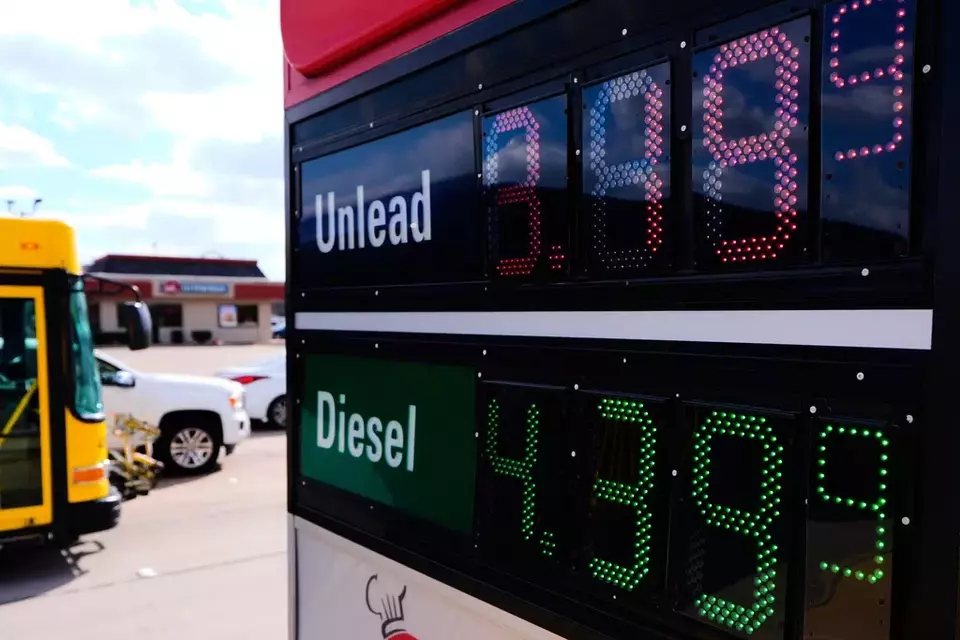
New York. As the war in Iran ratchets up, the price of crude oil has been swinging sharply. Consumers are already feeling the effects of the war and its destabilizing effect on worldwide energy production.
Gasoline prices are climbing, and many people will find some of the most immediate economic pain at the pump.
But you don't have to drive a car to be affected. Nearly all goods — including food — that are bought and sold must travel from where they’re produced. Those costs will climb with higher gasoline, diesel, and jet fuel prices.
And the spike in oil prices — surpassing $110 a barrel, then retreating — will likely be a big factor for US inflation. As the war continues, some experts say the price of, well, everything could be affected.
“The longer this lasts, the more significant the shock would be,” said Gregory Daco, chief economist at consulting firm EY-Parthenon.
Here's how the growing cost of oil and gas could impact consumers as the war continues.
Gas Prices Are Likely to Continue Climbing
Gasoline, diesel and jet fuel are made from crude oil. As the cost of crude climbs, so do the prices of those widely used products, which keep equipment, cars, buses, delivery trucks and airplanes running.
Across the United States, drivers were paying an average of $3.58 for a gallon of regular gasoline Wednesday, compared with $2.98 before the war started. Prices have increased about 20% since the US and Israel attacked Iran.
Prices vary across states. In California, drivers were paying $5.34. Some of California’s refineries have shut down in recent years, so the massive state relies on imports of gasoline and other refined products from Asia.
By contrast, the average price in Louisiana, which has oil production and refineries, was $3.20.
The spike in oil prices is likely to further push up gasoline prices, and could be felt more significantly in Asia and Europe, which are more dependent on Middle Eastern oil and gas than the United States.
The Cost of Shipping and Goods Increases Alongside the Price of Diesel
The price of diesel — which powers 18-wheeler trucks — has been climbing, too: to $4.83 a gallon in the US, a 28% jump since the war started.
“Can’t underscore what a massive jolt this is to the logistics, trucking, (agriculture) sectors,” Patrick De Haan, a petroleum analyst at GasBuddy, wrote on X Monday.
The effective closure of the Strait of Hormuz, the waterway that carries a fifth of the world’s crude oil and liquefied natural gas, already has caused problems for the shipping industry. Quickly rising oil and gas prices will add to the burden.
Fuel prices account for 50% to 60% of the total operating cost of shipping goods by ship, according to Patrick Penfield, professor of supply chain practice at Syracuse University, so higher fuel prices have a huge effect on the industry.
“When fuel prices start to go up, everything starts to slow down,” Penfield said. “So your ships slow down, your trucks slow down. People are less apt to ship things via air. And it really kind of causes a drag on the economy when fuel price go up.”
Fuel surcharges will also rise — as shipping companies aim to pass along higher costs to their customers, ultimately making goods more expensive.
Home Energy Bills Will Probably Rise
Heating your home and cooking food with natural gas are also likely to cost more as the war grinds on.
Europe’s benchmark natural gas rose 75% since the war began, according to data from the Intercontinental Exchange.
That could also affect the cost of products made from natural gas, such as petrochemical feedstock. It's used to make plastic and rubber, as well as nitrogen fertilizer.
Eventually, Groceries Might Be More Expensive, Too
The spike in oil prices likely won’t be felt immediately at US grocery stores, said David Ortega, a professor of food economics and policy at Michigan State University. But if oil prices remain high for a month or more, he said, “we’re in different territory.”
Higher oil prices impact the agricultural sector in two ways, Ortega said. They raise the cost of inputs such as fuel for farm equipment and the fertilizer, which is derived from natural gas. They also raise demand for soybean oil, palm oil, and other vegetable oils that can be used as replacements for petroleum-based fuel.
But Ortega said on-farm costs are only a small part of what consumers pay at the supermarket. A larger share comes from the cost of processing and transporting food, which uses a lot of energy.
“Food gets to the grocery store on diesel, whether it’s on a truck or on a boat,” Ortega said.
If oil prices remain elevated, fresh foods that must be transported quickly could see price hikes more quickly than packaged foods, which are less perishable, Ortega said.
With US oil prices increasing by roughly 42% from their prewar levels, to roughly $95 a barrel from about $67 before the conflict, that could push up inflation in the United States from 2.4% in January to 3% or higher in the coming months, according to a rough estimate by economists at JPMorgan.
Economist Daco, of EY-Parthenon, estimated that the bump in gas prices could push monthly inflation to as high as 1% in March, which would be the highest monthly increase in four years. Yearly inflation would near 3% in that case.
“That’s a significant shock in and of itself,” Daco said.
Experts Say Consumer Spending Will Decrease
Mark Mathews, chief economist and executive director of research at the National Retail Federation, said higher gas prices would likely affect consumer spending, particularly lower-income shoppers.
US households pay on average $2,500 a year, or nearly $50 a week, to fill up their tank, he said. If consumers are paying, say, $10 more per week, he said, their budgets are certainly affected.
“How do they offset that?" he said. “Going out to a movie theater or going to a theme park or going out to eat — all those areas would be ... more likely see cuts.”
Tags: Keywords: as a preferred
Related Articles

Iraq Exported 30 Million Barrels of Crude via Hormuz in a Month: Monitor
Iraq, an OPEC founding member, was forced to halt production in most of its oil fields during the war as reservoirs filled up.
Trump Says Oil Firms Making 'Too Much Money' from Iran Shortage
High gasoline prices are a key political issue for Trump as his Republican Party heads into the elections in November.
Oil Prices Rise Nearly 10% Following Latest Fighting in the Middle East
Brent's price, though, remains well below its wartime peak of nearly $120 per barrel for its most actively traded contract.
Pentagon Asks Congress for Roughly $80 Billion to Cover Cost of Iran War
The White House has requested a remarkable $1.5 trillion for the Pentagon — a nearly 50% increase over the current funding levels.
US Lifts Blockade of Iran as Oil Tankers Begin Passing Through Strait of Hormuz
Major shipowners began moving vessels through the strait after the agreement was signed, according to Lloyd’s List Intelligence.
Trump Calls Off Latest Threats to Strike Iran, Citing Progress in Negotiations
Trump had threatened further escalation earlier Thursday, posting on social media that the US would hit Iran “VERY HARD TONIGHT”.
A War Neither Side Can Control: The Political Costs for Trump and Netanyahu
The US retains military superiority over Iran, but the political trajectory of the war is increasingly slipping beyond its control.
US and Iranian Negotiators Reach Tentative Deal to Extend Ceasefire
Washington and Tehran have repeatedly accused each other of violating the seven-week ceasefire and have traded strikes throughout the week.
Drone Strike Sparks a Fire Near UAE's Nuclear Power Plant
Iran has been increasingly threatening the UAE over recent days as the country hosted Israeli Iron Dome missile defenses and troops.
Israel Deploys Iron Dome Batteries to UAE: Envoy
The United Arab Emirates diplomatically recognized Israel in 2020. That drew criticism from Iran, long Israel's main regional enemy.The Latest

Chandra Asri Group Receives Trade Finance Excellence Award, Reinforcing Its Role in Indonesia’s Industrial Development
Chandra Asri Group receives the Trade Finance Excellence Award at CIMB Niaga Business Summit 2026.
AEON MALL Deltamas Brings 11 Sports and Creative Competitions to AEONLYMPIC 2026
AEON MALL Deltamas hosts AEONLYMPIC 2026, featuring 11 sports and creative competitions, with more than 3,100 participants.
Indonesian Stocks Extend Losses for Third Day, Fall 3.64% to 4,996
Indonesian stocks fell 3.64% on Monday, extending losses for a third straight session amid MSCI concerns and tighter trading limits.
Prabowo Calls Meeting on Forest Fires as Haze Reaches Jakarta, Singapore
Prabowo summons senior officials to discuss forest fires as smoke reaches Jakarta and Malaysia pushes for regional action.
Jakarta Outranks Amsterdam in Global Public Transport Survey
Jakarta climbs two places to 15th in Time Out's 2026 public transport survey, with its governor citing better network integration.Most Popular
