



Explainer: US to Release 172 Million Barrels from Strategic Petroleum Reserve
New York. Oil prices have soared since the United States and Israel launched their war against Iran, and President Donald Trump is now turning to America’s Strategic Petroleum Reserve as part of a wider agreement from many of the world’s wealthiest countries to tap into emergency stockpiles.
Trump previously downplayed the need to use reserve oil after the Iran war broke out, maintaining that US supplies were ample and prices would soon fall. But that changed on Wednesday, when the International Energy Agency pledged to release 400 million barrels of oil available from its member nations’ stockpiles, the largest volume of emergency oil pulled in the organization's history.
The US is one of the IEA's 32 member countries. And the Trump administration soon confirmed that it would release 172 million barrels from the Strategic Petroleum Reserve starting next week as part of this effort, with deliveries set to roll out over 120 days.
The widening war has strained the energy sector globally. And in the US, drivers are already facing higher gas prices, a key cost of living. Trump's Republican Party is under pressure over the issue of affordability ahead of the November midterm elections. And tapping the reserve is among the few things a president can do on his own to try to make an impact on oil prices — although it's not a permanent fix.
Here is a look at what would be involved:
What is the Strategic Petroleum Reserve?
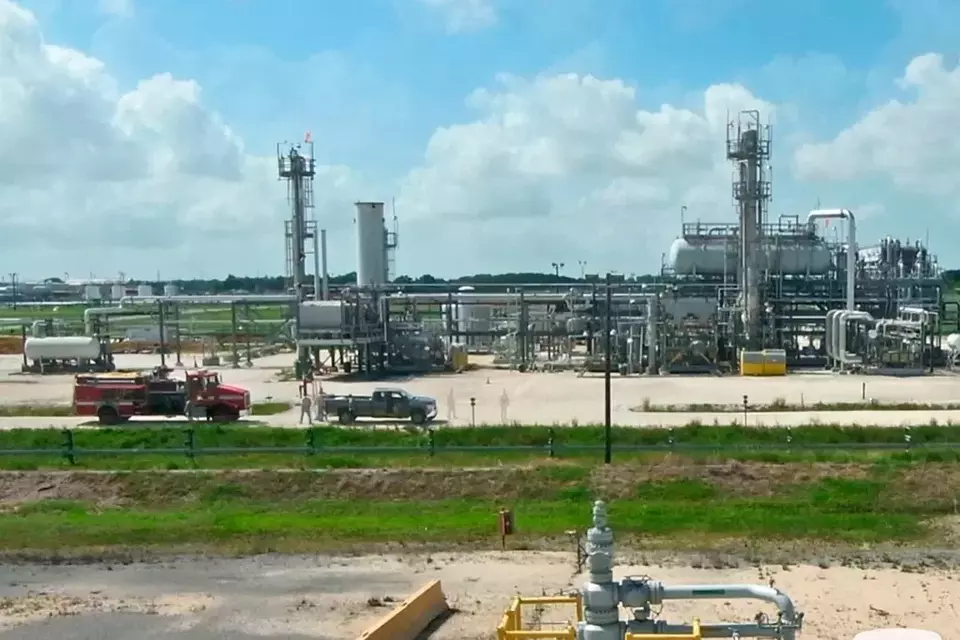
The Strategic Petroleum Reserve is a collection of underground salt caverns in Texas and Louisiana that can hold more than 700 million barrels of oil, although it is not currently full. The reserve held more than 415 million barrels as of the end of last month, up from about 395 million barrels at this time in 2025, according to the U.S. Energy Department.
The reserve was created after the 1970s Arab oil embargo to give the United States a supply that could be used in an emergency. The amount of oil inside peaked more than a decade and a half ago, Energy Department data shows, when the reserve held more than 726.6 million barrels at one point.
Will Gas Prices Get Cheaper When the Reserve is Tapped?
While pulling from the reserve may provide some short-term relief, it takes a while for a new supply to trickle down to consumers — and many factors go into prices at the pump.
In the US, the average gasoline price has already climbed nationally — sitting at nearly $3.60 per gallon on Thursday, up about 35 cents from a week ago and 65 cents a month ago, per motor club AAA.
Refineries buy crude oil in advance, so it’s possible that the pain of higher prices could increase further if the war drags on. And even if more oil were withdrawn from the reserve, refineries could still be working with a more expensive supply for a bit.

As always, some states also have pricier averages than others, due to factors ranging from nearby refinery supply to local fuel requirements and differing tax rates. On Thursday, California had the highest average of nearly $5.37 per gallon, while Kansas had the lowest of about $3.04 a gallon.
Gas prices are regressive — meaning lower-income people are more likely to spend a higher percentage of their money on fuel than affluent Americans. So increases hurt the most price-sensitive consumers.
How Is the Reserve Used?
Today, the US exports more petroleum than it imports. But the reserve remains and has been tapped for various reasons over time, from offsetting the impact of hurricanes and ship-channel closings to raising money for deficit reduction.
Former presidents have turned to the reserve amid supply disruptions spanning from geopolitical conflicts, adding more supply to the market in the hope of pushing prices lower. President Joe Biden drew significantly from the reserve in 2022 following Russia’s invasion of Ukraine, dropping the stockpile to its lowest level since the 1980s. Back in 1991, President George HW Bush also authorized withdrawing nearly 34 million barrels during the Gulf War, although only 17 million barrels were used. In 2011, President Barack Obama approved the release of 30 million barrels to offset supply disruptions from Libya.
Why is Trump Tapping the Reserve Now?
As the Iran war continues to escalate, oil prices have spiked and swung rapidly. That's because the flow of oil tankers through the Strait of Hormuz has all but stopped, cutting off a vital passageway where roughly one-fifth of the world’s oil sails through on a typical day. Major producers in the region, like Iraq, Kuwait, and the United Arab Emirates, have also cut production because they are running out of storage space. And Iran, Israel, and the US have all struck oil and gas facilities, worsening supply concerns.
The price for a barrel of Brent crude, the international standard, was back over the $100 mark on Wednesday — up from nearly $70 a barrel just late last week. Meanwhile, benchmark US crude was $96.12 as of morning trading.

In an effort to alleviate some of the effects of the war in Iran on energy markets, the IEA said on Wednesday it will make 400 million barrels of oil available. The Trump administration's plans to pull 172 million barrels from the reserve are part of that effort.
Trump frequently criticized the administration of his predecessor, Joe Biden, for tapping the reserve to try to bring down gas prices. US Secretary of Energy Chris Wright reiterated that criticism when announcing the coming release from the reserve on Wednesday — and said that the US had arranged to replace about 200 million barrels of reserve oil within the next year.
How Do They Get the Oil Out?
Oil is lighter than water — that’s why disasters like those caused by the Exxon Valdez tanker and the Deepwater Horizon drilling rig create slicks on the surface. To remove oil from the reserves, water is pumped into the salt caverns, making the crude float to the surface, where it is captured and sent through pipelines to refineries.
 as a preferred
Related Articles

Trump’s New Press Secretary Out After Less Than a Week
Katie Zacharia’s brief White House tenure ends after less than a week, following a short first briefing and reported tensions over her role.
Defying Trump, Zelensky Says Will Keep Hitting Russian Refineries
Russia on Thursday said Ukraine had attacked an oil refinery in Ryazan, south of the capital, Moscow.
Fury as US Federal Agents Search Ilhan Omar's Home
"Make no mistake: this is an attempt to target political enemies and weaponize federal law enforcement," Omar wrote on X.
‘It’s Trump Who Sets Oil Price’: Prabowo’s Brother
Neither the Indonesian government nor OPEC sets the oil price, Hashim Djojohadikusumo says.
Navi Pillay, South African Rights Champion, Wins Nobel Peace Prize
"If you clap a little bit more, I may share this prize with Trump," the 85-year-old said.
Trump Vows to Hit Iran 'Very Hard' If Linked to Flydubai Attack
The US leader's threat of retaliation came as he took a harsher tone on the stalled Iran war overall.
Trump Slammed for 'Illegal' US TV Ads Funded by Taxpayers
Mike Levin, a Democratic member of the House of Representatives, said: "It’s propaganda, and you’re paying the bill."
Airlangga Says Indonesia Won’t Face US Tariffs Over Russian Oil
Airlangga says Indonesia won’t face US tariffs over Russian oil bought within an allowed window.
Masoud Tells Trump that Iran Will Never 'Bend at the Knee'
Pezeshkian accused Washington of "terrorism" for assassinating former supreme leader Ayatollah Ali Khamenei at the start of the conflict.
Trump Thanks Indonesia for Gaza Troops
Indonesia has not only committed troops to the ISF, but is in its upper management.The Latest

Chandra Asri Group Receives Trade Finance Excellence Award, Reinforcing Its Role in Indonesia’s Industrial Development
Chandra Asri Group receives the Trade Finance Excellence Award at CIMB Niaga Business Summit 2026.
AEON MALL Deltamas Brings 11 Sports and Creative Competitions to AEONLYMPIC 2026
AEON MALL Deltamas hosts AEONLYMPIC 2026, featuring 11 sports and creative competitions, with more than 3,100 participants.
Indonesian Stocks Extend Losses for Third Day, Fall 3.64% to 4,996
Indonesian stocks fell 3.64% on Monday, extending losses for a third straight session amid MSCI concerns and tighter trading limits.
Prabowo Calls Meeting on Forest Fires as Haze Reaches Jakarta, Singapore
Prabowo summons senior officials to discuss forest fires as smoke reaches Jakarta and Malaysia pushes for regional action.
Jakarta Outranks Amsterdam in Global Public Transport Survey
Jakarta climbs two places to 15th in Time Out's 2026 public transport survey, with its governor citing better network integration.Most Popular
