



BI Reassures Markets Following Moody’s Negative Outlook Shift
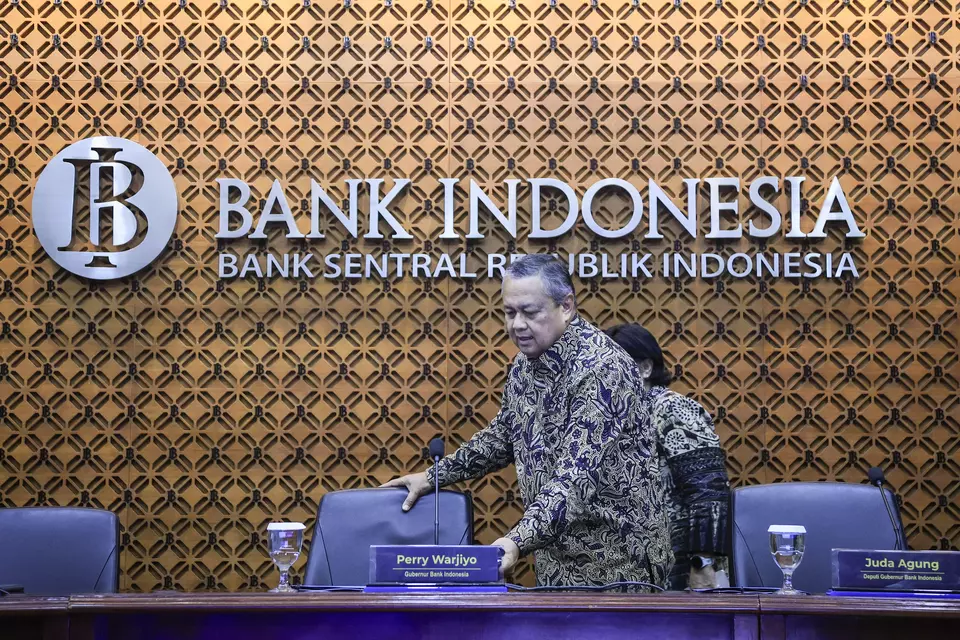
Jakarta. Bank Indonesia Governor Perry Warjiyo said the recent shift in Indonesia’s sovereign outlook to negative by Moody’s Ratings does not signal weakening economic fundamentals, emphasizing that domestic growth, inflation, and financial stability remain solid despite heightened global uncertainty.
“Adjustment to the outlook is believed not to reflect a deterioration in Indonesia’s economic fundamentals,” Perry said, noting that the economy expanded 5.39% in the fourth quarter of 2025, bringing full-year growth to 5.1%, while inflation stayed contained at 2.92% within the central bank’s target range. He added that rupiah stability continues to be reinforced through Bank Indonesia’s strong policy commitment, alongside resilient banking liquidity, high capital buffers, and low credit risk.
Moody’s, which maintained Indonesia’s Baa2 sovereign rating while revising the outlook to negative, still projects economic growth to remain around 5% in the near to medium term, with fiscal deficits staying below 3% of GDP and monetary policy continuing to support price stability. The agency also expects government debt ratios to remain lower than similarly rated peers, although it highlighted the need to strengthen state revenue to sustain growth while preserving macroeconomic and financial stability.
Bank Indonesia said medium-term prospects remain favorable, forecasting 2026 growth at 4.9%–5.7%, supported by stronger domestic demand and the continued impact of coordinated government and central bank policies. Growth is projected to accelerate further in 2027 to 5.1%–5.9%, with inflation expected to remain under control.
External resilience also remains intact, the central bank said. Indonesia recorded a $2.51 billion trade surplus in December 2025, driven by both natural-resource and manufacturing exports. Foreign-exchange reserves rose to $156.5 billion at year-end, equivalent to 6.4 months of imports or 6.3 months of imports and government external debt payments, well above the international adequacy standard of about three months of imports.
Looking ahead, Bank Indonesia expects the current account deficit in 2026 to stay low at 0.1%–0.9% of GDP, while the rupiah is projected to remain stable with a strengthening bias, supported by attractive yields, low inflation, and solid growth prospects. Financial system stability is also seen holding firm on ample liquidity, strong bank capital, and contained credit risk.
The central bank said it will continue strengthening its policy mix to safeguard macroeconomic and financial stability while supporting sustainable growth, working closely with the Financial System Stability Committee and the government to enhance policy communication and maintain market confidence amid rising global uncertainty.
Tags: Keywords: as a preferred
Related Articles

Rupiah Breaks Rp 18,000 as MSCI Review Triggers Market Turmoil
Rupiah breached Rp 18,000 per USD as MSCI's proposed market reclassification rattled investor sentiment and intensified market pressure.
Indonesia’s External Debt Rises to $459.3 Billion in August
Indonesia’s external debt rose 5.6% year-on-year to $459.3 billion in August, as public borrowing offset a decline in private debt.
Indonesia Pushes Rupiah-Yuan, Rupiah-Ringgit Trade to Reduce Dollar Demand
BI is urging greater use of local currencies in cross-border trade to reduce dollar demand as the rupiah trades beyond Rp 18,000.
Indonesian Stocks Rebound as Strong Domestic Liquidity Offers Support
Indonesian stocks rebound at Friday's open as solid domestic liquidity offsets pressure from oil prices and rising US Treasury yields.
BI Cites US Treasury Yields, $100 Oil as Rupiah Comes under Pressure
The rupiah weakened toward Rp 17,900 as rising US Treasury yields, oil above $100 and portfolio outflows pressured the currency.
Moody’s Turns Negative on Bayan Resources’ Outlook Over Coal Quota Uncertainty
Moody’s warns of production risks at Bayan Resources as Indonesia’s coal quota uncertainty threatens output and earnings.
Destry Faces Growth, Stability Challenge as First Woman to Lead Bank Indonesia
Destry Damayanti begins her term as BI;s first female governor, facing the challenge of safeguarding stability while lifting growth.
Bank Indonesia Says Digital Money Won’t Replace Cash
Bank Indonesia says digital payments will complement rather than replace cash as Indonesia accelerates its shift to digital transactions.
Indonesia to Have Renminbi Clearing Bank by Q4 2026
Indonesia plans to have two renminbi clearing banks, with one of them likely to be operated by a state-run bank.
Rupiah Weakens to Rp 17,862 as Indonesia’s External Debt Hits $453.4B
Rupiah weakened to Rp17,862 as Indonesia’s external debt rose 4.4% to $453.4 billion in the second quarter.The Latest

Prabowo Calls Meeting on Forest Fires as Haze Reaches Jakarta, Singapore
Prabowo summons senior officials to discuss forest fires as smoke reaches Jakarta and Malaysia pushes for regional action.
Jakarta Outranks Amsterdam in Global Public Transport Survey
Jakarta climbs two places to 15th in Time Out's 2026 public transport survey, with its governor citing better network integration.
MSCI Concerns, Tighter IDX Trading Rules Send Indonesian Stocks Down 5% by Midday
Indonesian stocks plunge 5% by midday as MSCI concerns weigh on sentiment and the IDX tightens its daily downside limit to 7%.
Jakarta Prepares 367 Health Facilities as Haze Reaches the Capital
Jakarta prepares 367 health facilities to treat potential haze-related illnesses after smoke from Sumatra and Kalimantan crosses the region.
Jakarta Expands Flood Prevention With New Water Storage Ponds
Jakarta opens two East Jakarta water storage ponds as it expands flood prevention efforts through reservoirs and river normalization.Most Popular
