



BI Rate Outlook Splits Economists Ahead of July Decision
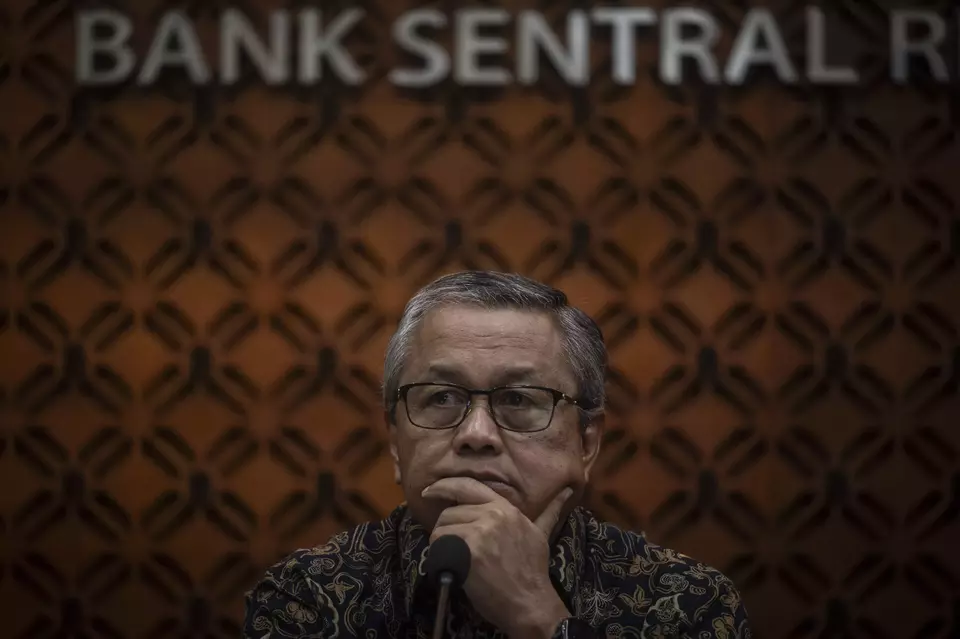
Jakarta. Economists have offered sharply contrasting forecasts for Bank Indonesia's interest-rate path, with projections ranging from another four rate hikes by year-end to a pause at 5.75% after the central bank's cumulative 100-basis-point rate hikes since May.
The differing views come ahead of Bank Indonesia's July Board of Governors Meeting, with some economists arguing that further tightening is needed to stabilize the rupiah, while others say policymakers should allow previous rate hikes to work through the economy before making another move.
Chief Economist at Sarana Multigriya Finansial (SMF) Martin D. Siyaranamual expects the central bank to take a more aggressive approach, projecting the benchmark BI Rate will reach 6.75% by the end of 2026 as pressure on the rupiah persists.
"Bank Indonesia needs to be more aggressive, and that should be reflected in the BI Rate. Based on our projections, the benchmark rate will reach 6.75% by the end of 2026," Martin said at a press conference in Jakarta on Wednesday.
Martin said the projection represents a relatively pessimistic scenario. In a more moderate case, he expects the BI Rate to end the year at around 6.25%, implying another two to three rate hikes totaling 50-75 basis points.
"Four more rate hikes would not be unusual. However, 6.75% represents a relatively pessimistic scenario. A more moderate outcome would be another two to three hikes, bringing the BI Rate to around 6.25%," he said.
According to Martin, persistent pressure on the rupiah reflects continued foreign selling of rupiah-denominated assets. At the same time, the government still requires substantial financing to support state spending, while Indonesia's foreign exchange reserves have been trending lower since the beginning of the year.
He said the government essentially has three options to meet its funding needs: cut spending, raise taxes, or issue more debt. If the first two prove difficult, additional borrowing would likely become the preferred option.
That, in turn, would push up yields on government bonds (SUN), increasing funding costs across the financial sector, including housing finance institutions such as SMF.
Martin warned that higher policy rates would directly raise banks' funding costs, resulting in more expensive mortgage loans and weaker demand for housing finance.
"The implication is higher funding costs, more expensive mortgage rates, and inevitably weaker mortgage demand. That will become a challenge for the housing finance industry," he said.
He added that rising yields on government bonds and Bank Indonesia's Rupiah Securities (SRBI) would also increase corporate borrowing costs, as corporate bond yields are generally priced against government debt.
Case for a pause
Other economists, however, expect Bank Indonesia to keep the BI Rate unchanged at 5.75% during its July policy meeting, arguing that the central bank should first assess the impact of the cumulative 100-basis-point tightening since May.
BTN macroeconomist Myrdal Gunarto said current financial market conditions do not warrant additional rate hikes, pointing to renewed foreign inflows into Indonesian stocks and government bonds, while the rupiah has strengthened to below Rp 17,899 per US dollar.
"As global investors have returned to both the stock market and the government bond market, with the rupiah trading below Rp 17,899 per US dollar, we expect the BI Rate to remain at 5.75%," Myrdal said.
He also noted that Indonesia's foreign exchange reserves increased in June from the previous month, signaling that the peak period of domestic foreign currency demand has likely passed.
The main risk now comes from rising oil import costs as global crude prices rebound, he said. Even so, consumer inflation is expected to remain below 3.5% in July.
"Our economy needs an interest-rate environment that can support stronger growth through consumption, investment, and export financing," Myrdal said.
Permata Bank Chief Economist Josua Pardede also argued that Bank Indonesia should hold rates steady, saying inflation remains within the central bank's target range.
Annual inflation accelerated to 3.34% in June from 3.08% in May, driven by the weaker rupiah, higher transportation costs, and rising import prices. Josua said the increase warrants close monitoring but does not yet justify another rate hike as long as the exchange rate and inflation expectations remain under control.
He cautioned, however, that the door remains open for further tightening if the rupiah weakens again, capital outflows intensify, or markets begin to question Bank Indonesia's ability to maintain stability. External risks also remain elevated as the US dollar stays strong, US interest rates remain restrictive, oil prices remain vulnerable to geopolitical tensions, and Indonesia's trade balance has deteriorated.
Indonesia posted a trade deficit of $1.16 billion in May, its first monthly deficit in more than six years, as imports outpaced exports.
According to Josua, any future rate hike would primarily aim to stabilize the rupiah and preserve capital inflows rather than curb inflation, which is currently driven more by supply-side and cost pressures than domestic demand.
He also described foreign portfolio inflows as fragile. Net inflows reached $5.65 billion between January and July 2026, but most were directed into SRBI and government bonds, while the stock market continued to record net outflows. Meanwhile, the rupiah weakened to around Rp 17,895 per US dollar on July 17.
"This shows that capital flows remain highly sensitive to yields and can reverse quickly," Josua said.
He added that keeping rates unchanged reflects policy prudence rather than limited policy space, giving previous rate hikes time to filter through money markets, bond markets, the exchange rate, bank lending, and inflation expectations.
Raising rates too aggressively, he warned, could send an unnecessary signal of panic while weighing on economic growth.
LPEM FEB UI economist Teuku Riefky shared a similar view. Although foreign portfolio inflows improved to a net $700 million between June 15 and July 15, the rupiah still weakened 2.09% over the period, from Rp 17,690 to Rp 18,060 per US dollar.
Despite the currency pressure, Indonesia's foreign exchange reserves increased to $145.6 billion in June from $144.9 billion in May, marking the first monthly increase since January.
LPEM expects inflation to remain within Bank Indonesia's target range despite rising risks from escalating tensions in the Middle East, which could lift global energy prices and imported inflation.
Riefky said additional monetary tightening would offer only limited support for the rupiah while potentially slowing credit growth, investment, and domestic economic activity.
"We expect Bank Indonesia to keep the BI Rate unchanged at the upcoming Board of Governors Meeting while assessing the impact of recent policy tightening on the exchange rate, inflation, and domestic economic activity," Riefky said.
Tags: Keywords: as a preferred
Related Articles

Rupiah Buckles Under MSCI Pressure, Sinks Past Rp 18,000
Rupiah fell 0.50% to Rp 18,027 per dollar as MSCI’s proposed downgrade of Indonesia’s market status rattled investor confidence.
Bank Indonesia Defends Rupiah as MSCI Review Fuels Selling Pressure
Bank Indonesia pledges continued market intervention as the rupiah breaches Rp 18,000 per dollar amid MSCI-related selling pressure.
Rupiah Breaks Rp 18,000 as MSCI Review Triggers Market Turmoil
Rupiah breached Rp 18,000 per USD as MSCI's proposed market reclassification rattled investor sentiment and intensified market pressure.
Rupiah Edges Toward Rp 18,000 as Riyadh Attacks Rattle Markets
Rupiah weakens to Rp 17,913 per dollar as Fed rate hike fears, Middle East tensions and MSCI uncertainty weigh on sentiment.
Rupiah Strengthens to Rp 17,899 per Dollar Despite Fiscal Deficit
Rupiah rose 0.09% to Rp 17,899 per dollar despite Indonesia’s Rp 319 trillion budget deficit and ongoing US-Iran tensions.
Indonesia’s FX Reserves Dip $200 M to $146.3 B in September
Indonesia’s FX reserves fell $200 million to $146.3 billion in September as rupiah stabilization and debt payments weighed.
Jakarta Stocks Struggle to Hold Gains as Forex Reserves Slip to $146.3B
Jakarta stocks struggle to hold gains as forex reserves slip to $146.3B, while global market pressure weighs on investor sentiment.
Jakarta Stocks Extend Gains as Investors Await Forex Reserves Data
Indonesian stocks rose for a third day as investors awaited September forex reserves data and assessed economic growth prospects.
Rupiah Gains as World Bank Upgrades Indonesia’s 2026 Growth Forecast
Rupiah strengthens to Rp17,899 as the World Bank raises Indonesia’s 2026 growth forecast to 5.2%.
Jakarta Stocks Open Higher on US Jobs Data, BI Policy Support
Jakarta stocks opened higher as weak US jobs data boosted hopes for a Fed rate pause, while BI continued supporting the rupiah.The Latest

UN Boss Commends Indonesian Forest Protection Despite Persistent Haze Problem
Outgoing UN boss António Guterres' comment comes at an ironic time amid Indonesia's struggle with forest fires.
Indonesia Must Benefit Most From Its Minerals: UN Chief
Outgoing UN chief António Guterres says that Indonesia must "retain a far greater share of the economic value" from its minerals.
Chandra Asri Group Receives Trade Finance Excellence Award, Reinforcing Its Role in Indonesia’s Industrial Development
Chandra Asri Group receives the Trade Finance Excellence Award at CIMB Niaga Business Summit 2026.
AEON MALL Deltamas Brings 11 Sports and Creative Competitions to AEONLYMPIC 2026
AEON MALL Deltamas hosts AEONLYMPIC 2026, featuring 11 sports and creative competitions, with more than 3,100 participants.
Indonesian Stocks Extend Losses for Third Day, Fall 3.64% to 4,996
Indonesian stocks fell 3.64% on Monday, extending losses for a third straight session amid MSCI concerns and tighter trading limits.Most Popular
