



New DNA Evidence Rewrites Long-Told Stories of People in Ancient Pompeii
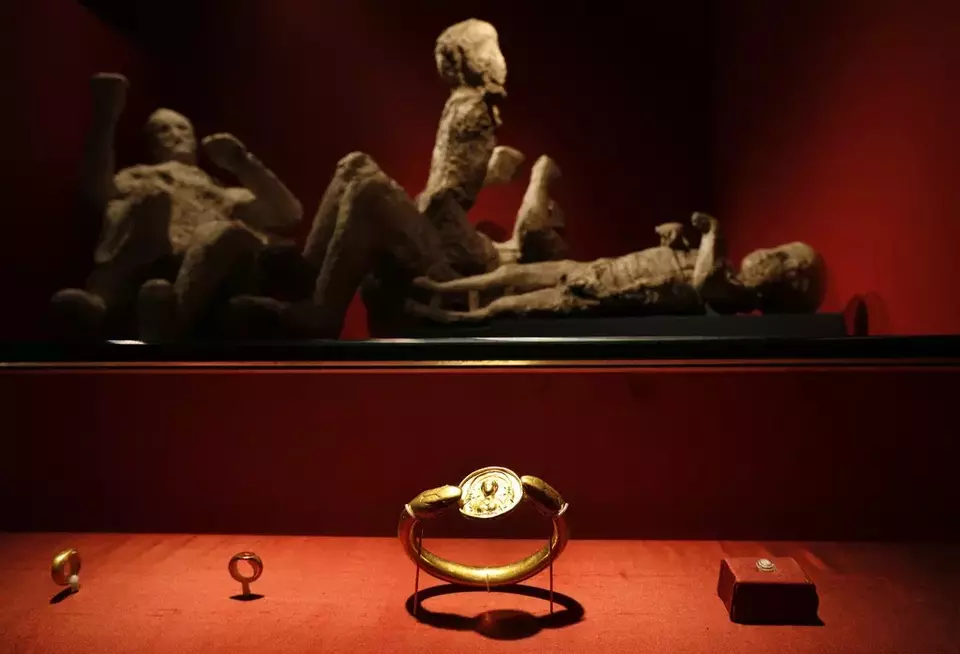
When a volcanic eruption buried the ancient city of Pompeii, the last desperate moments of its citizens were preserved in stone for centuries.
Observers see stories in the plaster casts later made of their bodies, like a mother holding a child and two women embracing as they die.
But new DNA evidence suggests things were not as they seem — and these prevailing interpretations come from looking at the ancient world through modern eyes.
“We were able to disprove or challenge some of the previous narratives built upon how these individuals were kind of found in relation to each other,” said Alissa Mittnik of the Max Planck Institute for Evolutionary Anthropology in Germany. “It opens up different interpretations for who these people might have been.”
Mittnik and her colleagues discovered that the person thought to be a mother was actually a man unrelated to the child. And at least one of the two people locked in an embrace — long assumed to be sisters or a mother and daughter — was a man. Their research was published Thursday in the journal Current Biology.
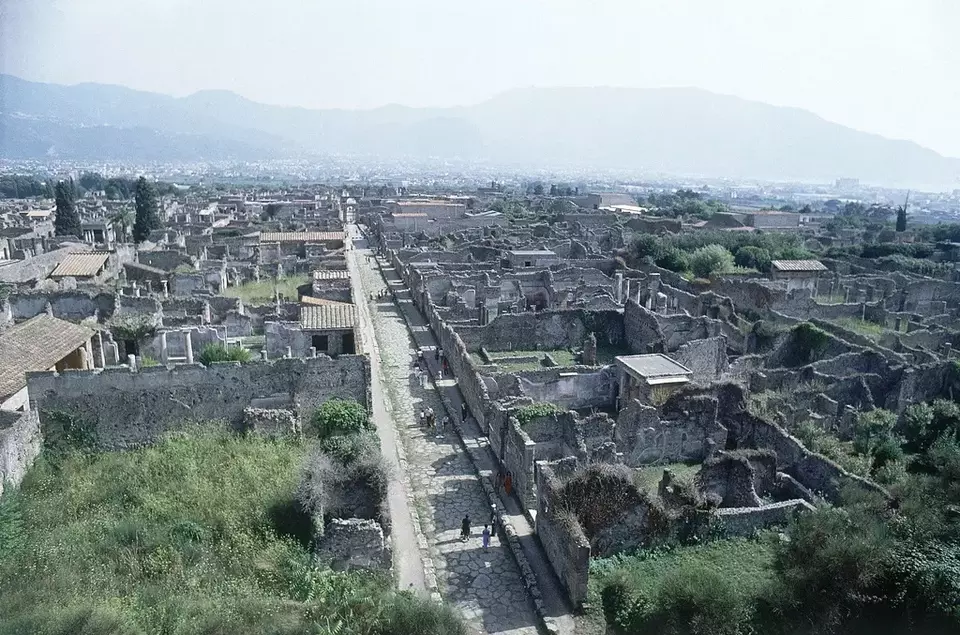
The team, which also includes scientists from Harvard University and the University of Florence in Italy, relied on genetic material preserved for nearly two millennia. After Mount Vesuvius erupted and destroyed the Roman city in 79 AD, bodies buried in mud and ash eventually decomposed, leaving spaces where they used to be. Casts were created from the voids in the late 1800s.
Researchers focused on 14 casts undergoing restoration, extracting DNA from the fragmented skeletal remains that mixed with them. They hoped to determine the sex, ancestry and genetic relationships between the victims.
There were several surprises in “the house of the golden bracelet,” the dwelling where the assumed mother and child were found. The adult wore an intricate piece of jewelry, for which the house was named, reinforcing the impression that the victim was a woman. Nearby were the bodies of another adult and child thought to be the rest of their nuclear family.
DNA evidence showed the four were male and not related to one another, clearly showing “the story that was long spun around these individuals” was wrong, Mittnik said.
Researchers also confirmed Pompeii citizens came from diverse backgrounds but mainly descended from eastern Mediterranean immigrants – underscoring a broad pattern of movement and cultural exchange in the Roman Empire. Pompeii is located about 150 miles (241 kilometers) from Rome.
The study builds upon research from 2022 when scientists sequenced the genome of a Pompeii victim for the first time and confirmed the possibility of retrieving ancient DNA from the human remains that still exist.
“They have a better overview of what’s happening in Pompeii because they analyzed different samples," said Gabriele Scorrano of the University of Rome Tor Vergata, a co-author of that research who was not involved in the current study. “We actually had one genome, one sample, one shot.”
Though much remains to be learned, Scorrano said, such genetic brushstrokes are slowly painting a truer picture of how people lived in the distant past.
Tags: Keywords: as a preferred
Related Articles

Mount Anak Krakatau Erupts Three Times Tuesday Morning
Mount Anak Krakatau erupted three times Tuesday morning, prompting authorities to bar activities within 3 kilometers of its active crater.The Latest

UN Boss Commends Indonesian Forest Protection Despite Persistent Haze Problem
Outgoing UN boss António Guterres' comment comes at an ironic time amid Indonesia's struggle with forest fires.
Indonesia Must Benefit Most From Its Minerals: UN Chief
Outgoing UN chief António Guterres says that Indonesia must "retain a far greater share of the economic value" from its minerals.
Chandra Asri Group Receives Trade Finance Excellence Award, Reinforcing Its Role in Indonesia’s Industrial Development
Chandra Asri Group receives the Trade Finance Excellence Award at CIMB Niaga Business Summit 2026.
AEON MALL Deltamas Brings 11 Sports and Creative Competitions to AEONLYMPIC 2026
AEON MALL Deltamas hosts AEONLYMPIC 2026, featuring 11 sports and creative competitions, with more than 3,100 participants.
Indonesian Stocks Extend Losses for Third Day, Fall 3.64% to 4,996
Indonesian stocks fell 3.64% on Monday, extending losses for a third straight session amid MSCI concerns and tighter trading limits.Most Popular
