



Connecting Communities: Jokowi’s Efforts to Boost Indonesia’s Digital Economy
Jakarta. A decade ago, President Joko "Jokowi" Widodo initiated nation-building with an Indonesia-centric perspective. One of his primary focuses has been digital transformation, aiming to digitize communities across the archipelago.
During Jokowi’s 10 years in office, intensive development in the telecommunications and informatics sectors has significantly contributed to the growth of Indonesia’s digital economy. It is estimated that by 2030, Indonesia's digital economy will reach Rp 5,522 trillion ($357 billion).
“Internet user growth has been a key driver of Indonesia’s digital economy. By 2030, our digital economy is predicted to reach $357 billion,” said Nezar Patria, Deputy Minister of Communication and Informatics, recently.
Digital transformation holds immense potential. From a business perspective, it can rapidly reshape the economy at scale. From a governmental standpoint, it can enhance transparency and accountability, streamline bureaucracy, prevent corruption, and reduce tax evasion.
For society, digital transformation brings improvements in healthcare and education, expands social inclusion, and enhances overall well-being. Given its significant positive impact, digitalization has become a necessity rather than an option or luxury for remaining competitive in today’s era.
One of the major achievements over the past decade is the increase in internet speed. The average speed rose from 2.5 Mbps in 2014 to 25 Mbps in 2024—a tenfold increase that has transformed how people work, learn, and interact.
This increase in speed corresponds with the growth of internet penetration in Indonesia. According to data from the Communication and Informatics Ministry, internet penetration rose sharply from 34.9 percent in 2014 to 77.02 percent in 2024, meaning that more than three-quarters of Indonesia's population now has internet access.
This growth is supported by an increase in allocated radio frequency spectrum. In 2014, the allocated spectrum was only 294 MHz, but by 2024, it had increased nearly fivefold to 1,372 MHz. This increase includes various frequencies, such as the 2,300 MHz band, which expanded from 30 MHz to 190 MHz.
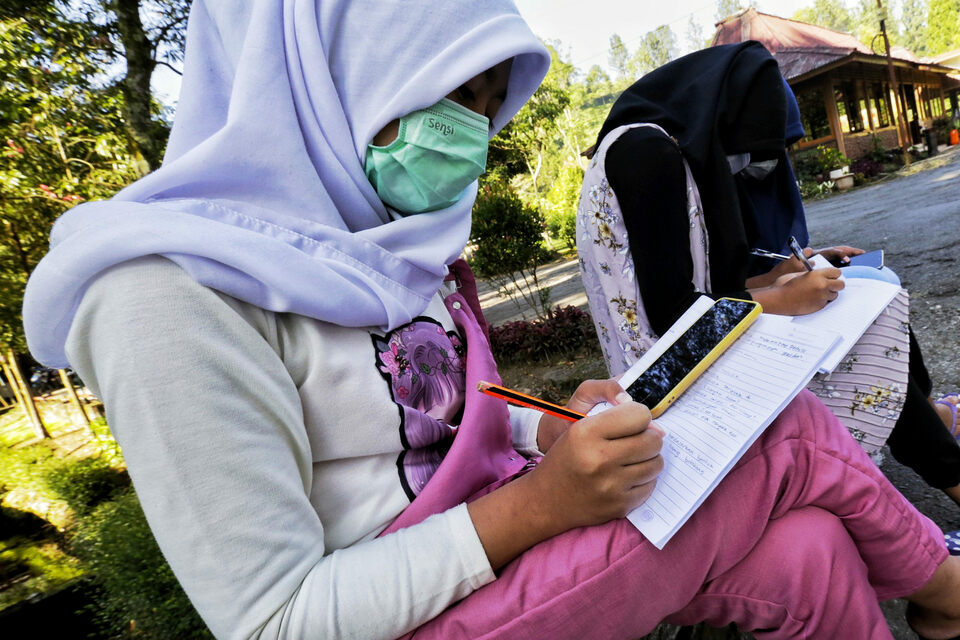
The Covid-19 pandemic accelerated the shift toward digitalization across various aspects of life. It not only boosted online learning but also encouraged small business owners to sell online.
Data from Bank Indonesia shows that during large-scale social restrictions (PSBB) in April 2020, digital transactions increased by 64.48 percent, and the volume of digital transactions grew by 37.35 percent year-on-year. The public turned to digital platforms to maintain activities and social interactions during the pandemic.
By laying the groundwork for digital transformation, the quality of public services has significantly improved, creating new reliability across the region.
Building digital infrastructure is key to ensuring internet access for everyone and eliminating areas without signal, particularly in remote, frontier, and outer regions.
During Jokowi's 10-year presidency, internet access has been expanded to 18,697 locations, with 7,283 telecommunications towers (BTS) established.
One resident of Golo Mori Village, located in the Komodo District of West Manggarai, East Nusa Tenggara (NTB), Amir, shared that they previously had to venture out to sea to get a phone signal. “We used to have to go out to sea on a boat just to find a signal, and it was unreliable. However, since the Bakti Kominfo (internet access) program, we can now access the internet from home. Thank you, Mr. Jokowi,” Amir told Beritasatu.com on Saturday.
The government has not only focused on construction but has also brought 4G signals to remote areas, ensuring that all villages are connected to high-speed internet.
Internet access is also accelerating public services toward the concept of smart government. For instance, the Public Service Mall facilitates easier management of permits for citizens without the need to relocate.
Additionally, various digital applications have become local government innovations to ease public access. One notable example is the early diagnosis and treatment program in Teluk Bintuni, which has successfully reduced malaria prevalence in West Papua.
In 2017, this program decreased malaria transmission from 9.2 percent to 0.02 percent across 12 villages. It also lowered malaria morbidity from 115 cases per 1,000 residents in 2009 to just 5 cases per 1,000 residents in 2016.
This innovation received recognition from the United Nations Public Service Awards (UNPSA) in the category of “Reaching the Most Vulnerable and Marginalized through Inclusive Service.”
Digitalization has also enhanced competitiveness and investment ease in Indonesia. The online licensing system (Online Single Submission/OSS) has proven to facilitate entrepreneurs, alongside an e-catalog for MSME products and the implementation of financial technologies such as e-commerce and QRIS.
The foundation for digital transformation that has been established will continue to be developed within the Inadigital ecosystem, a unified application aimed at simplifying public access to government services.
Tags: Keywords: as a preferred
Related Articles

Two Years Into Prabowo Presidency, Infrastructure Takes Back Seat
Prabowo’s social spending push raises concerns over infrastructure delays and uneven growth beyond Java.
Indonesia Ramps Up Digital Economy Push
Indonesia continues its push to grow its digital economy and financial technologies.
Jokowi Confirms PSI Membership After Months of Speculation
Jokowi confirms he joined PSI in October 2025, ending months of speculation over his political ties to the party.
Jokowi's Son, Megawati's Daughter Set for 2029 Faceoff in Solo
Ganjar said Kaesang has every right to run for parliament, dismissing concerns over PDIP's Central Java stronghold.
Shopee's Courier Algorithm Still Raises Competition Concerns in Indonesia
Indonesia's antitrust regulator says Shopee's courier algorithm still favors SPX despite reforms aimed at restoring competition.
Indonesia Collects $3.05 Billion in Digital Economy Taxes Through June
Indonesia collected Rp 54.7 trillion in digital economy taxes through June, led by Rp 42.01 trillion in VAT on e-commerce.
Jokowi Launches Nationwide Political Tour Wearing Son’s PSI Party Uniform
Jokowi has begun his first nationwide political tour since leaving office, openly wearing the uniform of the party led by his youngest son.
Indonesia Data Center Boom Draws Fresh $500 Million Investment
Indonesia's data center industry attracts fresh investment as AI and cloud demand drive rapid expansion across Greater Jakarta.
China Products, Rising Fees Hit Indonesian Online Sellers
Indonesian MSMEs face shrinking margins as rising marketplace fees collide with a flood of low-cost Chinese products.
Rising Seller Fees Mark New Phase for Indonesia’s E-Commerce Industry
Indonesian online sellers are reassessing marketplace dependence as rising platform fees pressure margins.The Latest

Prabowo Calls Meeting on Forest Fires as Haze Reaches Jakarta, Singapore
Prabowo summons senior officials to discuss forest fires as smoke reaches Jakarta and Malaysia pushes for regional action.
Jakarta Outranks Amsterdam in Global Public Transport Survey
Jakarta climbs two places to 15th in Time Out's 2026 public transport survey, with its governor citing better network integration.
MSCI Concerns, Tighter IDX Trading Rules Send Indonesian Stocks Down 5% by Midday
Indonesian stocks plunge 5% by midday as MSCI concerns weigh on sentiment and the IDX tightens its daily downside limit to 7%.
Jakarta Prepares 367 Health Facilities as Haze Reaches the Capital
Jakarta prepares 367 health facilities to treat potential haze-related illnesses after smoke from Sumatra and Kalimantan crosses the region.
Jakarta Expands Flood Prevention With New Water Storage Ponds
Jakarta opens two East Jakarta water storage ponds as it expands flood prevention efforts through reservoirs and river normalization.Most Popular
