



Comparing Harris and Trump's Strategies on Artificial Intelligence
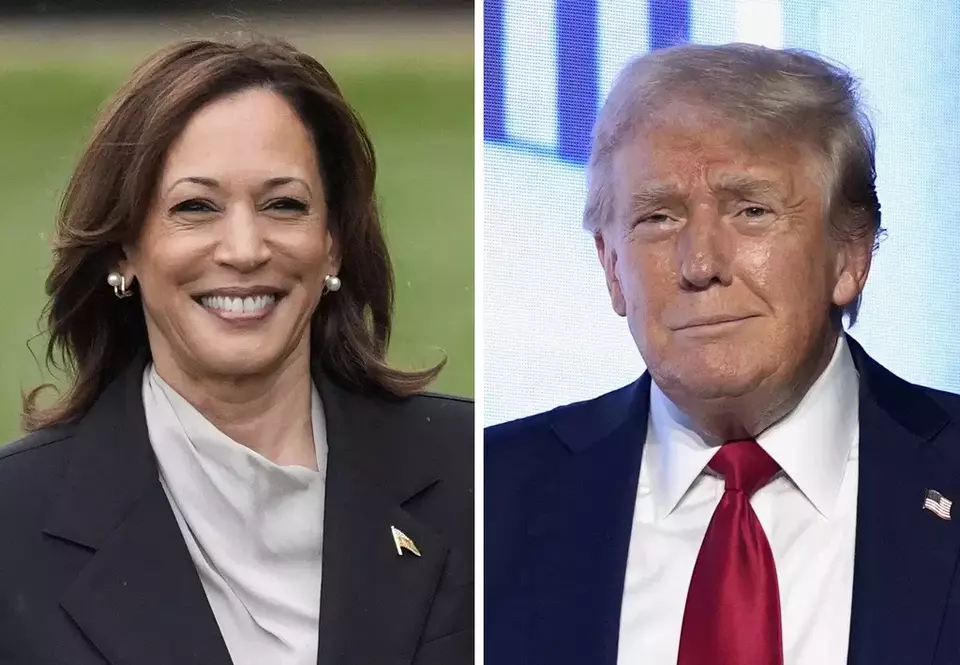
Washington. Two days after President Joe Biden signed a sweeping executive order on artificial intelligence last year, Vice President Kamala Harris brought the wonky document to a global AI summit, telling an international audience what set the U.S. apart in its approach to AI safety.
In an event meant to address the potential catastrophes posed by futuristic forms of AI, Harris made waves by pivoting to present-day concerns — and the need to codify protections quickly without stifling innovation.
"When a senior is kicked off his healthcare plan because of a faulty AI algorithm, is that not existential for him?" Harris told a crowd in London last November. "When a woman is threatened by an abusive partner with explicit deepfake photographs, is that not existential for her?"
Now, she's running for president and her chief opponent, former President Donald Trump, has said he wants to "cancel" the Biden order.
Here are the candidates' records on AI:
Trump's approach
Biden signed his AI executive order last Oct. 30, and soon after Trump was signaling on the campaign trail that, if re-elected, he'd do away with it. His pledge was memorialized in the platform of this month's Republican National Convention.
"We will repeal Joe Biden's dangerous Executive Order that hinders AI Innovation, and imposes Radical Leftwing ideas on the development of this technology," says Trump's platform. "In its place, Republicans support AI Development rooted in Free Speech and Human Flourishing." The Trump campaign didn't respond to a request for more details.
Trump didn't spend much time talking about AI during his four years as president, though in 2019 he became the first to sign an executive order about AI. It directed federal agencies to prioritize research and development in the field.
Before that, tech experts were pushing the Trump-era White House for a stronger AI strategy to match what other countries were pursuing. In 2017, not long before Google quietly introduced a research breakthrough helping to set the foundation of the technology now known as generative AI, then-Treasury Secretary Steven Mnuchin brushed aside concerns about AI displacing jobs, saying that prospect was so far in the future that "it's not even on my radar screen."
That perspective later shifted, with Trump's top tech adviser telling corporate leaders in 2018 that AI-fueled job displacement is "inevitable" and that "we can't sit idle, hoping eventually the market will sort it out." The 2019 order called on federal agencies to "protect civil liberties, privacy, and American values" in applying AI technologies, and to help workers gain relevant skills.
Trump also in the waning weeks of his administration signed an executive order promoting the use of "trustworthy" AI in the federal government. Those policies carried over into the Biden administration.
Harris' approach
The debut of ChatGPT nearly halfway through Biden's presidential term made it impossible for politicians to ignore AI. Within months, Harris was convening the heads of Google, Microsoft, and other tech companies at the White House, a first step down a path that brought leading developers to agree to voluntary commitments to ensure their technology won't put people's rights and safety at risk.
Then came Biden's AI order, which used Korean War-era national security powers to scrutinize high-risk commercial AI systems but was mostly directed at safeguarding the government's use of the technology and setting standards that could foster commercial adoption. Unlike the European Union, however, the US still has no broad rules on AI — something that would require Congress to pass.
Harris already brought to the White House a deep understanding of Silicon Valley, having grown up and worked in the San Francisco Bay Area and later served as California's attorney general, where she forged relationships with some tech leaders, said Alondra Nelson, former director of the White House Office of Science and Technology Policy.
Even before ChatGPT, Nelson led the White House efforts to draft a blueprint for an AI "bill of rights" to guard against the technology's potential harms. But it was the speech at the Global Summit on AI Safety in London where Harris brought all those threads together and "articulated to the world what American AI strategy was," Nelson said.
Harris said she and Biden "reject the false choice that suggests we can either protect the public or advance innovation." And while acknowledging a need to consider existential threats to humanity, Harris emphasized "the full spectrum of AI risk."
"She kind of opened the aperture of the conversation about potential AI risks and harms," Nelson said.
 as a preferred
Related Articles

Trump’s New Press Secretary Out After Less Than a Week
Katie Zacharia’s brief White House tenure ends after less than a week, following a short first briefing and reported tensions over her role.
Defying Trump, Zelensky Says Will Keep Hitting Russian Refineries
Russia on Thursday said Ukraine had attacked an oil refinery in Ryazan, south of the capital, Moscow.
Fury as US Federal Agents Search Ilhan Omar's Home
"Make no mistake: this is an attempt to target political enemies and weaponize federal law enforcement," Omar wrote on X.
‘It’s Trump Who Sets Oil Price’: Prabowo’s Brother
Neither the Indonesian government nor OPEC sets the oil price, Hashim Djojohadikusumo says.
Indonesia Businesses Urged to Move Beyond AI Pilot Projects
Salesforce warns Indonesian companies risk missing AI productivity gains by delaying deployment and failing to prepare workers.
AI Adoption Exposes Indonesian Firms to Data Leak Risks
AI adoption is surging in Indonesia, raising concerns over data leaks, weak safeguards and the risks of unauthorized AI use.
Navi Pillay, South African Rights Champion, Wins Nobel Peace Prize
"If you clap a little bit more, I may share this prize with Trump," the 85-year-old said.
Indonesia Can Hit 8% Growth With Housing, AI, Green Energy: Hashim
Hashim Djojohadikusumo says housing, AI, digital infrastructure and green energy could help Indonesia achieve 8% economic growth.
Airlangga Urges Indonesia to Catch Up With Vietnam in Digital, AI Industries
Indonesia needs to accelerate digital, semiconductor and AI industries to catch up with Vietnam and achieve its 8% growth target.
AI Data Centers Could Consume 4% of Global Power by 2035, World Bank Says
AI data centers are set to triple global power demand by 2035, putting Southeast Asia’s electricity grids under pressure.The Latest

Prabowo Calls Meeting on Forest Fires as Haze Reaches Jakarta, Singapore
Prabowo summons senior officials to discuss forest fires as smoke reaches Jakarta and Malaysia pushes for regional action.
Jakarta Outranks Amsterdam in Global Public Transport Survey
Jakarta climbs two places to 15th in Time Out's 2026 public transport survey, with its governor citing better network integration.
MSCI Concerns, Tighter IDX Trading Rules Send Indonesian Stocks Down 5% by Midday
Indonesian stocks plunge 5% by midday as MSCI concerns weigh on sentiment and the IDX tightens its daily downside limit to 7%.
Jakarta Prepares 367 Health Facilities as Haze Reaches the Capital
Jakarta prepares 367 health facilities to treat potential haze-related illnesses after smoke from Sumatra and Kalimantan crosses the region.
Jakarta Expands Flood Prevention With New Water Storage Ponds
Jakarta opens two East Jakarta water storage ponds as it expands flood prevention efforts through reservoirs and river normalization.Most Popular
