



Breakdown of 15 Economic Policy Stimuli for Public Welfare in 2025
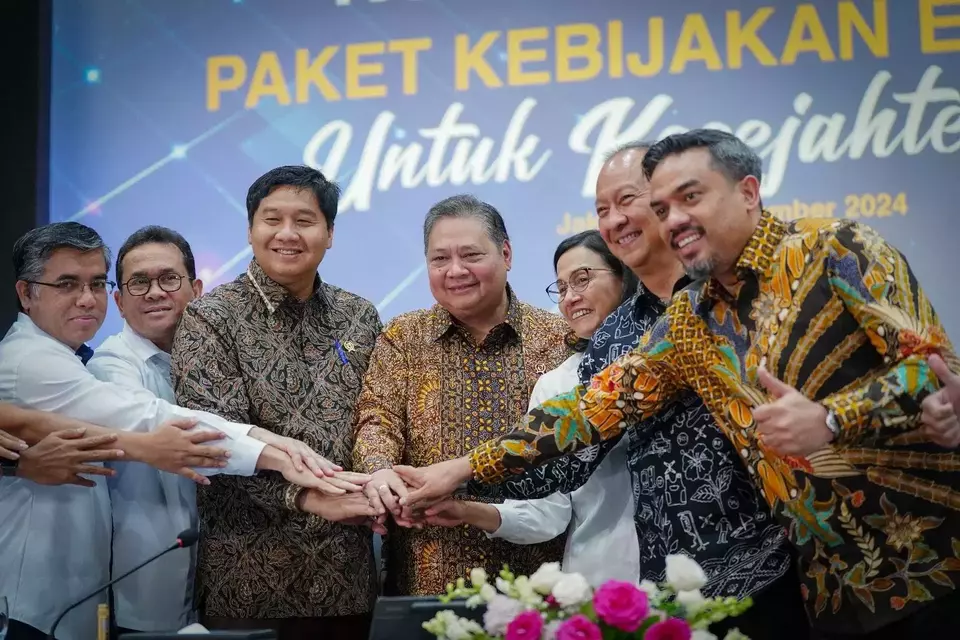
Jakarta. As the year 2025 approaches, the Government continues its consistent efforts to maintain the purchasing power and welfare of the people by preparing a package of economic policy incentives. These incentives include tax exemptions and reductions for various segments of society and businesses, which will be implemented in early 2025.
For low-income households, the Government will provide a series of policy facilities, including:
- Value-added tax (VAT) Subsidized by the Government (DTP) of 1% from the 12% VAT rate for bulk palm oil with the "MINYAKITA" brand, so the VAT charged remains at 11%.
- VAT DTP of 1% from the 12% VAT rate is also applied to wheat flour, so the VAT charged on wheat flour remains 11%.
- Industrial sugar is also a commodity that receives the 1% VAT DTP from the 12% VAT rate, so it will be charged at 11%. This industrial sugar is an important input for the food and beverage industry, which accounts for 36.3% of the total processing industry.
- Food Aid in the form of 10 kilograms of rice per month for low-income households for 2 months (January and February 2025), targeting 16 million Food Aid Recipients (PBP).
- 50% discount for customers with electricity up to 2200 VA for 2 months (January-February 2025), targeting 81.42 million customers, covering a consumption of 9.1 TWh/month, which is equivalent to 35% of the national electricity consumption.
In addition to targeting low-income households, the economic policy facilities designed by the Government are also aimed at the middle class, including:
- Government-borne VAT (DTP) for purchasing homes priced up to Rp 5 billion with a tax base of up to Rp 2 billion. This incentive scheme provides a 100% discount from January to June 2025, and a 50% discount from July to December 2025.
- 10% government-borne VAT (DTP) for battery electric vehicles (BEVs) on certain four-wheeled EVs and buses with a minimum local content of 40%, and 5% government-borne VAT for buses with a minimum local content between 20% and less than 40%.
- Government-borne Luxury Goods Tax of 15% on imported fully built-up (CBU) electric vehicles and locally produced electric vehicles (CKD).
- Exemption of Import Duties for CBU EVs with a 0% tariff, in line with ongoing programs.
- PPnBM DTP incentive of 3% for hybrid engine vehicles.
- Government-borne Income Tax (PPh 21) incentive for workers earning up to Rp 10 million/month in labor-intensive sectors such as textiles, apparel, footwear, and furniture.
- Optimizing unemployment insurance from state-owned employee insurer BPJS Ketenagakerjaan as a buffer for workers who experience layoffs by providing cash benefits of 60% flat of their wages for 6 months, training benefits of Rp 2.4 million, easy access to job information, and access to the Pre-Employment Program.
- 50% discount on Work Accident Insurance (JKK) contributions for 6 months in labor-intensive sectors, targeting 3.76 million workers.
Specifically, the Government has also prepared incentive facilities for businesses, particularly for the protection of MSMEs and Labor-Intensive Industries, through:
- Extension of the 0.5% Final Income Tax until 2025 for Individual Taxpayers (WP OP) MSMEs that have benefited for 7 years, ending in 2024. Other WP OP MSMEs can still use the 0.5% Final Income Tax for 7 years since they first registered according to Government Regulation No. 55 of 2022. MSMEs with an annual turnover below Rp 500 million will be exempt from Income Tax.
- Financing for labor-intensive industries for machinery revitalization to increase productivity with an interest subsidy scheme of 5% and specific credit limits.
 as a preferred
Related Articles

All Workers Paid Under Rp 10 Million Exempt From Income Tax in 2027
The government-borne income tax will apply to workers earning less than Rp 10 million a month regardless of the sector, starting next year.
Industry Groups Welcome LPG and Plastic Duty Waiver, But Warn of Limited Impact
The measure is part of the government’s Rp 26.34 trillion ($1.5 billion) economic stimulus package for the second half of 2026.
Government Launches $1.5 Billion Economic Stimulus Package for 2nd Half of 2026
Indonesia will spend $1.5 billion on transport incentives, food aid, and workforce programs to support growth through 2026.
Indonesia Unveils $28 Million Subsidy Program for Tofu and Tempeh Producers
Indonesia will subsidize soybean purchases for tofu and tempeh producers to help keep staple foods affordable.The Latest

Prabowo Calls Meeting on Forest Fires as Haze Reaches Jakarta, Singapore
Prabowo summons senior officials to discuss forest fires as smoke reaches Jakarta and Malaysia pushes for regional action.
Jakarta Outranks Amsterdam in Global Public Transport Survey
Jakarta climbs two places to 15th in Time Out's 2026 public transport survey, with its governor citing better network integration.
MSCI Concerns, Tighter IDX Trading Rules Send Indonesian Stocks Down 5% by Midday
Indonesian stocks plunge 5% by midday as MSCI concerns weigh on sentiment and the IDX tightens its daily downside limit to 7%.
Jakarta Prepares 367 Health Facilities as Haze Reaches the Capital
Jakarta prepares 367 health facilities to treat potential haze-related illnesses after smoke from Sumatra and Kalimantan crosses the region.
Jakarta Expands Flood Prevention With New Water Storage Ponds
Jakarta opens two East Jakarta water storage ponds as it expands flood prevention efforts through reservoirs and river normalization.Most Popular
