



ASEAN in the Global Economy
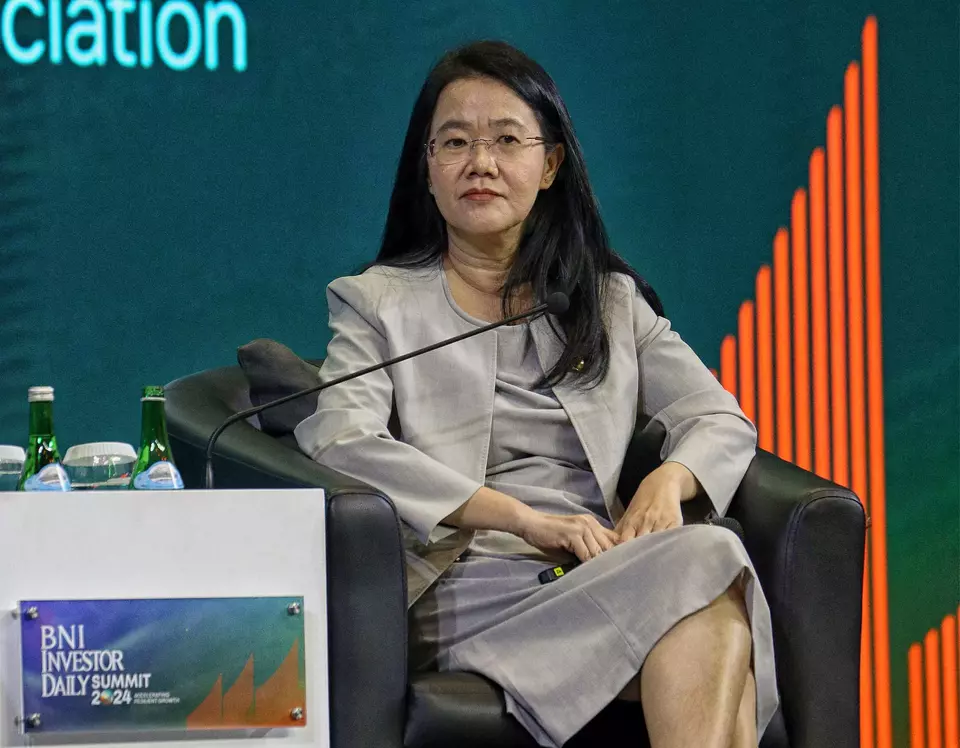
Jakarta. Dr Lili Yan Ing, Secretary General of the International Economic Association (IEA), delivered a speech on "ASEAN in the Global Economy" at the 2024 BNI Investor Daily Summit held in Jakarta Convention Center on Wednesday.
In her remarks, Ing started by underscoring the importance of ASEAN in the global economy these days.
“First, when ASEAN was established back in 1967, ASEAN was a mere $24 billion economy. But this year, ASEAN is estimated to be the 4th largest economy in the world recording $4.1 trillion, after the US (1st), China (2nd), and Germany (3rd)," Dr Ing told the forum.
"Second, in 2023, ASEAN contributed 7 percent to global trade, 5 percent to global manufacturing value-added, and ASEAN was home to 17 percent of global foreign direct investment [FDI]. ASEAN gradually and surely has cemented itself as the top trading partner for major economies. In 2023, ASEAN was the 1st trading partner for China, 2nd for Japan, 3rd for South Korea, and 4th for the US,” she said.
Dr Ing explained economic transformation for the last half century, particularly on how global governance once was dominated by major developed countries (namely G7 countries) until the early 1970s, they have gradually relinquished their positions to emerging economies. These emerging economies have increased their shares in key four metrics: output, trade, manufacturing value-added, and FDI.
The emerging economies include China, India, South Korea, and Southeast Asia (including Indonesia).
Dr Ing highlighted the economic shifts in the last half century are not caused by significant changes in the growth performance of developed countries but rather by the rapid catching up of a few emerging market economies, such as China, India, South Korea, and Southeast Asia. She underscored that economic development is a process of continuous structural transformation in industries and technology (and human capital), which raise productivity, as well as hard infrastructure and soft institutions, that reduce transaction costs.
The governments of those few successful countries adopted pragmatic approaches to turn their countries’ comparative advantage from “latent” to “actual” and exploited the latecomer advantages throughout their industrialization and technology catching-up process, according to Dr Ing.
Executive Director of Asia-Pacific Economic Cooperation, Dr Rebecca Sta Maria, who shared the session with Dr Ing, illustrated the importance of strengthening economic cooperation of APEC countries, through at least three channels: first, trade and investment liberalization.
APEC members should take necessary actions to reduce tariff and non-tariff barriers to trade and investment that boost job creation, incomes and growth, aiming to have a Free Trade Area of the Asia-Pacific (FTAAP). Second, through business facilitation. APEC members should pursue measures to reduce the time, costs, and uncertainty of doing business in the region and open new economic opportunities ensuring to also include small firms, women, and youth. Third, through economic and technical cooperation (ECOTECH). It is crucial to build the technical capacity of APEC's diverse members to promote trade and investment, and to have robust, secure, and sustainable economic growth that widely benefits the region's people.
Dr Ing closed the session by reminding ASEAN to be more prepared for the current US-China trade (now extended to technology, strategic industries, and security) tensions that will most likely remain the same, if it is not escalating.
“Tensions will only slow down economic recovery and derail economic development. ASEAN has always been a peace promoter, we are very clear politically and economically that we have never and will never take any sides. We treat countries with equal treatment and respect. We see and treat the US equally as important as China, the EU, Japan, South Korea, Palestine, Brazil, South Africa, Mozambique, and all other countries. We respect all countries as our trading and investment partners, as our development partners, to grow and prosper together.”
President Joko "Jokowi" Widodo kicked off the 2024 BNI Investor Daily Summit on Tuesday with his successor Prabowo Subianto wrapping up the forum the following day. Energy and Mineral Resources Minister Bahlil Lahadalia closed the morning's session that focused on trade and investment.
Tags: Keywords: as a preferred
Related Articles

IMF Upgrades Indonesia’s 2026 Growth Forecast to 5.1%
Indonesia has yet to beat Vietnam as the fastest-growing ASEAN economy.
ASEAN Digital Pact to Drive Cross-Border Payments
ASEAN is set to sign its digital economy pact, which Standard Chartered believes will change how the members do business with each other.
Indonesia Races with ASEAN Neighbors for Investments
Indonesia and its ASEAN neighbors are pursuing aggressive reforms to attract foreign investors, according to Investment Minister Rosan.
Big Spending, Limited Revenue: Economists Question Prabowo’s Economic Strategy
Prabowo’s flagship programs face scrutiny as rising spending, weak job creation and deindustrialization threaten Indonesia’s growth.
ADB to Inject Another $3 Billion to ASEAN Tourism
Between 2015 and 2025, ADB has deployed over $3.7 billion to turn ASEAN into better tourist magnets.
‘ASEAN Members Don’t Always Agree, But We Stay Together’: Indonesia
Indonesia says ASEAN members “choose to keep talking, even when agreement is difficult”.
'Indonesia Isn't That Rich': Economists Question Universal Free Meal Program
Economists are urging Indonesia to target free meals at those most in need, arguing a narrower program could cost less than Rp 8 trillion.
Indonesia Wants to Link QR Payment with Timor-Leste
In ASEAN, Indonesia's QRIS payment system is already available in Singapore, Thailand, and Malaysia.
Hong Kong Investors Gain Equal Treatment in New ASEAN Deal
ASEAN has promised not to treat Hong Kong investors differently under a freshly inked deal.
Indonesia’s Manufacturing Stagnation Raises Deindustrialization Risk: Economist
Indonesia risks deindustrialization as manufacturing stagnates and commodity dependence continues 81 years after independence.The Latest

Jakarta Seeks to Become Southeast Asian Film Production Hub
Jakarta aims to become a Southeast Asian film hub by attracting foreign productions and expanding global partnerships.
Indonesia’s Value-Added Processing Investment Reaches $26.69 B
Indonesia’s value-added processing investment rose 11.3% year-on-year to $26.69 billion in January-September 2026.
Indonesia Steps Up Trade Deals to Unlock Export Opportunities Worth Billions
Indonesia seeks to unlock $10.9 billion in potential export growth through a trade deal with the European Union.
INDEF: Only 5% of Formal MSMEs Join Free Meals Program, Most See No New Business
Only 5% of formal MSMEs have ties to Indonesia’s free meals program, with most businesses yet to see new opportunities, INDEF says.
Indonesia Lags Behind Vietnam in Tariff-Hit US Furniture Export
Furniture producers association says that Indonesia needs to improve its logistics if it wants to catch up to Vietnam in US exports.Most Popular
