



Will Sugary Drinks Tax Keep Indonesians Away From Diabetes?
President Joko "Jokowi" Widodo enters his second term as president facing all too familiar national health problems: infectious and non-communicable diseases remain prevalent and there has been very little progress in reducing maternal mortality, child stunting, tuberculosis, HIV and diabetes.
Child stunting prevention has become the main priority of the government. Consequently, though, non-communicable diseases like diabetes and obesity often become a sideshow.
The fact is, the two above conditions lead to heart disease and stroke, the two most common causes of premature death in Indonesia.
Sadly, the government's Healthy Community Campaign (Germas) has become more of a gimmick than a systematic intervention to curtail non-communicable disease morbidity and mortality.
Still, against that backdrop, a novel idea emerged recently as an alternative to reduce the prevalence of non-communicable diseases.
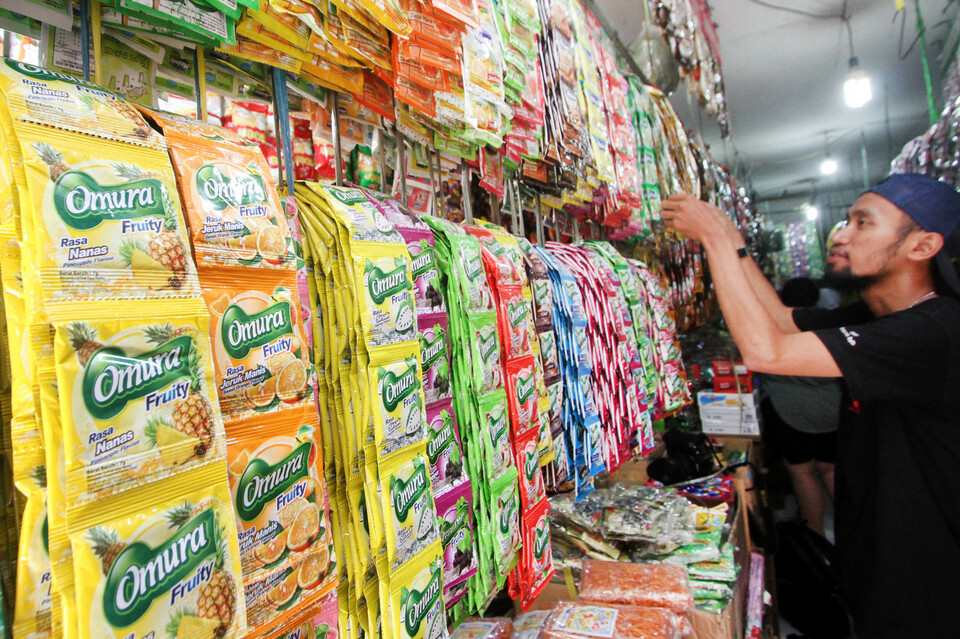
The government said it was mulling over a plan to impose an excise tax on sugar-sweetened beverages, knowing that their over-consumption leads to obesity and diabetes.
But it stands to reason that we need to carefully think about this intervention from various perspectives: policy effectiveness, situational issue and intervention magnitude.
Sugary drinks tax is relatively new around the world, with the effect in many places remaining to be seen.
One success story comes from Mexico, where the government enacted a 10 percent tax on sugar-sweetened beverages in 2014.
The tax immediately reduced sugary drinks consumption by 5.5 percent and 9.7 percent in the first and second years, with the most substantial reduction seen in socioeconomically disadvantaged households.
The drop in number suggested Mexicans grew accustomed to healthier drinks in a very short time. The country's government expected that over ten years, the tax would prevent 190,000 new cases of diabetes.
Mexico's beverage industry did mount a resistance, especially since the tax came at a time when they were enjoying burgeoning sales of sugar-sweetened beverages.
According to a market survey from 2014, low price was the second-most common reason why people choose to consume a certain typle of beverages. A tax will increase costs and cut profits of the industry.
The critical question now is whether the sugary drinks tax will be able to reduce obesity and diabetes in Indonesia.
One estimation puts it that a 20 percent tax on sugar-sweetened beverages would reduce the number of obese and overweight patients while also prevent over a million new cases of diabetes.
However, we might have to temper our expectations. Sugary drinks taxes seem to be highly efficient in countries where high consumption of sugar-sweetened beverages is the normal, like the United States and Mexico – where plain mineral water is more expensive than sweetened drinks.
The tax's impact on a country with low to average consumption of sugary drinks, like Indonesia, remains to be seen.
The best solution is to see the sugar excise tax as only one of many interventions needed to modify the social determinants of obesity and diabetes.
Since it is easier for people to consume junk food in Indonesia than to follow a healthy diet, reducing the amount of sugar-sweetened beverages would not be enough to prevent obesity and diabetes. Besides, many people also drink sugary drinks they make on their own at home, which are untaxable.
The government's plan to impose an excise tax on sugary drinks is a great leap forward for public health intervention. But it cannot stand as the sole alternative to reduce the non-communicable disease burden. The government and the communities should keep promoting a healthier lifestyle, including healthy eating habits, while discouraging unhealthy food consumption.
Afifan Ghalib Haryawan is a medical doctor working in the USAID-Linkages project. He is actively involved in Junior Doctor Network Indonesia as a policy analyst.
Tags: Keywords: as a preferred
Related Articles

Tiffany & Co. Store Remains Under Customs Watch Despite Reopening
Customs officers remain stationed at Tiffany & Co.'s Plaza Indonesia store despite the Finance Minister allowing operations to resume.The Latest

Chandra Asri Group Receives Trade Finance Excellence Award, Reinforcing Its Role in Indonesia’s Industrial Development
Chandra Asri Group receives the Trade Finance Excellence Award at CIMB Niaga Business Summit 2026.
AEON MALL Deltamas Brings 11 Sports and Creative Competitions to AEONLYMPIC 2026
AEON MALL Deltamas hosts AEONLYMPIC 2026, featuring 11 sports and creative competitions, with more than 3,100 participants.
Indonesian Stocks Extend Losses for Third Day, Fall 3.64% to 4,996
Indonesian stocks fell 3.64% on Monday, extending losses for a third straight session amid MSCI concerns and tighter trading limits.
Prabowo Calls Meeting on Forest Fires as Haze Reaches Jakarta, Singapore
Prabowo summons senior officials to discuss forest fires as smoke reaches Jakarta and Malaysia pushes for regional action.
Jakarta Outranks Amsterdam in Global Public Transport Survey
Jakarta climbs two places to 15th in Time Out's 2026 public transport survey, with its governor citing better network integration.Most Popular
