



What Happens After the Headlines for Indonesia’s MBG Program?
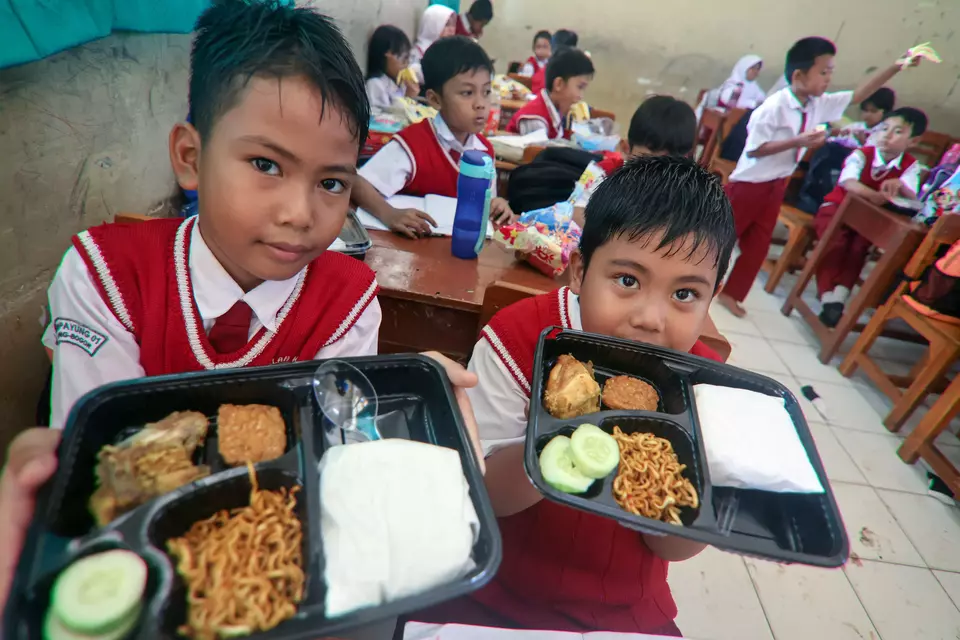
For months, public debate surrounding Indonesia’s Free Nutritious Meals Program (MBG) has been dominated by food safety incidents, governance concerns, and, more recently, a corruption case that attracted national attention.
The headlines have been relentless, but they eventually fade. What remains is a more difficult question: What happens next?
Public attention has naturally shifted to the National Nutrition Agency (BGN) and its new leadership. Questions have been raised about whether the agency has the right combination of experience and capabilities to navigate one of the most ambitious public programs Indonesia has ever undertaken.
Yet the challenge facing BGN today goes beyond any individual appointment. It is a question of institution-building.
Strip away the headlines and daily controversies, and much of the criticism ultimately points to the same underlying issue: governance.
The hard part begins now. Launching a program is difficult. Sustaining quality, accountability, and public confidence across a program of this scale is considerably harder.
MBG has now entered that phase. The program expanded at a remarkable speed. Few countries have attempted to build a nutrition initiative of this scale within such a short period of time. That pace reflected the urgency of addressing nutritional challenges that continue to affect millions of Indonesian children and families.
Yet scale brings its own demands.As programs mature, priorities change. Expansion gives way to execution. Coverage becomes only one measure of success. Quality, oversight, and accountability become equally important. MBG has largely solved one problem: expansion.
Governance is the harder challenge now. BGN is entering a different phase. Less attention is being placed on how many additional facilities can be opened and more on how effectively existing services are operating.
In a more constrained fiscal environment, prioritization should not be mistaken for retreat. It is an effort to protect the program's objectives by ensuring that limited resources generate the greatest possible impact.
Greater emphasis is now being placed on those most vulnerable to nutritional risks: pregnant women, breastfeeding mothers, children under five, and communities in remote and underserved regions.
At the same time, BGN has begun exploring partnerships with businesses, philanthropic organizations, foundations, and other social initiatives to help expand service delivery in areas facing geographical and infrastructure challenges.
The responsibility for addressing nutritional needs remains firmly with the state. Collaboration is intended to strengthen delivery, particularly where geography continues to present significant obstacles.
Recent policy adjustments have also affected stakeholders who have already committed resources, facilities, equipment, and labor to support the program.
Businesses, cooperatives, suppliers, and local communities make decisions based on expectations about the future. Confidence depends not only on funding but also on predictability.
Strong governance is not simply about preventing misconduct. It creates clarity, consistency, and confidence among the many actors whose decisions influence the success of a program.
By this stage, MBG is no longer merely a nutrition program. It is increasingly becoming part of a broader economic ecosystem.
Behind every meal are farmers, fishermen, livestock producers, market traders, cooperatives, village-owned enterprises, logistics providers, kitchen operators, and thousands of small businesses that have begun to organize themselves around the program.
In many parts of Indonesia, MBG is already generating economic activity that extends far beyond the beneficiaries who receive the meals.
The program now supports an ecosystem that reaches well beyond nutrition itself. The discussion is therefore no longer as simple as whether MBG should continue or stop.
Improvement is no longer up for debate. The challenge is how to strengthen execution while maintaining services for beneficiaries and preserving the economic activity that has already begun to emerge around the programme.
As programs grow, governance becomes increasingly important. Longer supply chains, larger budgets, and greater numbers of stakeholders inevitably create new risks. Strong institutions do not rely solely on the integrity of individuals. They depend on systems capable of identifying risks, strengthening accountability, and correcting problems before they become crises.
Leadership still matters -- not because institutions depend on personalities, but because leadership often signals priorities.
One of the notable features of BGN’s new leadership structure is the combination of experiences it brings together. Operational management, large-scale logistics, and public-sector oversight are all represented at a time when the agency is being asked to strengthen execution while improving accountability.
Agustina Arumsari’s appointment points in the same direction. Her background in oversight and public accountability suggests a stronger emphasis on governance, internal controls, and institutional safeguards as BGN enters its next phase.
Ultimately, confidence is built less by promises than by execution. Mistakes have occurred. That much is obvious. What matters now is whether those lessons produce stronger governance, clearer accountability, and better execution.
That is how confidence is earned. No institution of this scale is transformed overnight. Yet periods of disruption often expose weaknesses that might otherwise have remained hidden.
Whether this becomes a setback or a turning point depends on what happens next. If stronger governance, better oversight, and more disciplined execution emerge from this period, MBG may ultimately be remembered not for its difficulties, but for the institutional maturity that followed them.
Transformation is not measured by who occupies the office. It is measured by whether the institution emerges more capable, more accountable, and better able to serve the people it was created to serve.
----
Dian Fatwa is the spokesperson of Indonesia’s National Nutrition Agency (BGN). The views expressed in this article are those of the author.
 as a preferred
Related Articles

AGO Probes Alleged Fraud in $72 Million Free Meal Motorcycle Deal
Five suspects are detained in Indonesia’s $72 million motorcycle procurement probe, with cash, aircraft and vehicles seized
'Indonesia Isn't That Rich': Economists Question Universal Free Meal Program
Economists are urging Indonesia to target free meals at those most in need, arguing a narrower program could cost less than Rp 8 trillion.
Indonesia Spends Almost $7.6 Billion on Free School Lunch
By August 31, Indonesia spent around Rp 134.2 trillion or almost $7.6 billion to keep the program running.
MBG Food Poisoning in Pati: 416 Affected, 63 Hospitalized
Food poisoning symptoms affect 416 MBG recipients in Pati, with 63 hospitalized as authorities investigate the cause.
256 Students Affected by Suspected Free Meal Poisoning
Several Karo students remain under treatment weeks after 256 students fell ill in a suspected free nutritious meal poisoning incident.
Widespread Food Poisoning Cases Hit Indonesia’s Free Meals Program
Hundreds of schoolchildren across Indonesia have fallen ill after consuming meals from the government’s Free Nutritious Meals (MBG) program.
567 Students Fall Ill in Suspected MBG Food Poisoning Case in E. Java
At least 567 students in Sidoarjo have received medical treatment after suspected food poisoning linked to the MBG meal program.
Free Meal Program Gets Lion’s Share of BGN’s $13.6 Billion 2027 Budget
Indonesia’s Nutrition Agency gets Rp 240 trillion for 2027, with 97% earmarked for the government’s free nutritious meal program.
Nutrition Agency Chief Threatens Dismissal for MBG Program SOP Violations
Indonesia’s nutrition agency chief threatens dismissals over violations in Prabowo’s flagship free meal program.
Nutrition Agency Plans Test Kits to Prevent Free Meal Poisoning
Indonesia plans food test kits at free meal kitchens after repeated poisoning cases involving schoolchildren across the country.The Latest

Jakarta Outranks Amsterdam in Global Public Transport Survey
Jakarta climbs two places to 15th in Time Out's 2026 public transport survey, with its governor citing better network integration.
MSCI Concerns, Tighter IDX Trading Rules Send Indonesian Stocks Down 5% by Midday
Indonesian stocks plunge 5% by midday as MSCI concerns weigh on sentiment and the IDX tightens its daily downside limit to 7%.
Jakarta Prepares 367 Health Facilities as Haze Reaches the Capital
Jakarta prepares 367 health facilities to treat potential haze-related illnesses after smoke from Sumatra and Kalimantan crosses the region.
Jakarta Expands Flood Prevention With New Water Storage Ponds
Jakarta opens two East Jakarta water storage ponds as it expands flood prevention efforts through reservoirs and river normalization.
Press Council Highlights AI Ethics at United Tractors Journalist Workshop
United Tractors’ 2026 journalist workshop highlights ethical AI use and the importance of trust and credibility in journalism.Most Popular
