



Trump’s Chaos Strategy Is Hurting His Allies -- Not Just His Rivals

In Jakarta, as in many world capitals, economic policymakers now find themselves grappling with not just fluctuating markets but also fluctuating messages from the United States. Under President Donald Trump, American foreign and economic policy appears guided less by structured diplomacy and more by what some analysts dub the "Madman Theory" in practice.
Trump governs less like a statesman and more like a high-stakes trader at a bustling market stall. This bazaar-style leadership relies on keeping everyone off balance through unpredictability, surprise tariffs, unscheduled leader-to-leader phone calls, and off-the-cuff announcements via his social media platform, Truth Social. Yet what may appear as strength on the surface often translates into paralysis and economic damage for America’s partners.
The Global Economy on Edge
The year 2025 has already delivered a cascade of disruptive moves from Washington. Countries from Jakarta to Brussels have faced:
- Sudden import tariffs with little or no notice.
- Abrupt reversals of trade agreements.
- Market-moving social media posts and unplanned personal calls from the US president.
Such unpredictability has real consequences. Investment flows freeze. Companies hold back on expansion. Governments become less willing to negotiate in good faith when deals can be overturned overnight.
Indonesia: A Partner Undermined
Indonesia, despite its historically friendly relationship with the US, has not been spared. Jakarta now faces a 32 percent tariff on key exports to the US, affecting palm oil, electronics, textiles, rubber goods, and footwear. These sectors form the backbone of Indonesia's export economy.
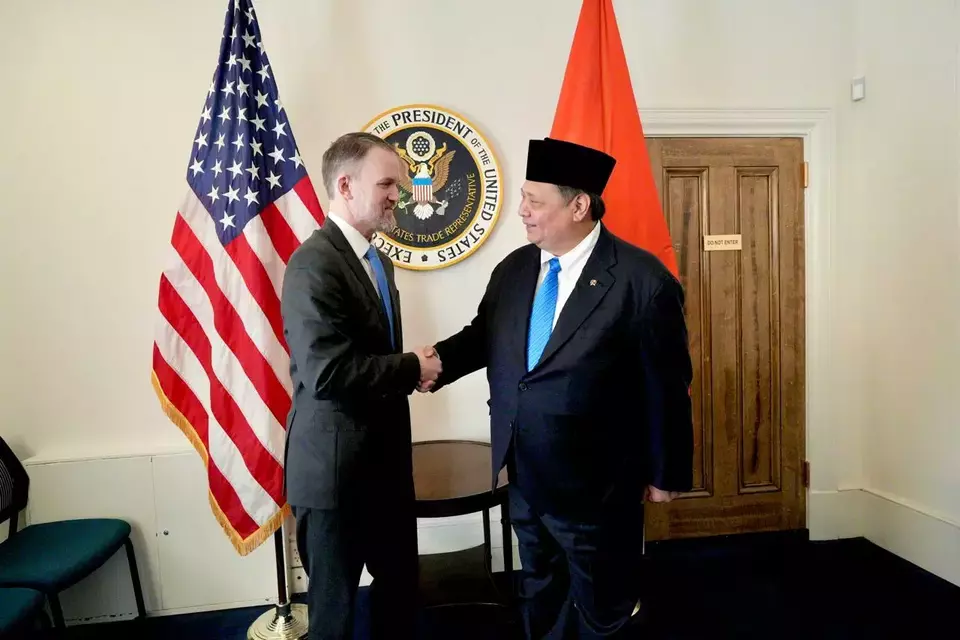
This is especially frustrating considering that Indonesia had proactively offered significant concessions to the US:
- Near-zero tariffs for US goods entering Indonesia.
- A $34 billion US product purchase agreement.
- Access to critical minerals like nickel, copper, and cobalt.
Chief Economic Minister Airlangga Hartarto has been leading negotiations, but in the current climate, securing a stable deal with Washington is like trying to hit a moving target.
The Vietnam Lesson: Unilateral Moves
Vietnam offers another stark example. Believing it had secured a deal to maintain US tariffs at 11 percent, Hanoi was blindsided when Trump personally called Vietnamese General Secretary Tô Lâm -- someone outside formal trade talks -- and unilaterally imposed a 20 percent base tariff, rising to 40 percent for goods suspected of re-exporting Chinese products.
No formal diplomatic channels were used. No warnings were given. The impact was immediate: market volatility and diplomatic shock.
Fracturing Trust Across the Globe
Similar scenes are playing out in Europe. The European Union, facing tariffs as high as 50 percent on automotive, steel, and pharmaceutical products, has expressed mounting frustration.
"You can’t build alliances on guesswork," said Maroš Šefčovič, Vice President of the European Commission. One senior EU official summarized the mood: "Every time we think we have a deal, he moves the goalposts."

In Southeast Asia, Thailand and Malaysia also reported receiving surprise tariff letters without prior consultation, triggering panic among economic ministries. This erosion of trust is not easily repaired.
TACO: Trump Always Chickens Out
Among market insiders, there is an informal term for this behavior: TACO, or "Trump Always Chickens Out." It describes Trump’s pattern of announcing extreme policies only to gradually reverse them. Yet even temporary chaos leaves lasting scars. Investment is delayed. Supply chains are disrupted. Business confidence erodes.
When Both Sides Lose
The economic fallout is not limited to America’s partners. The United States itself is paying a price:
- The OECD projects US GDP growth at just 1.6 percent for 2025.
- JPMorgan warns that rising import costs could fuel inflation.
- US federal courts are reviewing Trump's use of emergency tariff powers.
Indonesia faces its own challenges:
- GDP forecasts have been downgraded from 5.2 percent to between 4.7 and 5.0 percent.
- Export-heavy industries risk mass layoffs, especially in textiles and palm oil.
Chaos Is Not Strategy
This commentary is not a personal attack on Donald Trump. It is a critique of a leadership style that undermines global stability, including Indonesia's economic security.
When foreign policy is driven by impulse rather than clear strategy, it is not America’s enemies who suffer most -- but its friends and partners. Indonesia, like many nations, is working to build a stable and self-reliant economy. Yet when its largest economic partner behaves unpredictably, those efforts become much harder.
The Madman Theory might yield short-term gains, but in a deeply interconnected world, confusion is not strength. Chaos is not a strategy. And in the end, both America and its partners stand to lose.
---
Trista Nagel is a graduate of Gadjah Mada University (UGM) in International Relations and is currently pursuing her Master’s degree in Global Business Management at Monash University.
The opinions expressed are solely those of the author.
Tags: Keywords: as a preferred
Related Articles

Trump’s New Press Secretary Out After Less Than a Week
Katie Zacharia’s brief White House tenure ends after less than a week, following a short first briefing and reported tensions over her role.
Defying Trump, Zelensky Says Will Keep Hitting Russian Refineries
Russia on Thursday said Ukraine had attacked an oil refinery in Ryazan, south of the capital, Moscow.
Fury as US Federal Agents Search Ilhan Omar's Home
"Make no mistake: this is an attempt to target political enemies and weaponize federal law enforcement," Omar wrote on X.
‘It’s Trump Who Sets Oil Price’: Prabowo’s Brother
Neither the Indonesian government nor OPEC sets the oil price, Hashim Djojohadikusumo says.
Navi Pillay, South African Rights Champion, Wins Nobel Peace Prize
"If you clap a little bit more, I may share this prize with Trump," the 85-year-old said.
Trump Vows to Hit Iran 'Very Hard' If Linked to Flydubai Attack
The US leader's threat of retaliation came as he took a harsher tone on the stalled Iran war overall.
Trump Slammed for 'Illegal' US TV Ads Funded by Taxpayers
Mike Levin, a Democratic member of the House of Representatives, said: "It’s propaganda, and you’re paying the bill."
Airlangga Says Indonesia Won’t Face US Tariffs Over Russian Oil
Airlangga says Indonesia won’t face US tariffs over Russian oil bought within an allowed window.
Masoud Tells Trump that Iran Will Never 'Bend at the Knee'
Pezeshkian accused Washington of "terrorism" for assassinating former supreme leader Ayatollah Ali Khamenei at the start of the conflict.
Trump Thanks Indonesia for Gaza Troops
Indonesia has not only committed troops to the ISF, but is in its upper management.The Latest

Chandra Asri Group Receives Trade Finance Excellence Award, Reinforcing Its Role in Indonesia’s Industrial Development
Chandra Asri Group receives the Trade Finance Excellence Award at CIMB Niaga Business Summit 2026.
AEON MALL Deltamas Brings 11 Sports and Creative Competitions to AEONLYMPIC 2026
AEON MALL Deltamas hosts AEONLYMPIC 2026, featuring 11 sports and creative competitions, with more than 3,100 participants.
Indonesian Stocks Extend Losses for Third Day, Fall 3.64% to 4,996
Indonesian stocks fell 3.64% on Monday, extending losses for a third straight session amid MSCI concerns and tighter trading limits.
Prabowo Calls Meeting on Forest Fires as Haze Reaches Jakarta, Singapore
Prabowo summons senior officials to discuss forest fires as smoke reaches Jakarta and Malaysia pushes for regional action.
Jakarta Outranks Amsterdam in Global Public Transport Survey
Jakarta climbs two places to 15th in Time Out's 2026 public transport survey, with its governor citing better network integration.Most Popular
