



Trump Needs a Copy Editor
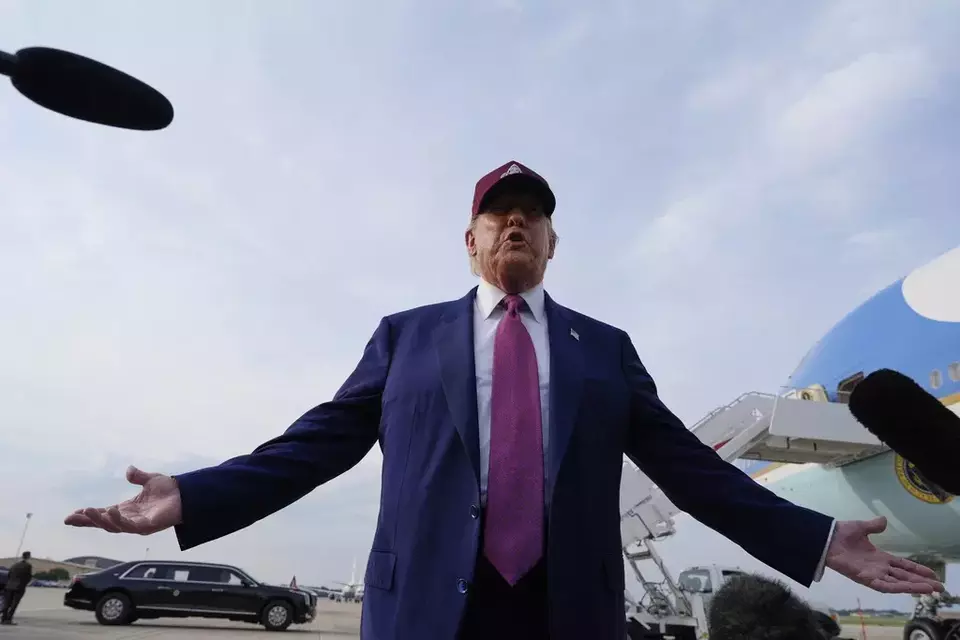
Jakarta. A letter from US President Donald Trump to Indonesian President Prabowo Subianto on tariffs and trade deficits offers a glimpse into how Washington views its economic ties with Indonesia. Yet beyond its substance, the letter, sent on official White House letterhead, reads more like a social media post than a diplomatic note.
Instead of coming across as a respectful message between two heads of state, the letter feels more like a business ultimatum. It is filled with phrases that suggest coercion rather than dialogue, repeatedly framing Indonesia’s trade practices as a “major threat to our Economy and, indeed, our National Security.”
The letter’s inconsistent capitalization, randomly emphasizing words like “TRADE,” “Great Honor,” “Tariff,” and “Non Tariff”, undermines the formality expected in high-level diplomatic correspondence. While seemingly minor, these presentation flaws can signal a lack of care or respect in communications between nations.
The language itself is riddled with redundancies and informal phrasing. Phrases such as “in other words, in a matter of weeks” sound casual and out of place in a diplomatic letter. The constant repetition of “Trade Deficit” and “Tariff” clutters the message, making it feel like a sales pitch designed to pressure Indonesia rather than an invitation to negotiate fairly.
The Associated Press reported that Trump inserted the word “only” before tariff rates in his letters, implying generosity. Yet these letters appear to follow a templated format, with one addressed to Bosnia and Herzegovina mistakenly referring to its female leader, Željka Cvijanović, as “Mr. President.” A corrected version was later posted online. A letter to Tunisia followed the same format word for word, with only the rates changed.
White House press secretary Karoline Leavitt said Trump is crafting “tailor-made trade plans for each and every country,” adding that the administration plans to continue posting the letters on social media before mailing formal copies, a break from the traditional closed-door approach used by previous administrations.
Substantively, the letter leans heavily toward unilateral demands. It threatens a 32 percent tariff on Indonesian products while simultaneously offering zero tariffs if Indonesia relocates production to the US. Tauhid Ahmad, an economist at the Institute for Development of Economics and Finance (INDEF), said Trump’s suggestion for Indonesian businesses is unrealistic, as it would increase production costs and hurt competitiveness.
Such conditions, framed as addressing trade deficits, are likely to be seen in Jakarta as economic pressure rather than a constructive step toward resolving imbalances. By linking economic concerns to national security, the letter risks complicating relations and eroding trust between the two countries. Trade issues, while serious, should not be equated with threats to national security, especially when dealing with a long-standing partner like Indonesia.

---
Faisal Maliki Baskoro is the editor of The Jakarta Globe
The views expressed in this article are those of the author.
Tags: Keywords: as a preferred
Related Articles

Trump’s New Press Secretary Out After Less Than a Week
Katie Zacharia’s brief White House tenure ends after less than a week, following a short first briefing and reported tensions over her role.
Defying Trump, Zelensky Says Will Keep Hitting Russian Refineries
Russia on Thursday said Ukraine had attacked an oil refinery in Ryazan, south of the capital, Moscow.
Fury as US Federal Agents Search Ilhan Omar's Home
"Make no mistake: this is an attempt to target political enemies and weaponize federal law enforcement," Omar wrote on X.
‘It’s Trump Who Sets Oil Price’: Prabowo’s Brother
Neither the Indonesian government nor OPEC sets the oil price, Hashim Djojohadikusumo says.
Navi Pillay, South African Rights Champion, Wins Nobel Peace Prize
"If you clap a little bit more, I may share this prize with Trump," the 85-year-old said.
Indonesia’s US Trade Surplus Defies Tariffs, but Economists Warn Risks Remain
Indonesia posted a $12.47 billion surplus with the US in January-August 2026, up from $12.26 billion a year earlier.
Trump Vows to Hit Iran 'Very Hard' If Linked to Flydubai Attack
The US leader's threat of retaliation came as he took a harsher tone on the stalled Iran war overall.
Trump Slammed for 'Illegal' US TV Ads Funded by Taxpayers
Mike Levin, a Democratic member of the House of Representatives, said: "It’s propaganda, and you’re paying the bill."
Airlangga Says Indonesia Won’t Face US Tariffs Over Russian Oil
Airlangga says Indonesia won’t face US tariffs over Russian oil bought within an allowed window.
Masoud Tells Trump that Iran Will Never 'Bend at the Knee'
Pezeshkian accused Washington of "terrorism" for assassinating former supreme leader Ayatollah Ali Khamenei at the start of the conflict.The Latest

Chandra Asri Group Receives Trade Finance Excellence Award, Reinforcing Its Role in Indonesia’s Industrial Development
Chandra Asri Group receives the Trade Finance Excellence Award at CIMB Niaga Business Summit 2026.
AEON MALL Deltamas Brings 11 Sports and Creative Competitions to AEONLYMPIC 2026
AEON MALL Deltamas hosts AEONLYMPIC 2026, featuring 11 sports and creative competitions, with more than 3,100 participants.
Indonesian Stocks Extend Losses for Third Day, Fall 3.64% to 4,996
Indonesian stocks fell 3.64% on Monday, extending losses for a third straight session amid MSCI concerns and tighter trading limits.
Prabowo Calls Meeting on Forest Fires as Haze Reaches Jakarta, Singapore
Prabowo summons senior officials to discuss forest fires as smoke reaches Jakarta and Malaysia pushes for regional action.
Jakarta Outranks Amsterdam in Global Public Transport Survey
Jakarta climbs two places to 15th in Time Out's 2026 public transport survey, with its governor citing better network integration.Most Popular
