



Trade, Leadership, and the Challenge of Translating the President’s Vision
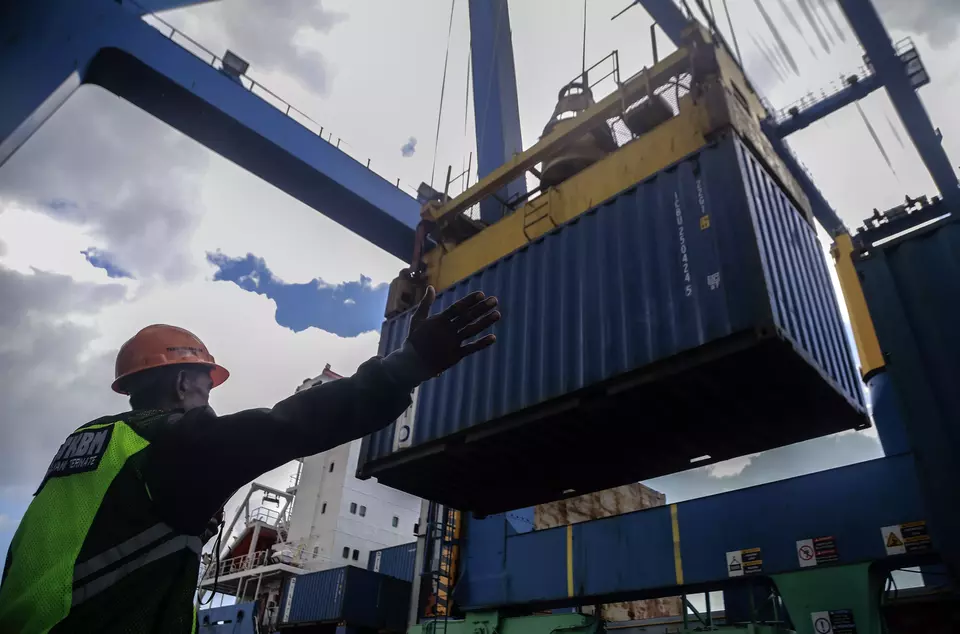
Amid unrelenting global economic pressure, volatile international food prices, and increasingly fragmented global supply chains, President Prabowo Subianto has, since the start of his administration, sent a clear message: trade must serve as an instrument of economic growth as well as a safeguard for public welfare. This direction is reflected in the President’s emphasis on strengthening the domestic market, completing and utilizing international trade agreements, and pursuing active economic diplomacy through overseas visits to open new market access and economic opportunities for Indonesia.
On various occasions, the President has stressed that economic growth must not be exclusive. Markets must work for the people, prices of basic necessities must remain under control, and national business players — including micro, small, and medium enterprises (MSMEs) — must receive certainty, protection, and broader market access. This message is particularly important amid global uncertainty, which demands a stronger state role in driving the economy rather than merely observing market dynamics.
However, in a presidential system, the President’s vision and direction only matter to the extent that they can be executed by technical ministries. National leadership depends on sectoral leadership that is active, well-coordinated, and clearly communicated to the public. This is where challenges often emerge: the gap between policy direction at the presidential level and implementation on the ground.
The trade sector is one of the most visible testing grounds for this challenge. It directly affects market prices, the availability of goods, and the competitiveness of national businesses. When this sector operates without clear leadership, the impact is quickly felt by the public.
It is therefore reasonable for the public to ask: where is the Trade Ministry today? This question does not arise from a desire to find a scapegoat, but from a fundamental need for policy leadership in a sector that directly touches household kitchens and the pulse of the national economy.
The ministry is a strategic node in Indonesia’s economic architecture, sitting at the intersection of the production sector, fostered by various technical ministries, and the market, both domestically across 38 provinces grappling with connectivity gaps, price disparities, and high logistics costs, and in increasingly competitive regional and global arenas. When this node weakens, the entire value chain is disrupted.
Yet what has been felt lately is a shrinking role. The Trade Ministry appears to be playing a minimalist, even ceremonial, function. Policy communication is barely audible. Strategies to stabilize prices of basic necessities are not articulated consistently to the public. Efforts to promote exports, especially to countries that are Indonesia’s trade agreement partners, do not appear to be actively led by the state. What emerges instead is the impression of waiting, rather than orchestrating.
This is striking, because Indonesia’s own experience shows that an active role for the ministry is not utopian. In earlier periods, the ministry was able to assert itself, both in managing domestic trade dynamics and in voicing Indonesia’s and developing countries’ interests in international forums.
Domestically, the ministry played a significant role in ensuring price stabilization and managing distribution, accompanied by clear policy communication to the public. Globally, Indonesia was fairly well known as a consistent voice advocating policy space for developing countries, including on issues of food security, special and differential treatment, and fairness in the multilateral trading system. This fact suggests that today’s problem is not a lack of mandate or institutional capacity, but a narrowing of the courage to lead.
Current trade challenges demand the opposite. Indonesia’s domestic market is not a single, homogeneous market. It is a mosaic of regions with layered distribution structures, complex inter-regional dependencies, and high price sensitivity. Under such conditions, price stabilization cannot rely on occasional market operations or ad hoc policies. It requires trade leadership capable of connecting production, distribution, reserves, and consumption patterns in an integrated way, and then translating them into policies that the public can understand and trust.
On the external front, Indonesia has signed numerous trade agreements — FTAs, CEPAs, and PTAs — often praised as achievements of economic diplomacy. Yet agreements, no matter how ambitious, are merely instruments. Without a state-led utilization strategy, without support for the real sector, and without active trade diplomacy to resolve non-tariff barriers, their benefits will remain on paper. This is where the Ministry of Trade should step forward as the chief executor, not merely the custodian of agreements.
What is worrying is when excessive political caution ends up blurring policy mandates. Cross-ministerial coordination, which should be functional and mutually reinforcing across sectors, appears to have shifted into a subordinative relationship, leaving technical ministries with little room to demonstrate their own sectoral leadership. In governance, coordination is not about uniformity of voice, but about clear and complementary divisions of roles.
This phenomenon does not stand alone. Several strategic ministries have recently chosen silence in the public sphere and distanced themselves from policy discourse. But the absence of communication in trade has consequences that are felt far more quickly: market prices, supply of goods, the survival of small businesses, and business confidence in the state’s policy direction.
In Roman political philosophy, Cicero once warned, non nobis solum nati sumus — we are not born for ourselves alone. In Islamic tradition, the Prophet Muhammad (peace be upon him) said, “Each of you is a leader, and each of you will be held accountable for what you lead.” In both great traditions, leadership is measured by the courage to carry responsibility, not by how quietly one can endure.
President Prabowo Subianto needs a Ministry of Trade that works as a market architect, not merely an administrator of routine tasks. Future economic challenges — from food security and industrial transformation to Indonesia’s repositioning in global trade — cannot be addressed with a minimalist role. They require a ministry that is present, vocal, and leading, so that the President’s message to markets and the public is not muffled at the implementation level.
This piece is not a call to assign blame, but an invitation to return to the original mandate and align the vision of national leadership with sectoral policy practice. When strategic ministries choose excessive silence, what is lost is not only the government’s voice, but also public trust that the state is truly present in managing markets for the common good. In economics, a vacuum of leadership is almost always filled by distortion.
---
Iman Pambagyo is the Trade Ministry’s Director General of International Trade Negotiations (2012-2014, 2016-2020) and Indonesia’s Ambassador to the WTO (2014-2015).
The views expressed in this article are those of the author.
Tags: Keywords: as a preferred
Related Articles

Prabowo Calls Meeting on Forest Fires as Haze Reaches Jakarta, Singapore
Prabowo summons senior officials to discuss forest fires as smoke reaches Jakarta and Malaysia pushes for regional action.
Books on Prabowo's Ideas Distributed Free at Jakarta Car-Free Day
Prabowo, who took office on Oct. 20, 2024, will mark the second anniversary of his presidency on Tuesday.
Two Years Into Prabowo Presidency, Infrastructure Takes Back Seat
Prabowo’s social spending push raises concerns over infrastructure delays and uneven growth beyond Java.
Prabowo, Egypt’s Sisi Talk Trade Pact for $5 Billion Commerce
Egypt's Sisi tells Prabowo that he wants to see annual trade to reach $5 billion by 2030 as Jakarta seeks tariff deals.
Egypt's Sisi Arrives in Indonesia for Talks With Prabowo
Egyptian President Abdel Fattah el-Sisi arrives in Indonesia for talks with Prabowo Subianto to strengthen strategic ties.
Prabowo to Launch Indonesia’s First Electric Vehicle Battery Export
Indonesia is set to export its first electric vehicle batteries as Prabowo launches a $10.2 billion industrial program.
Bahlil Signals More Ministries May Join New Downstream Coordination
Bahlil signals one or two more ministries could join the new downstream coordination, with the Industry Ministry among those considered.
Prabowo to Inaugurate Six New Military Commands on TNI Anniversary
Prabowo will inaugurate six new military commands and dozens of other units as Indonesia’s TNI marks its 81st anniversary.
Big Spending, Limited Revenue: Economists Question Prabowo’s Economic Strategy
Prabowo’s flagship programs face scrutiny as rising spending, weak job creation and deindustrialization threaten Indonesia’s growth.
Breaking: Prabowo Reportedly Set to Reshuffle Energy, Foreign Affairs Ministerial Posts
Prabowo reshuffles energy and foreign affairs portfolios as Bahlil and Sugiono are set for new roles in his seventh cabinet reshuffle.The Latest

Chandra Asri Group Receives Trade Finance Excellence Award, Reinforcing Its Role in Indonesia’s Industrial Development
Chandra Asri Group receives the Trade Finance Excellence Award at CIMB Niaga Business Summit 2026.
AEON MALL Deltamas Brings 11 Sports and Creative Competitions to AEONLYMPIC 2026
AEON MALL Deltamas hosts AEONLYMPIC 2026, featuring 11 sports and creative competitions, with more than 3,100 participants.
Indonesian Stocks Extend Losses for Third Day, Fall 3.64% to 4,996
Indonesian stocks fell 3.64% on Monday, extending losses for a third straight session amid MSCI concerns and tighter trading limits.
Prabowo Calls Meeting on Forest Fires as Haze Reaches Jakarta, Singapore
Prabowo summons senior officials to discuss forest fires as smoke reaches Jakarta and Malaysia pushes for regional action.
Jakarta Outranks Amsterdam in Global Public Transport Survey
Jakarta climbs two places to 15th in Time Out's 2026 public transport survey, with its governor citing better network integration.Most Popular
