



The Global Water Crisis Needs Our Accelerated Action on All Fronts
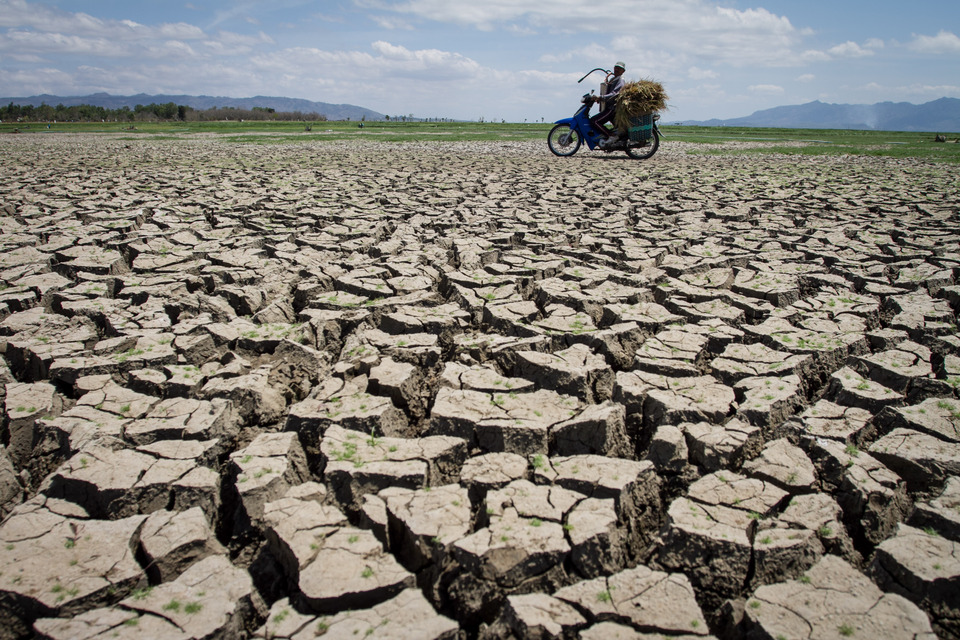
Climate change is now well established as one of the most pressing issues of our time, with the most evident impact felt through our relationship with water.
Rising temperatures and changing weather patterns continue to disrupt our water cycle worldwide, impacting societies, ecosystems, and economies through unpredictable water availability and quality. In response, the world committed to Sustainable Development Goal (SDG) six in 2015 as part of the 2030 Agenda – to provide safely managed water and sanitation for all.
Unfortunately, we are already alarmingly off track less than a decade later. Globally, billions of people still lack safe water, sanitation, and handwashing facilities, while climate change amplifies water-related extremes worldwide.
Beyond its direct impacts, climate change reveals underlying vulnerabilities stemming from poor water governance, giving rise to calls for more sustainable water management. Closer to home, Indonesia's diversity of water security challenges – from lack of access to safe water to water stress – demonstrates this, driven by interconnected pressures including population growth, urbanization, and increasing water pollution.
This year's theme for World Water Day, 'Accelerating Change,' reflects the critical need for climate action to match or even exceed the pace of climate change if it is to make genuine progress.
How do we increase the pace of transition? This remains top-of-mind for the other attendees and me at this week's UN 2023 Water Conference – the first event of its kind in nearly 50 years – where critical decision-makers from all fronts will come together to create an agenda that "gives our world's lifeblood the commitment it deserves," as noted by United Nations Secretary-General, António Guterres.
What's encouraging is that each stakeholder will bring their unique perspectives and strengths to this crucial forum on the future of our water. I hope we come away with a bold, whole-of-society approach that significantly accelerates action across government, businesses, and the public.
Setting a Strong Water Agenda
Governments have taken the lead with policies that provide an impetus for the sustainability transition. But while the water management community understands the issues and agrees on the solutions, the challenge is to ensure decision-makers in other sectors that rely on water, or impact water management, understand and come on board too.
Taking a page from our broader climate action efforts, the Paris Agreement has been a landmark initiative in the multilateral climate change process. For the first time, a binding agreement brings all the world's nations to support a common strategy to cut greenhouse gas emissions. It is now the leading framework for critical discussions and dialogues. Meanwhile, at a corporate level, the Science Based Targets Initiative (SBTi) mobilizes the private sector to take urgent climate action by providing a guideline for businesses to set ambitious emissions reduction targets.
But globally, consensus on the water is proving more elusive, despite it being an important element of climate policy formulation. Ultimately, we need to take a similar approach to climate by building a stronger consensus on frameworks, goals, and guidelines for water, with nuances to reflect local conditions and resources.
I'm optimistic about the Water Action Agenda, which will be the primary outcome of the Conference. With a collection of all water-related voluntary commitments, the agenda is set to accelerate progress in the second half of the Water Action Decade and guide governments and businesses to manage water better and tackle water and water-related challenges.
Corporate Action Needed
To make a sustained impact on tackling the water crisis, it is key for the private sector to "walk the talk" and embed water stewardship in their businesses by leveraging innovation and collaboration to achieve collective change.
With water as a critical ingredient in the operations of all businesses, companies can take the lead in sustainable water management. One approach is advancing water reuse and recycling, which ensures wastewater is effectively treated to a quality that makes it possible to feed back into our water cycles.
Water treatment solutions can now empower companies to reuse their wastewater, reduce costs, and do their part to ensure that natural water sources are not unnecessarily exploited.
Empowering People with Knowledge
The public also has a significant role to play in accelerating change. Over the past decade, governments, businesses, non-governmental organizations (NGOs), and the scientific community have driven home the message about climate change and highlighted the importance of strength in numbers and that we must mobilize the public on climate action.
However, more work needs to be done to raise awareness about the particular challenges of water management and climate change. The public can take more informed and effective individual action aided by data and knowledge shared by key stakeholders.
In Indonesia, there are multistakeholder-led water conservation programs that aim at raising awareness among local communities by informing individuals of how to monitor their water consumption and the importance of adopting water-conscious behaviors. With each drop of water saved, we can make a bigger difference.
While the Sustainable Development Goals drawn up in 2015 have yet to be fully realized, we mustn't lose momentum. Effective water management is a vital component of each SDG and is critical for its success, from better health and well-being to reducing inequalities.
World Water Day reminds us that by channeling the efforts of government, businesses, and individuals towards addressing the water crisis, we can together be the change we want to see, and by accelerating action on the ongoing water crisis, we can collectively close the gaps on our other global challenges.
Poul Due Jensen is the chief executive officer of Danish multinational company Grundfos, the world's largest pump manufacturer.
Tags: Keywords: as a preferred
Related Articles

UN Chief Visits Indonesia to Discuss Multilateralism, Peacekeeping
UN chief António Guterres visits Jakarta to honor fallen peacekeepers as Indonesia seeks a UN Security Council seat for 2029–2030.The Latest

Jakarta Outranks Amsterdam in Global Public Transport Survey
Jakarta climbs two places to 15th in Time Out's 2026 public transport survey, with its governor citing better network integration.
MSCI Concerns, Tighter IDX Trading Rules Send Indonesian Stocks Down 5% by Midday
Indonesian stocks plunge 5% by midday as MSCI concerns weigh on sentiment and the IDX tightens its daily downside limit to 7%.
Jakarta Prepares 367 Health Facilities as Haze Reaches the Capital
Jakarta prepares 367 health facilities to treat potential haze-related illnesses after smoke from Sumatra and Kalimantan crosses the region.
Jakarta Expands Flood Prevention With New Water Storage Ponds
Jakarta opens two East Jakarta water storage ponds as it expands flood prevention efforts through reservoirs and river normalization.
Press Council Highlights AI Ethics at United Tractors Journalist Workshop
United Tractors’ 2026 journalist workshop highlights ethical AI use and the importance of trust and credibility in journalism.Most Popular
