



State Capitalism Has Limits: Defining Danantara’s Proper Role in Economy

Debates over the role of the state in Indonesia’s economy are hardly new. Since independence, the country has been built on the conviction that the state must play a strong role in managing economic resources that affect the livelihoods of many.
This principle is enshrined in Article 33 of the 1945 Constitution — a constitutional foundation frequently cited, though not always fully interpreted.
In practice, interpretations of the state’s economic role have evolved with the times: from post-colonial statism, to pragmatic liberalization during the development era, and more recently, to the re-emergence of the state as a strategic investor amid 21st-century global uncertainty.
Over the past decade, the world has witnessed a clear return of the state as an active economic actor. This is reflected in the growing prominence of sovereign wealth funds, development banks, and state investment holding companies managing public assets to promote growth, industrial modernization, and national economic resilience.
In an era marked by global trade fragmentation, supply-chain disruptions, and geopolitical uncertainty, the state’s role as a buffer against market risk is increasingly seen as not only legitimate, but necessary. The key question, however, is not whether the state should play a more active role — but where the boundaries of that role should be drawn.
The State: Between Catalyst and Operator
It is important to emphasize that Article 33 of the Constitution was never intended to mandate that the state directly operate all sectors of the economy. The Constitutional Court itself has consistently interpreted the phrase “controlled by the state” as granting regulatory authority, policy oversight, and responsibility to ensure public benefit — not as an obligation for the state to act as a business operator in every industry.
The renewed role of the state in the global economy does not represent a return to old-style state socialism. What has emerged instead is a new approach — often referred to domestically as Sumitronomics — in which the state functions as a strategic investor, provider of long-term capital, and absorber of structural risk, without displacing markets as the primary mechanism for resource allocation.
In this framework, the state acts as a market maker and risk absorber of last resort, rather than as a permanent industrial operator. The objective is to build markets, not replace them.
International experience shows that effective state involvement lies not in production or day-to-day industrial management, but in capital allocation and market design. Singapore’s Temasek Holdings, for example, manages a portfolio worth roughly $324 billion, focusing on strategic ownership, consolidation, financing, and modernization — not on running factories or production lines.
Similar models are employed by sovereign wealth funds in the United Arab Emirates and Saudi Arabia, which serve as long-term investment catalysts rather than substitutes for market forces.
It is therefore unsurprising that developing economies seeking to accelerate structural transformation — without relying solely on short-term market dynamics — have begun to adopt comparable approaches.
Danantara: Opportunity and Mandate
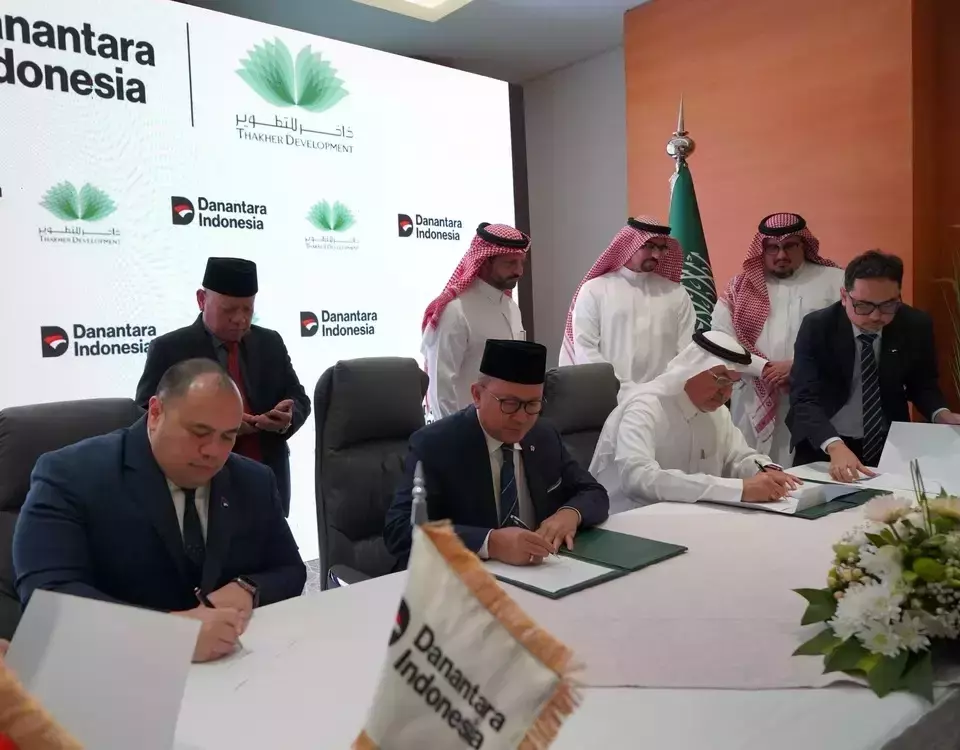
In Indonesia’s case, the creation of Danantara reflects the state’s recognition of the need for a more agile and professional investment vehicle. As a strategic holding and investment institution for state-owned enterprises, Danantara is designed to manage public assets, attract global partners, and provide off-budget financing for priority projects such as downstream industrialization, renewable energy, and higher-value manufacturing.
With initial funding of around $20 billion allocated to dozens of strategic projects, Danantara has significant potential to accelerate Indonesia’s industrial upgrading. Precisely because of this potential, clarity of mandate becomes critically important.
Investment Versus Operation
Challenges arise when state investment drifts into direct ownership and operational control of sectors that already have functioning private-sector ecosystems. In a modern economy, the state’s primary responsibility is to establish a fair regulatory framework and facilitate healthy competition.
There are, of course, areas where state investment is justified — particularly in the presence of market failures, such as research and development, public infrastructure, or strategic sectors that struggle to attract private capital in the short term. Even then, such involvement should be accompanied by clear performance benchmarks and a well-defined exit strategy from the outset.
This is where the fine line between the state as a market catalyst and the state as a market replacement is tested. When the state becomes an operator in competitive sectors — such as textiles, garments, processed foods, or light manufacturing — the risk of market distortion increases. Preferential access to financing, regulatory advantages, and implicit state guarantees can crowd out private investment, discouraging expansion or even prompting private players to exit the market altogether.
Lessons from the Textile and Garment Industry
Indonesia’s textile and garment industry offers a relevant illustration. In 2023, exports from the sector stood at approximately $11.63 billion, down from the previous year amid weakening global demand.
Despite these pressures, the sector remains one of the country’s largest employers and contributes around 7.94% to non-oil and gas manufacturing value added.
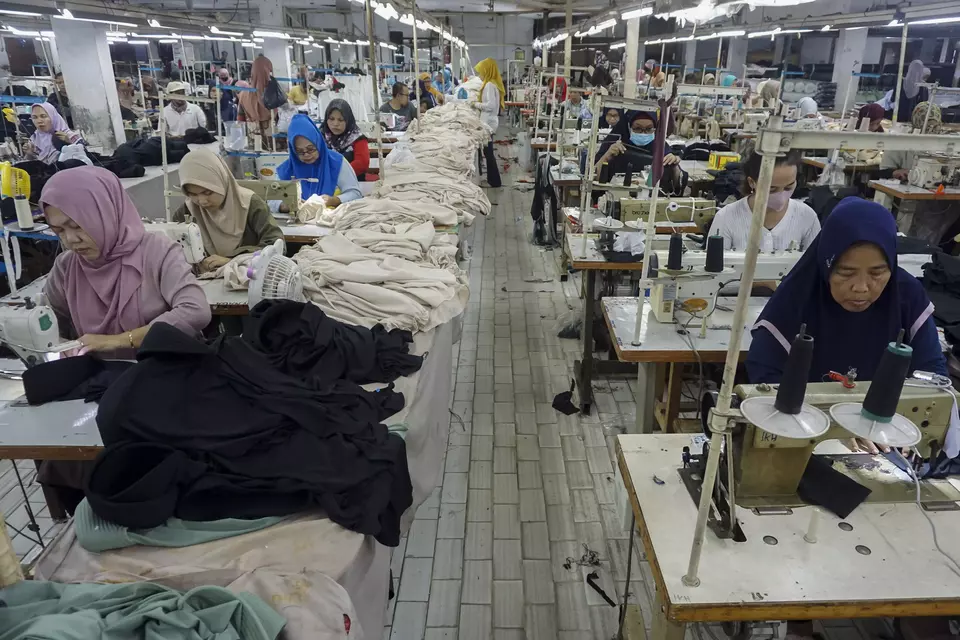
The challenges it faces are largely structural and external: import surges, dumping practices, high logistics and energy costs, slow machinery modernization, and rapidly shifting global consumer preferences. Government responses have focused on policy instruments such as export financing, trade remedies, and logistics debottlenecking — demonstrating that the state is already present in addressing sectoral challenges.
These facts suggest that the core problem is not the absence of state-owned textile factories, but the need to reduce business risks so private firms are willing to invest, innovate, and improve productivity. This is not a natural-monopoly sector or a strategic chokepoint; it is an industry that thrives on flexibility, design, speed, and efficiency.
Preserving Danantara’s Strategic Role
Expectations for Danantara are understandably high. Indonesia’s sovereign wealth fund is projected to eventually manage an investment portfolio worth up to $900 billion. If governed professionally and transparently, it could unlock new growth engines, strengthen the national industrial base, attract global capital, and enhance the long-term value of state assets.
Achieving this vision depends on maintaining strict role discipline — positioning Danantara as an investor and national risk-portfolio manager, not as an industrial operator. When a single entity simultaneously acts as regulator, asset owner, and business operator, the lines of good governance inevitably blur.
In an era of global fragmentation that demands rapid responses to technological and market shifts, excessive state dominance in operations risks creating rigidity rather than resilience.
Ultimately, Indonesia does need a strong state. But strength should not be measured by how many industries the state directly controls. It should be measured by how effectively the state builds healthy, competitive markets that are attractive to investment.
The central challenge of the 21st century is not how the state replaces markets, but how it decides — precisely — when to enter and when to exit them. This is not a simplistic “state versus private sector” debate. It is a question of how the state designs its role within a modern economic architecture.
Paradoxically, this approach demands a more capable state, not a smaller one — because building markets and managing national risk is often far more complex than simply running companies.
---
Iman Pambagyo is the Trade Ministry’s Director General of International Trade Negotiations (2012-2014, 2016-2020) and Indonesia’s Ambassador to the WTO (2014-2015).
The views expressed in this article are those of the author.
Tags: Keywords: as a preferred
Related Articles

Danantara-Backed New Asia Forum Targets $30 Billion in Investment
Bali will host the inaugural New Asia Forum in December, targeting $30 billion in investment across eight strategic sectors.
Indonesia to Merge 23 Industrial Estate Firms in Sweeping SOE Overhaul
"We will also soon consolidate 16 insurance companies. We are consolidating 60 hospitals and more than 100 hotels," Dony said.
Indonesia Faces Data Center Shortage as Demand Surges: Danantara
Indonesia faces a data center capacity shortage, with customers waiting up to a year as demand for digital infrastructure surges.
Indonesia Breaks Ground on $169 Million Bekasi Waste-to-Energy Plant
The facility will be capable of processing up to 1,500 tons of waste per day and converting it into electricity.
Indonesia’s Sweeping SOE Overhaul Could Save Rp 70 Trillion by Year-End
Danantara expects Indonesia’s sweeping SOE restructuring to generate Rp 70 trillion in savings by the end of this year.
Prabowo Says State-Owned Enterprise Overhaul to Save Rp 50 Trillion Annually
Prabowo said Danantara is Indonesia's first sovereign wealth fund and oversees state assets valued at more than $1 trillion.
Government to Take Charge of $7.3 Billion Whoosh Debt Restructuring
Indonesia will transfer management of the $7.3 billion Whoosh rail debt from Danantara to the Finance Ministry.
Danantara Advances $12.5 Billion Industrial Projects Across Metals, Energy, Food
The first phase of the program, launched on Feb. 6, covered six projects across 13 locations with a total investment of Rp 109 trillion.
Prabowo Targets Slimmer SOEs, Rules Out Layoffs
Prabowo targets cutting SOEs to around 250 within two years, while Danantara says the restructuring will not result in layoffs.
Rosan: Himbara's Rp 1.1 Quadrillion Valuation Fuels Growth
Himbara's Rp 1.1 quadrillion market value highlights its growing role in financing MSMEs and driving Indonesia's economy.The Latest

Prabowo Calls Meeting on Forest Fires as Haze Reaches Jakarta, Singapore
Prabowo summons senior officials to discuss forest fires as smoke reaches Jakarta and Malaysia pushes for regional action.
Jakarta Outranks Amsterdam in Global Public Transport Survey
Jakarta climbs two places to 15th in Time Out's 2026 public transport survey, with its governor citing better network integration.
MSCI Concerns, Tighter IDX Trading Rules Send Indonesian Stocks Down 5% by Midday
Indonesian stocks plunge 5% by midday as MSCI concerns weigh on sentiment and the IDX tightens its daily downside limit to 7%.
Jakarta Prepares 367 Health Facilities as Haze Reaches the Capital
Jakarta prepares 367 health facilities to treat potential haze-related illnesses after smoke from Sumatra and Kalimantan crosses the region.
Jakarta Expands Flood Prevention With New Water Storage Ponds
Jakarta opens two East Jakarta water storage ponds as it expands flood prevention efforts through reservoirs and river normalization.Most Popular
