



Solving the Plastic Pollution Crisis Begins at Home, but Will Require Global Support
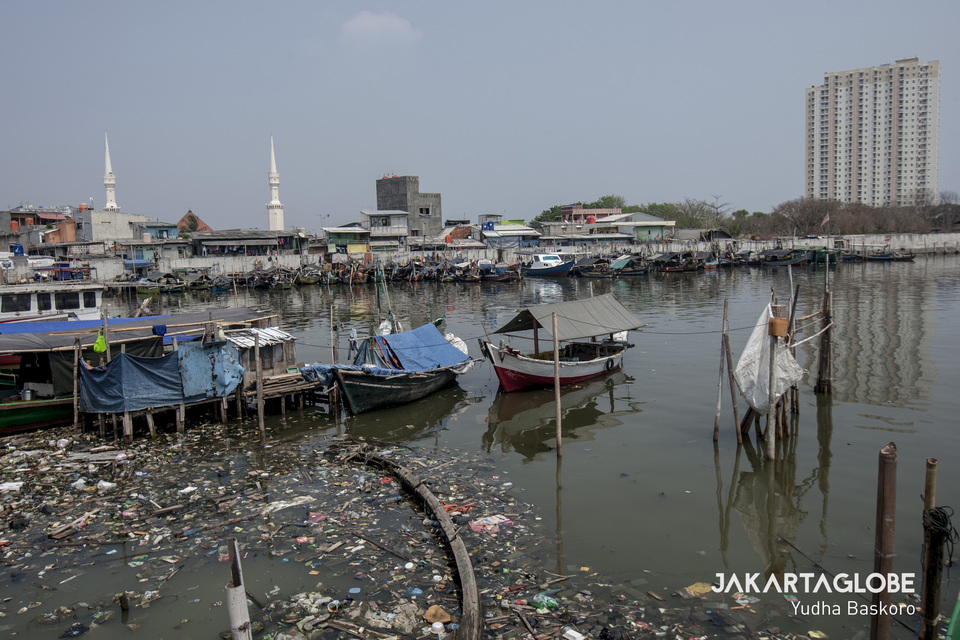
Like many parts of Southeast Asia, Indonesia is bearing the brunt of the world’s reliance on plastic. Fueled by a rapidly urbanizing population, the Covid-19 pandemic, and a legacy of plastic waste imports, plastic pollution poses serious threats to Indonesia's economy, human health, and marine ecosystems.
Despite the gravity of the problem, recycling rates are lagging. Recent data reveals that only 7 percent of Indonesia's municipal solid plastic waste is recycled out of 66 metric tonnes collected annually.
Much of the problem stems from the reality of collecting and aggregating plastic waste across a large archipelago of 17,000 islands. Complexities exist across the entire plastic supply chain, and notably, a clear gap in waste collection and sorting infrastructure continues to plague rural territories.
The challenges of Indonesia’s waste management infrastructure have been identified as a key action in its National Plastic Action Partnership (NPAP), which brings together policymakers, experts, businesses, entrepreneurs, and civil society to work towards a 70 percent reduction in marine plastic debris by 2025.
It has been regarded as one of the most ambitious plans to combat plastic pollution and waste. Among its goals is to quadruple recycling capacity, but addressing the disconnect further up the value chain is also crucial.
Unique market challenges require tailored solutions
Recent research revealed that the leakage of mismanaged plastic waste into the ocean is particularly high in coastal countries across South and Southeast Asia. This is due to the logistical challenge of collecting, sorting, and recycling waste at scale in these island regions with limited infrastructure.
Among the top barriers is inefficient transportation across remote areas. In addition, with the majority of plastic waste recovery being delivered through the informal sector, it is challenging to ensure a reliable supply of recycled materials.
These factors combined dampen buyer demand, which in turn lowers the value of collected waste and reduces incentives for local waste collectors.
It’s a vicious cycle that needs to be tackled through a holistic approach on both the demand and supply sides- strengthening capacity and streamlining collection processes across hard-to-access coastal communities while facilitating access to global supply chains to demonstrate the value of plastic waste.
There is no shortage of local start-ups and SMEs in waste management and recycling seeking to create a sustainable circular economy to address plastic pollution. However, they need support to develop expertise and scale to lead this transformation.
The all-hands-on-deck approach is needed to transform local waste management
While local innovators possess an in-depth understanding of local markets and close working relationships with informal collectors, they do not have sufficient resources and funding. Most importantly, without connections to global markets, they struggle to achieve scale domestically to bring about a significant impact on the local ecosystem.
The good news is that these gaps can be filled through collaboration across the plastic value chain - from corporations leading the movement to end plastic pollution to public and private investors who can channel financing toward solutions.
We are seeing an example of this multi-stakeholder collaboration brought to life in Indonesia, across the islands of Kalimantan and Sulawesi, where a unique supply chain model is being implemented to streamline logistics processes while scaling plastic waste collection and aggregation centers.
Merging local recycling expertise with global supply chains, alongside additional support and funding from an international development agency, is expected to expand to other cities like Semarang, helping the nation tackle the overflowing plastic waste problem.
Local innovators in Indonesia and other parts of Southeast Asia are designing solutions to address the plastic waste crisis, and investors and corporations need to step up to provide the connections, technical support, and financing to help them scale for real impact.
Indonesia estimates that $18.4 billion is needed between 2017 and 2040 to achieve appropriate levels of plastic waste collection, sorting, recycling, recovery, and disposal.
But recent data shows that private investments into the country’s-plastics circular economy from 2018 to 2022 was only $32 million.
Last month marked the celebration of Earth Day, when people worldwide were reminded of the importance of investing in our planet, underscoring the need for all stakeholders – governments, institutions, businesses, and consumers – to pool resources to fight our biggest environmental challenges.
There is hope for the global plastic pollution problem if we come together to magnify the impact of local actors and empower them to become agents of change.
Daniel Law is the CEO of Prevented Ocean Plastic Southeast Asia. Regula Schegg is the managing director of Asia, Circulate Capital. Prevented Ocean Plastic Southeast Asia, a partnership between PT Polindo Utama, Bantam Materials, and Circulate Capital, and supported by the US Agency for International Development (USAID), has set up plastic waste management and collection infrastructure across select coastal communities in Indonesia and is helping to streamline logistics processes.
Tags: Keywords: as a preferred
Related Articles

French Activists Run Across Java to Raise Awareness of Indonesia’s Waste Crisis
Three French runners crossing Java spotlight Indonesia’s waste crisis, as the country struggles to manage rising plastic pollution.The Latest

Chandra Asri Group Receives Trade Finance Excellence Award, Reinforcing Its Role in Indonesia’s Industrial Development
Chandra Asri Group receives the Trade Finance Excellence Award at CIMB Niaga Business Summit 2026.
AEON MALL Deltamas Brings 11 Sports and Creative Competitions to AEONLYMPIC 2026
AEON MALL Deltamas hosts AEONLYMPIC 2026, featuring 11 sports and creative competitions, with more than 3,100 participants.
Indonesian Stocks Extend Losses for Third Day, Fall 3.64% to 4,996
Indonesian stocks fell 3.64% on Monday, extending losses for a third straight session amid MSCI concerns and tighter trading limits.
Prabowo Calls Meeting on Forest Fires as Haze Reaches Jakarta, Singapore
Prabowo summons senior officials to discuss forest fires as smoke reaches Jakarta and Malaysia pushes for regional action.
Jakarta Outranks Amsterdam in Global Public Transport Survey
Jakarta climbs two places to 15th in Time Out's 2026 public transport survey, with its governor citing better network integration.Most Popular
