



US Foreign Aid Cuts Leave Nonprofits Scrambling for Funds
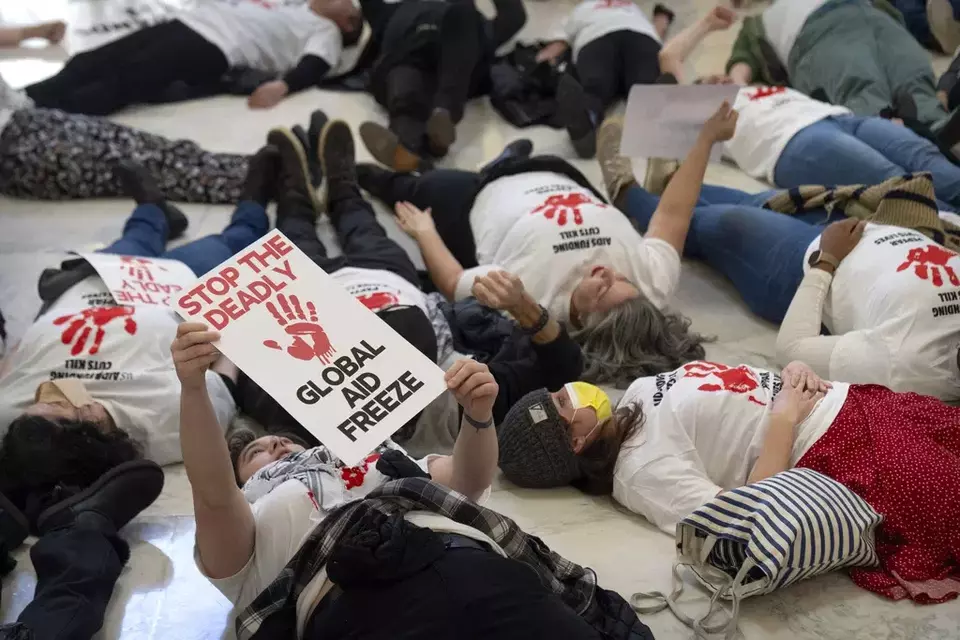
Jakarta. Charitable organizations that once relied on US foreign aid are now seeking alternative funding after the Trump administration suspended nearly all aid contracts.
But past giving trends suggest private and public donors are unlikely to bridge the gap. The United States was the world’s largest single provider of foreign aid, and no other government or private foundation is positioned to compensate for the loss, according to program executives, aid researchers, and nonprofit workers.
Experts in international development warn that, beyond lost funding, dismantling the US Agency for International Development (USAID) also strips the sector of crucial political leadership and expertise.
The Trump administration initially froze foreign aid before laying off most USAID employees and terminating additional contracts and grants. Billionaire adviser Elon Musk, tasked with cutting government spending, has called USAID a “criminal organization.”
“The American people delivered a mandate for President Trump to root out inefficiencies across the federal government,” a State Department spokesperson said, adding that Secretary of State Marco Rubio is working “to ensure taxpayer resources are being used to make America safer, stronger, and more prosperous.”
Can Private Donors Fill the Gap?
The numbers suggest otherwise.
In 2023, the US contributed $64 billion—28 percent of the $223 billion in official development assistance provided by governments worldwide, according to the Organization for Economic Cooperation and Development.
Private donations that crossed borders totaled just $70 billion in 2020, according to the most recent data available from Indiana University’s Global Philanthropy Tracker. Even if private donors doubled their contributions, coordinating efforts at such a scale would be an enormous challenge, with no clear organization to oversee it.
“There is no foundation—or group of foundations—that can provide the funding, workforce capacity, expertise, or leadership that the United States has historically provided to combat and control deadly diseases and address hunger and poverty worldwide,” said Rob Nabors, North America director for the Gates Foundation.
Will Other Countries Step In?
Unlikely.
In 1970, the world’s richest nations agreed to allocate 0.7 percent of their gross national product to development aid, but few have met the target. Some, including Sweden, the Netherlands, and the United Kingdom, have recently cut foreign assistance due to budget constraints or shifting political priorities.
Susan Appe, a University at Albany professor of public administration and policy, studies how nonprofits adapt to shifting donor priorities. She said local organizations might seek funding from their own governments, generate income, attract domestic philanthropists, or engage diaspora communities.
“These adaptive strategies take time to cultivate,” Appe said, noting that abrupt funding cuts make such adjustments nearly impossible.
Criticisms and Calls for Reform
The US cuts have reignited calls for foreign aid reform. Critics argue that reliance on a few major donor countries has long been a weakness in the system. Others contend that aid is too inflexible, top-down, and riddled with intermediaries.
One push in development circles has been to “localize aid”—directing more funds to local organizations rather than funneling them through large international nonprofits.
Nilima Gulrajani, a principal research fellow at London-based ODI Global, has led a project to rethink foreign aid. Her initiative, “Donors in a Post-Aid World,” explores why the richest countries should provide foreign aid at all.
“Everyone knew a rethinking was needed,” she said. “But now, with these cuts, the urgency is greater than ever. Unfortunately, the collateral damage will be the most vulnerable populations.”
In October, a small group of donor countries, researchers, and activists involved in her project suggested refocusing foreign aid on extreme poverty, global health, and climate change while reforming how assistance is delivered. But with Washington’s withdrawal, even these goals now seem ambitious.
“It’s very unlikely any donor will fully replace what’s been lost,” Gulrajani said. “Not only is it a massive gap to fill, but the US pullback has done untold damage to the sector.”
Could the End of USAID Lead to a Fresh Start?
Few critics of foreign aid welcome the fallout from the Trump administration’s cuts.
The nonprofit Unlock Aid has long argued that too much US foreign aid is funneled through large Washington-based contractors with little accountability. The group advocates for more direct partnerships with beneficiary countries and greater transparency in how funds are spent.
“I think those who care about foreign aid need to present a compelling vision for what a new system could look like—one that Americans can support,” said Walter Kerr, co-executive director of Unlock Aid.
In February, Unlock Aid joined several organizations in launching emergency fundraisers to assist groups that lost USAID funding, raising $600,000 so far.
“It’s difficult to talk about reform when life-saving programs are being cut,” Kerr said.
Tags: Keywords: as a preferred
Related Articles

Trump’s New Press Secretary Out After Less Than a Week
Katie Zacharia’s brief White House tenure ends after less than a week, following a short first briefing and reported tensions over her role.
Defying Trump, Zelensky Says Will Keep Hitting Russian Refineries
Russia on Thursday said Ukraine had attacked an oil refinery in Ryazan, south of the capital, Moscow.
Fury as US Federal Agents Search Ilhan Omar's Home
"Make no mistake: this is an attempt to target political enemies and weaponize federal law enforcement," Omar wrote on X.
‘It’s Trump Who Sets Oil Price’: Prabowo’s Brother
Neither the Indonesian government nor OPEC sets the oil price, Hashim Djojohadikusumo says.
Navi Pillay, South African Rights Champion, Wins Nobel Peace Prize
"If you clap a little bit more, I may share this prize with Trump," the 85-year-old said.
Trump Vows to Hit Iran 'Very Hard' If Linked to Flydubai Attack
The US leader's threat of retaliation came as he took a harsher tone on the stalled Iran war overall.
Trump Slammed for 'Illegal' US TV Ads Funded by Taxpayers
Mike Levin, a Democratic member of the House of Representatives, said: "It’s propaganda, and you’re paying the bill."
Airlangga Says Indonesia Won’t Face US Tariffs Over Russian Oil
Airlangga says Indonesia won’t face US tariffs over Russian oil bought within an allowed window.
Masoud Tells Trump that Iran Will Never 'Bend at the Knee'
Pezeshkian accused Washington of "terrorism" for assassinating former supreme leader Ayatollah Ali Khamenei at the start of the conflict.
Trump Thanks Indonesia for Gaza Troops
Indonesia has not only committed troops to the ISF, but is in its upper management.The Latest

Prabowo Calls Meeting on Forest Fires as Haze Reaches Jakarta, Singapore
Prabowo summons senior officials to discuss forest fires as smoke reaches Jakarta and Malaysia pushes for regional action.
Jakarta Outranks Amsterdam in Global Public Transport Survey
Jakarta climbs two places to 15th in Time Out's 2026 public transport survey, with its governor citing better network integration.
MSCI Concerns, Tighter IDX Trading Rules Send Indonesian Stocks Down 5% by Midday
Indonesian stocks plunge 5% by midday as MSCI concerns weigh on sentiment and the IDX tightens its daily downside limit to 7%.
Jakarta Prepares 367 Health Facilities as Haze Reaches the Capital
Jakarta prepares 367 health facilities to treat potential haze-related illnesses after smoke from Sumatra and Kalimantan crosses the region.
Jakarta Expands Flood Prevention With New Water Storage Ponds
Jakarta opens two East Jakarta water storage ponds as it expands flood prevention efforts through reservoirs and river normalization.Most Popular
