



Indonesia to Review Mines After Deadly Sumatra Floods
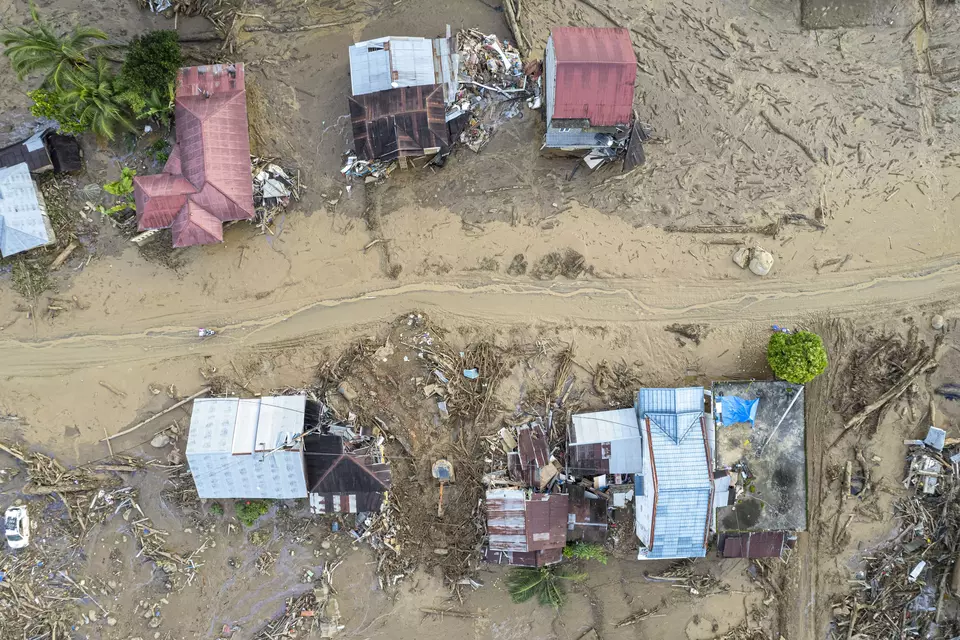
Jakarta. The Energy and Mineral Resources Ministry said it will reassess mining operations that fail to follow good mining practices, as the government faces mounting pressure to determine whether environmental mismanagement worsened the catastrophic floods and landslides that have killed hundreds across Sumatra.
Energy Ministry spokesman Dwi Anggia said Minister Bahlil Lahadalia has ordered a review of mining activities suspected of contributing to ecological damage following last week’s cyclone-driven disaster.
“Mining operations that have impacted the environment will be evaluated,” Anggia told state news agency Antara on Monday.
She said the review will specifically target companies that ignore good mining practices, resulting in severe ecosystem degradation. For now, the ministry is prioritizing recovery efforts in affected areas, including securing fuel supplies for emergency agencies.
“For example, we must ensure adequate diesel for heavy equipment used by the Public Works Ministry to clear debris. It requires a lot of fuel, and the minister has instructed that distribution be accelerated despite the logistical challenges,” Anggia said.
Activists Say Sumatra Has Become a ‘Sacrifice Zone’
Environmental watchdog Jaringan Advokasi Tambang (Jatam) said the scale of extractive industries on the island has turned Sumatra into a “sacrifice zone” for mining.
According to Jatam coordinator Melky Nahar, there are at least 1,907 active mining permits on the island, covering more than 2.45 million hectares.
He added that the government’s Forest Area Utilization Permit (PPKH) mechanism, intended to regulate activities in forest areas, has effectively become the main gateway for converting protected forests into extraction zones.
Across Sumatra, at least 271 PPKH permits have been issued, covering 53,769 hectares. Of these, 66 permits are for mineral and coal mining covering more than 38,000 hectares; 11 for geothermal projects; 51 for oil and gas blocks; and 72 for other energy developments. The remainder are allocated for telecommunications, government facilities, and various non-extractive uses.
Among the permit holders, he said, is Agincourt Resources, operator of the Martabe gold mine in the Batang Toru ecosystem. Land clearing in the forest zone for mining-related activity is estimated to have reached more than 570 hectares, which Jatam argues has undermined natural watershed protection.
The Attorney General’s Office has also signaled a wider investigation into whether extensive illegal logging contributed to the scale of the disaster.
The Forest Area Enforcement Task Force (Satgas PKH) — comprising the AGO, National Police, military, and Forestry Ministry — is assessing whether the flooding and landslides that struck North Sumatra, West Sumatra, and Aceh were purely natural or exacerbated by human-driven deforestation.
“We will examine all information circulating in public,” AGO spokesman Anang Supriatna said on Monday. “This needs to be studied to determine whether the floods were caused by natural factors alone or if illegal logging played a role.”
The humanitarian toll has risen sharply, with local authorities reporting 442 deaths, 646 injured, 402 people missing, and more than 2,000 houses severely damaged as of Sunday evening. Rescue operations remain hampered by washed-out roads, unstable terrain, and continuing heavy rain, and emergency teams warn that the full extent of the devastation has yet to be determined.
 as a preferred
Related Articles

Indonesia Seals 21 Companies in Kalimantan, Sumatra Over Forest Fires
Indonesia has sealed 21 companies across seven provinces over suspected links to forest and land fires, with more under investigation.The Latest

Jakarta Outranks Amsterdam in Global Public Transport Survey
Jakarta climbs two places to 15th in Time Out's 2026 public transport survey, with its governor citing better network integration.
MSCI Concerns, Tighter IDX Trading Rules Send Indonesian Stocks Down 5% by Midday
Indonesian stocks plunge 5% by midday as MSCI concerns weigh on sentiment and the IDX tightens its daily downside limit to 7%.
Jakarta Prepares 367 Health Facilities as Haze Reaches the Capital
Jakarta prepares 367 health facilities to treat potential haze-related illnesses after smoke from Sumatra and Kalimantan crosses the region.
Jakarta Expands Flood Prevention With New Water Storage Ponds
Jakarta opens two East Jakarta water storage ponds as it expands flood prevention efforts through reservoirs and river normalization.
Press Council Highlights AI Ethics at United Tractors Journalist Workshop
United Tractors’ 2026 journalist workshop highlights ethical AI use and the importance of trust and credibility in journalism.Most Popular
